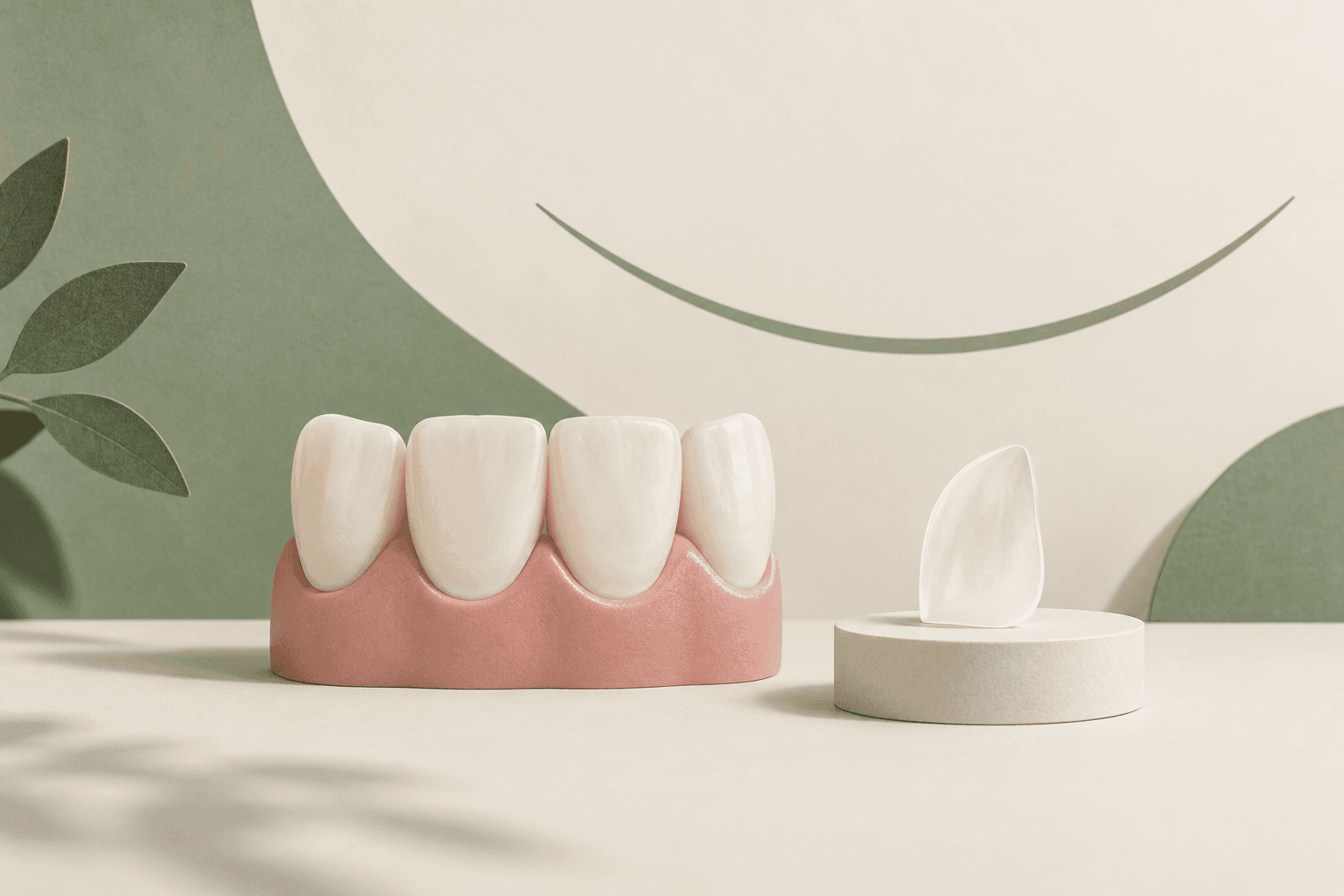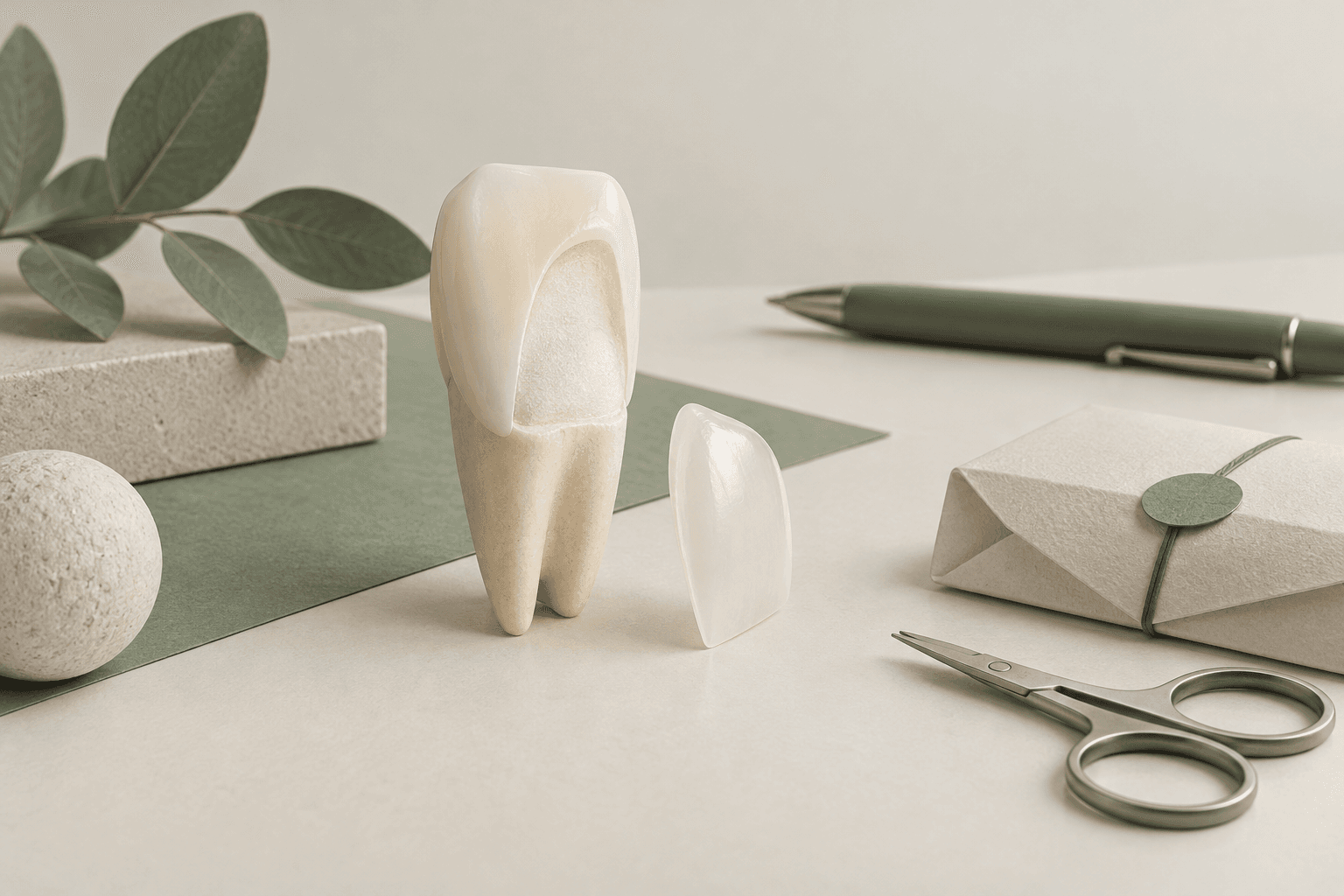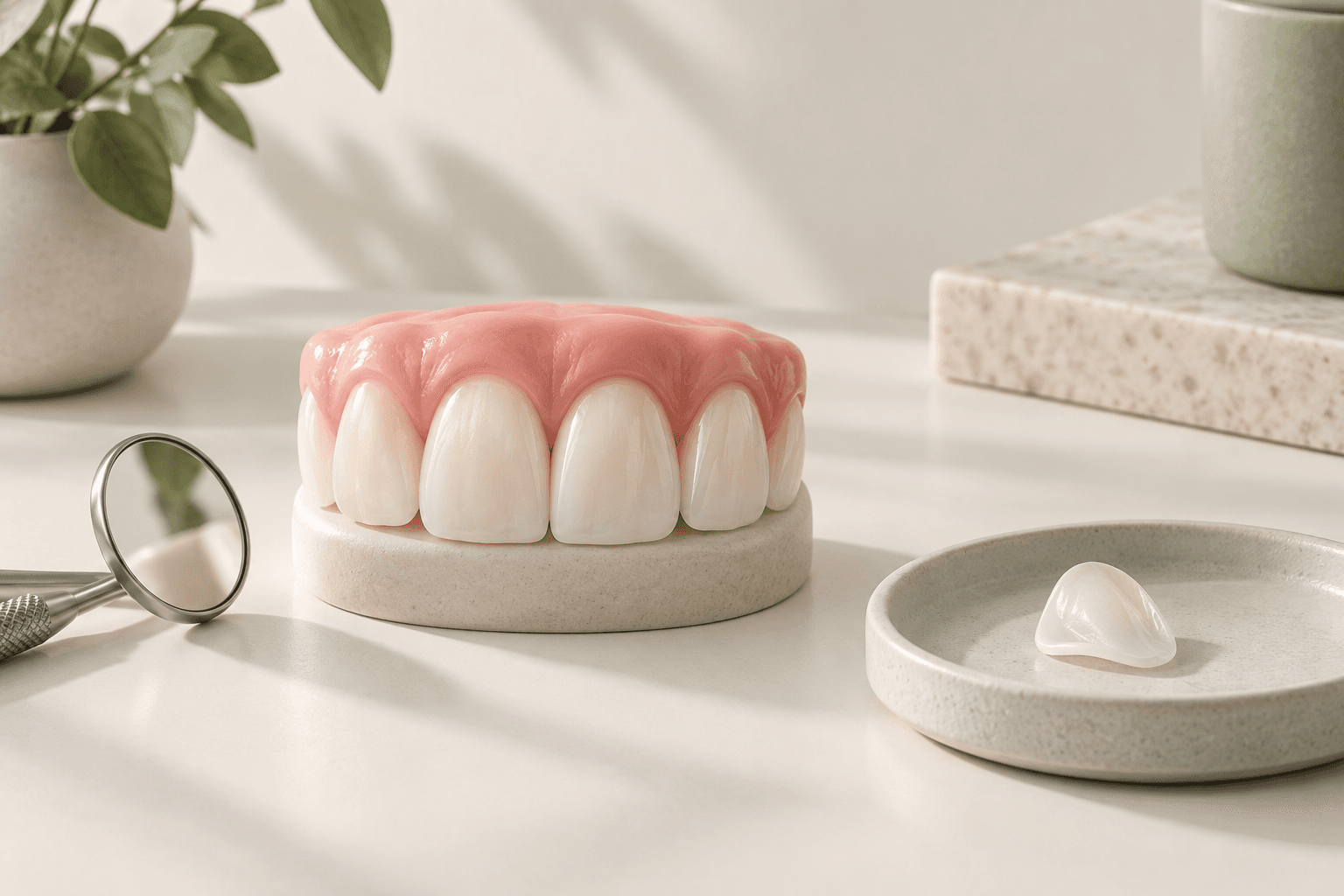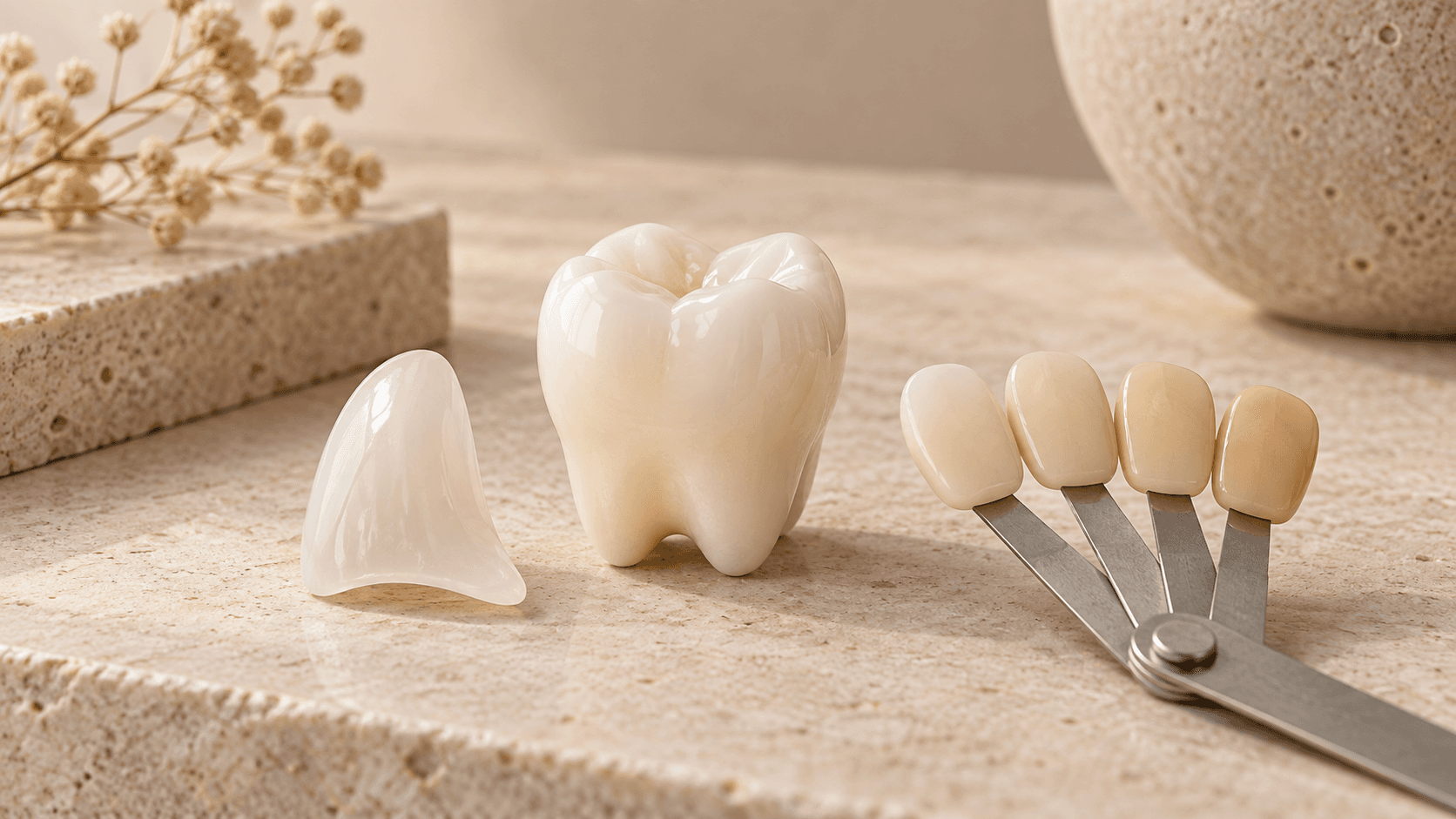
Porcelain veneers for white spots: when to consider?
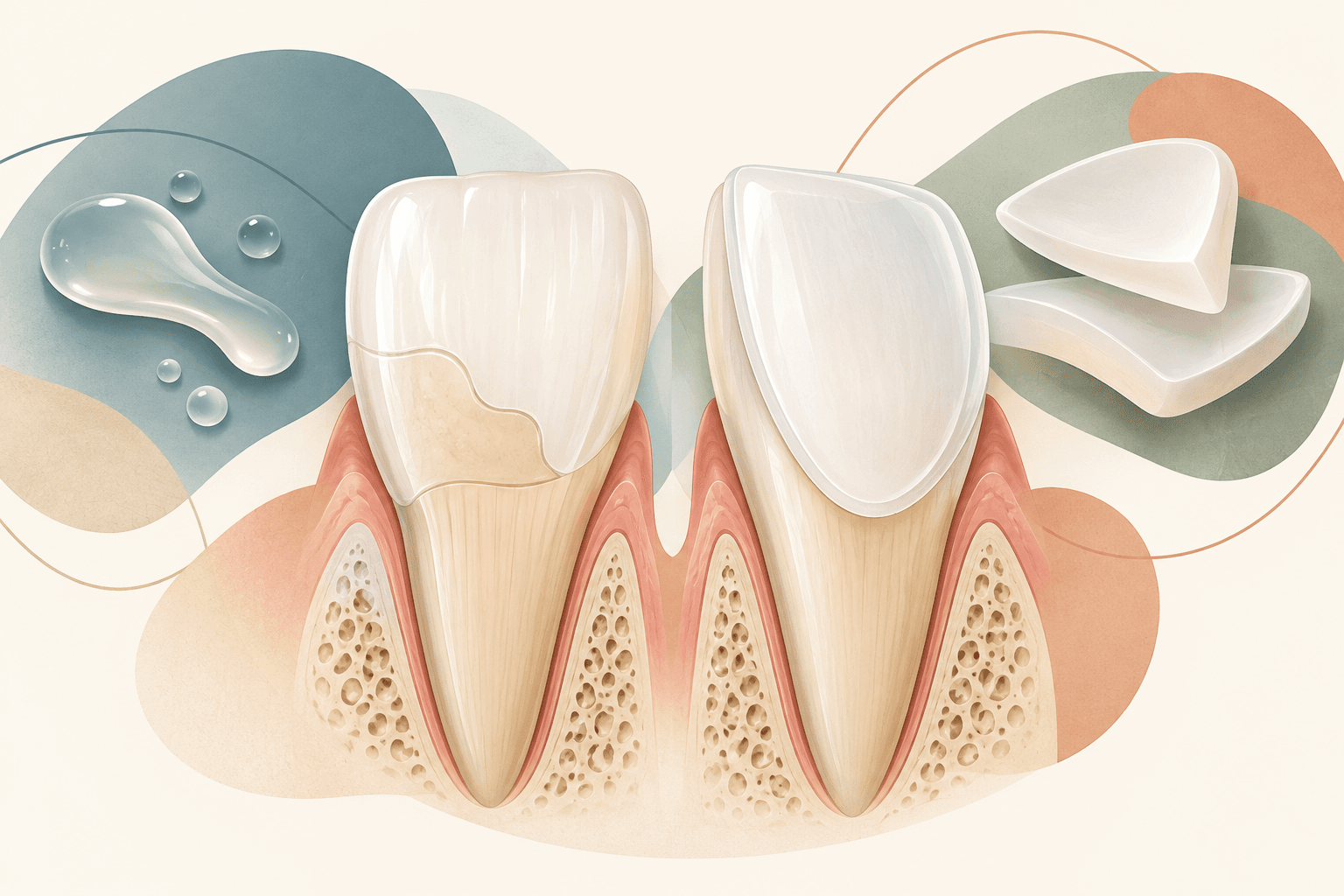
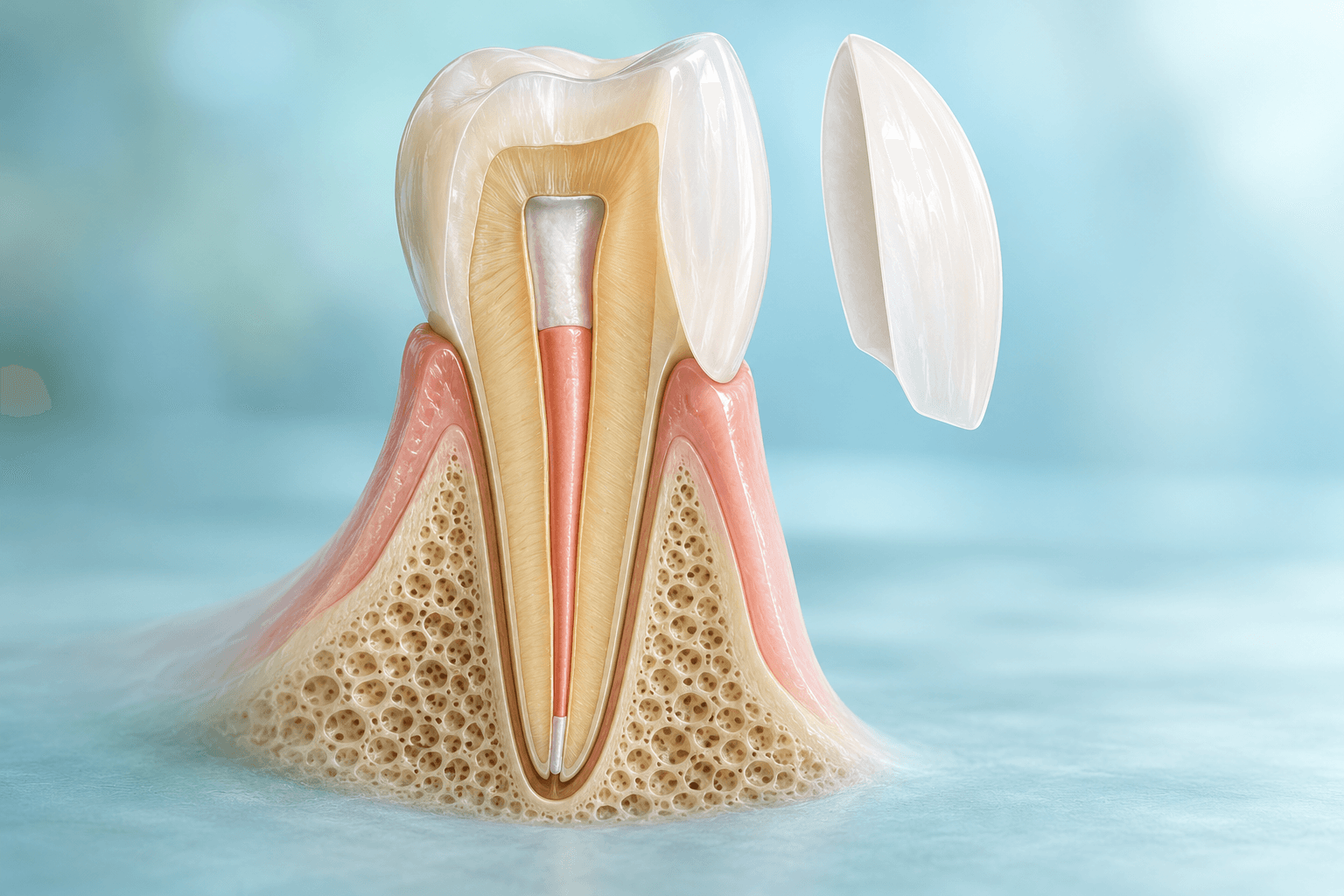
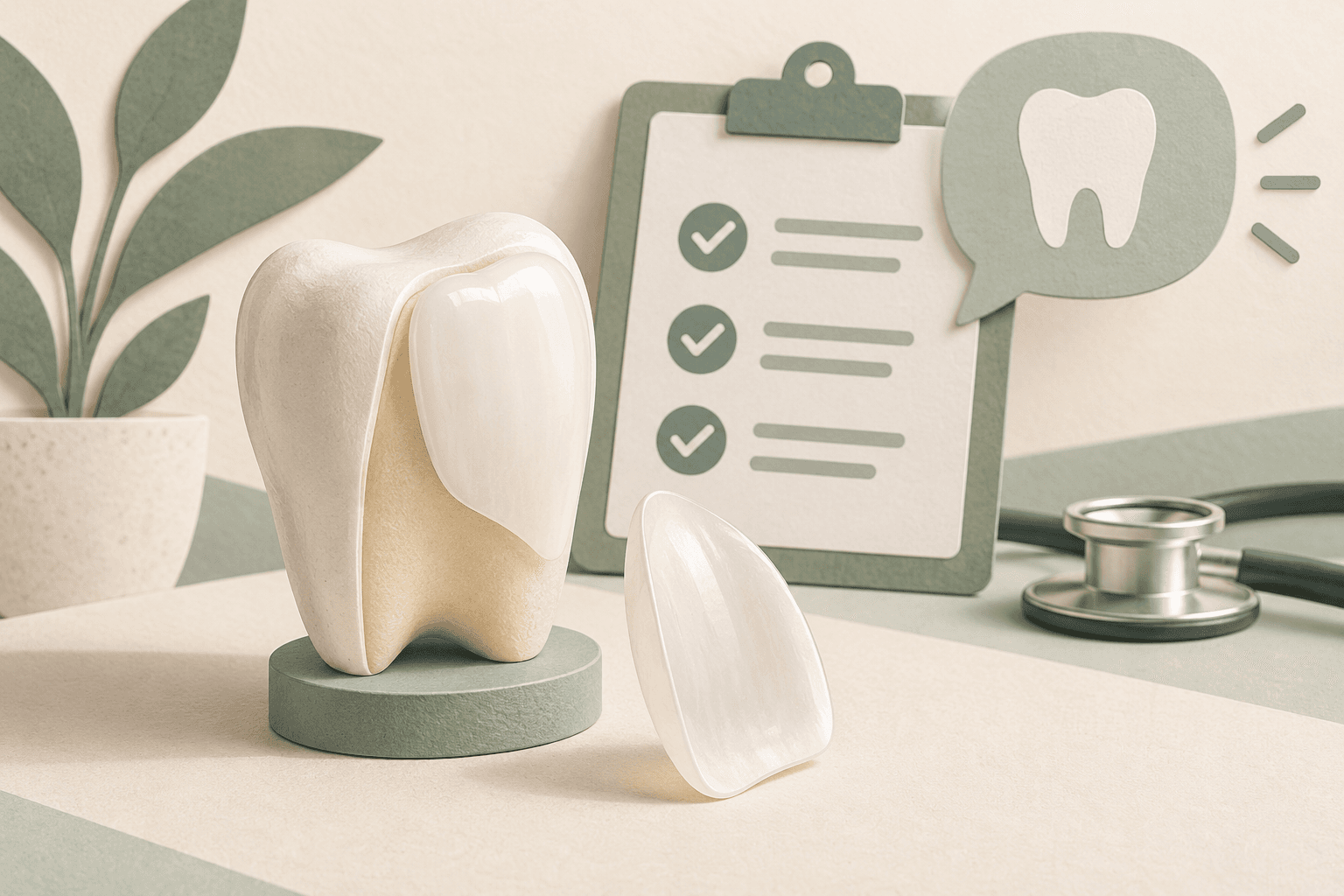
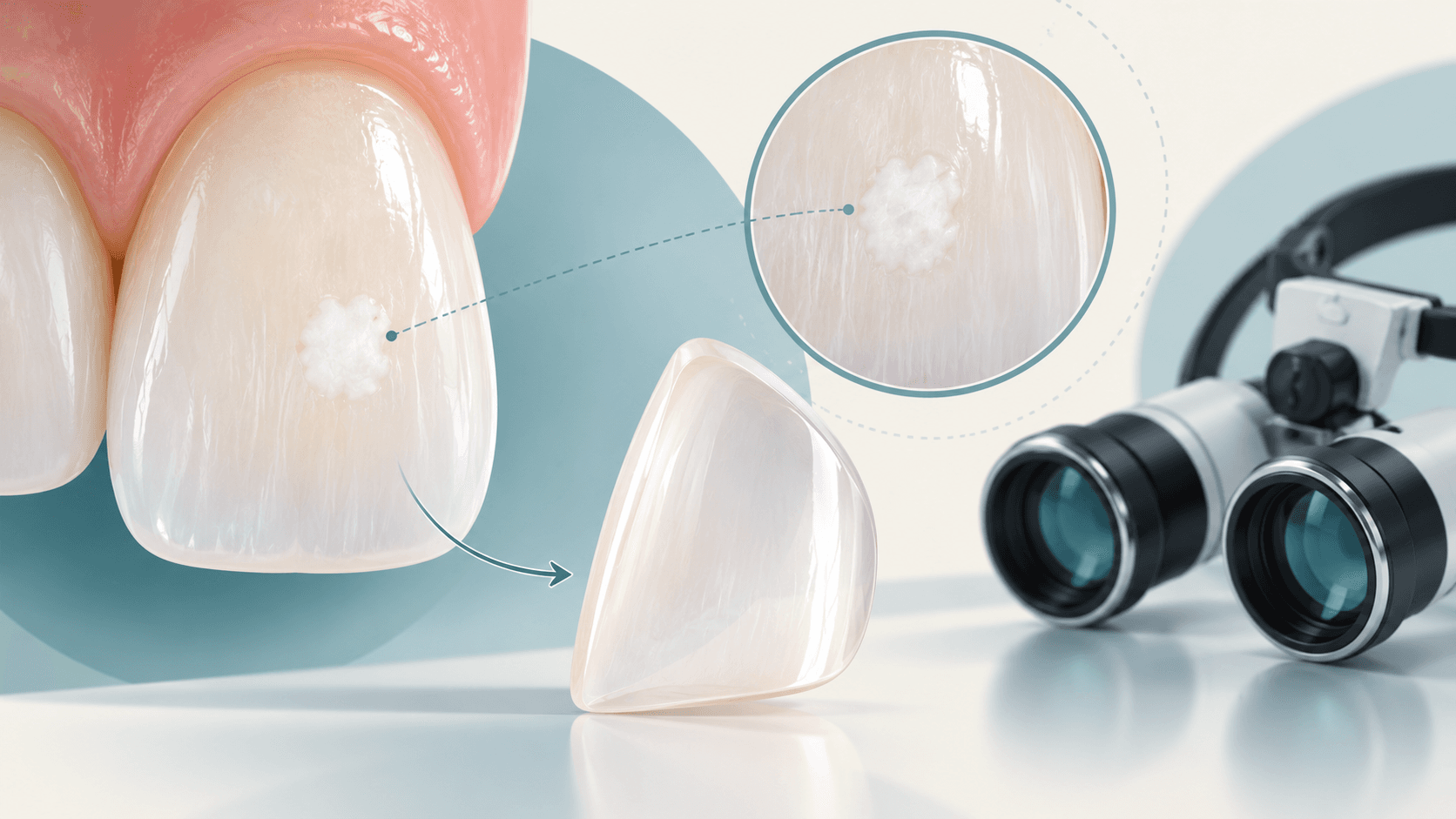
White spots on enamel have different causes. Understand why diagnosis comes before porcelain veneers and what alternatives can be discussed, with the limits of the available evidence.
Identified authorship
Educational content in dentistry
Publications
White spots on enamel have different causes. Understand why diagnosis comes before porcelain veneers and what alternatives can be discussed, with the limits of the available evidence.
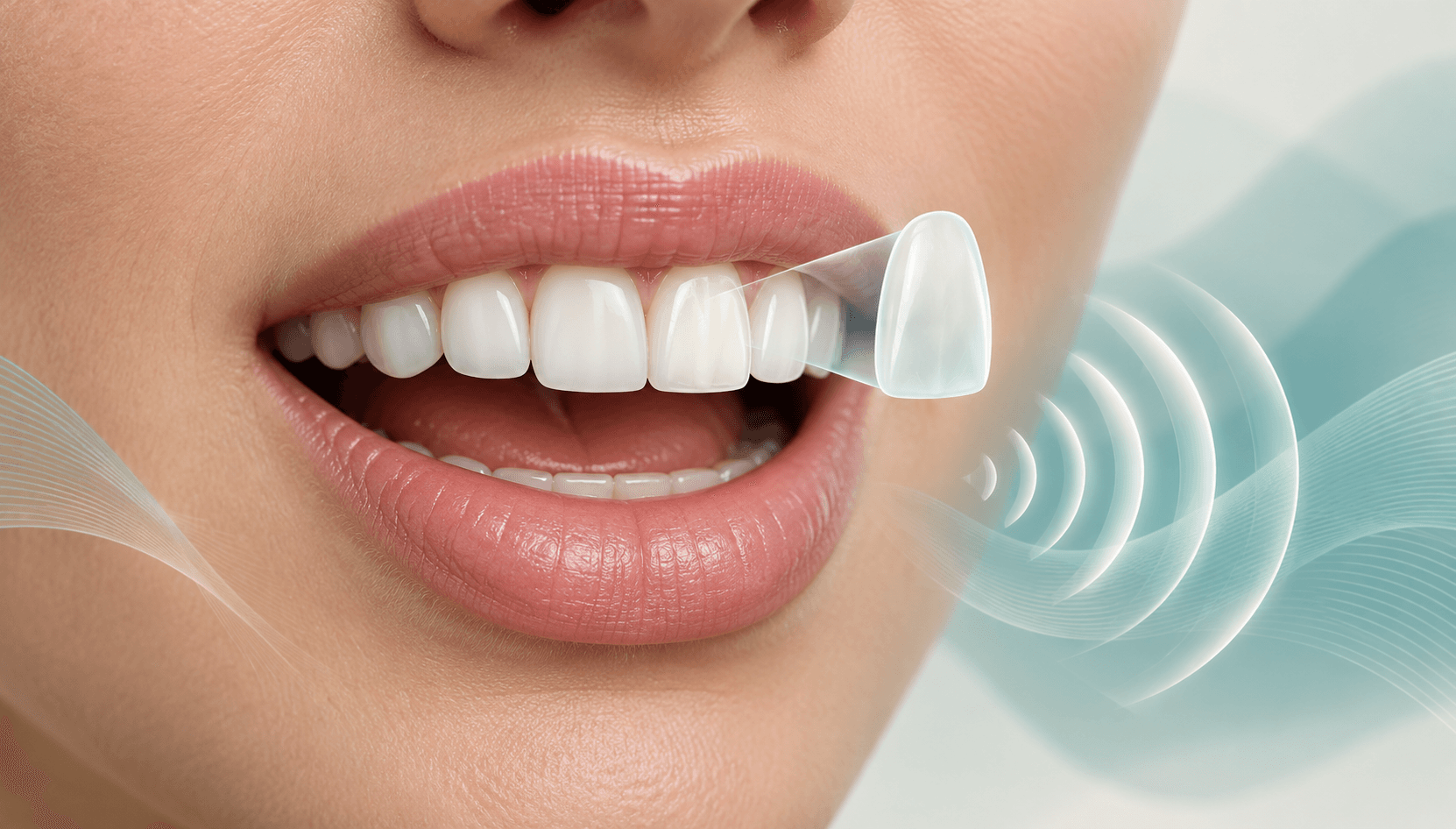
Changes in the shape or position of the front teeth can influence some sounds, but the available research does not allow us to say that porcelain veneers usually alter speech or predict the effect on a person.
Having an old resin restoration does not automatically preclude a porcelain veneer. The condition of the restoration, the available enamel, and the area of adhesion need to be evaluated tooth-by-tooth.
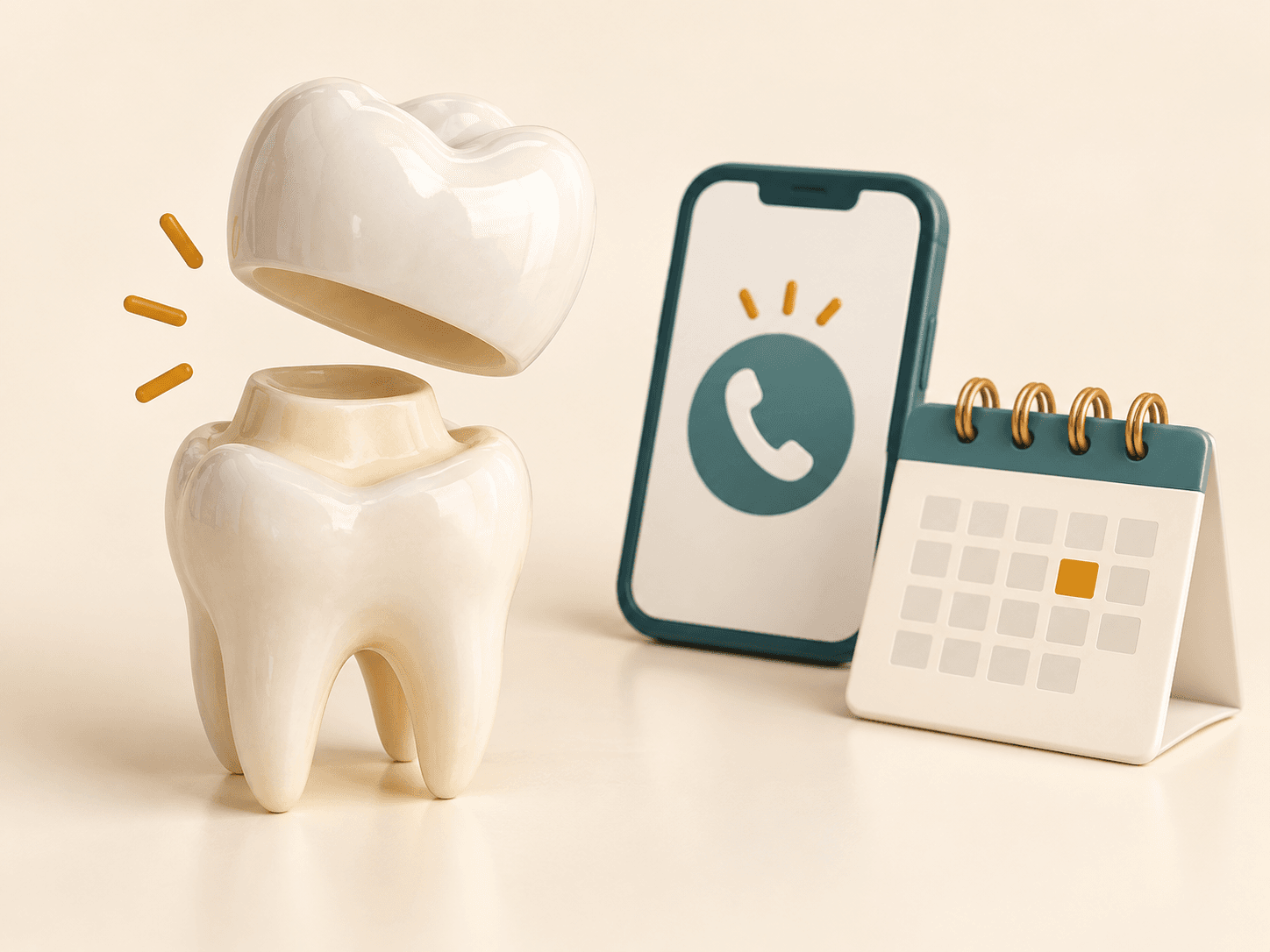
If a fixed prosthetic crown has come out, keep the piece and contact your dentist for evaluation. While waiting, avoid chewing hard foods with this tooth, maintain hygiene carefully, and do not use household glue. The urgency depends on the symptoms and how the problem occurred.
Anyone thinking of whitening their teeth and then placing porcelain veneers should talk about the order before starting. Whitening can change the color of natural teeth, but it does not whiten the ceramic; therefore, the planning of the shade and adhesive steps needs to consider the case and does not follow a universal deadline defined by this article.
In some cases, a root canal tooth may receive a ceramic veneer, but the root canal is not enough to indicate the procedure. The condition of the tooth, the restoration, the color, and the bite need to be evaluated.
Having porcelain veneers does not mean that you should abandon dental follow-up. Understand what laboratory studies have observed about prophylaxis and why they do not prove clinical damage in every cleaning.
Not all wisdom teeth need to be removed. Understand what may warrant extraction, why follow-up remains important, and what questions to bring to the appointment.
Are you going to change dentists and already use porcelain veneers? See how to organize the treatment records and prepare the conversation to continue the follow-up.
Thinking about porcelain veneers before a wedding or event? Understand what steps go into the calendar and what to clarify before arranging a date.
Checking the pieces before fixing the porcelain veneers is an opportunity to clarify doubts. See how to participate in this conversation with the dentist.
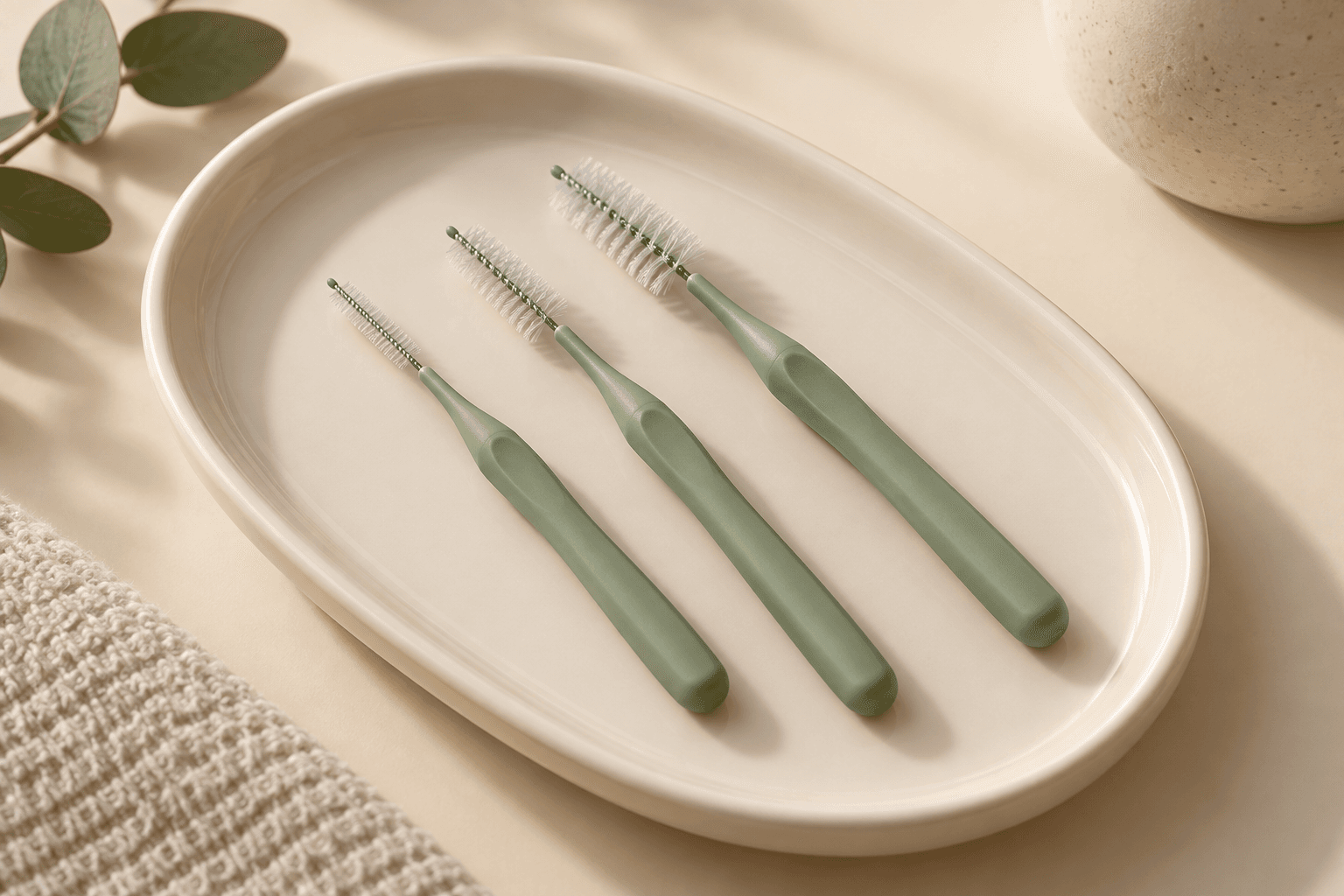
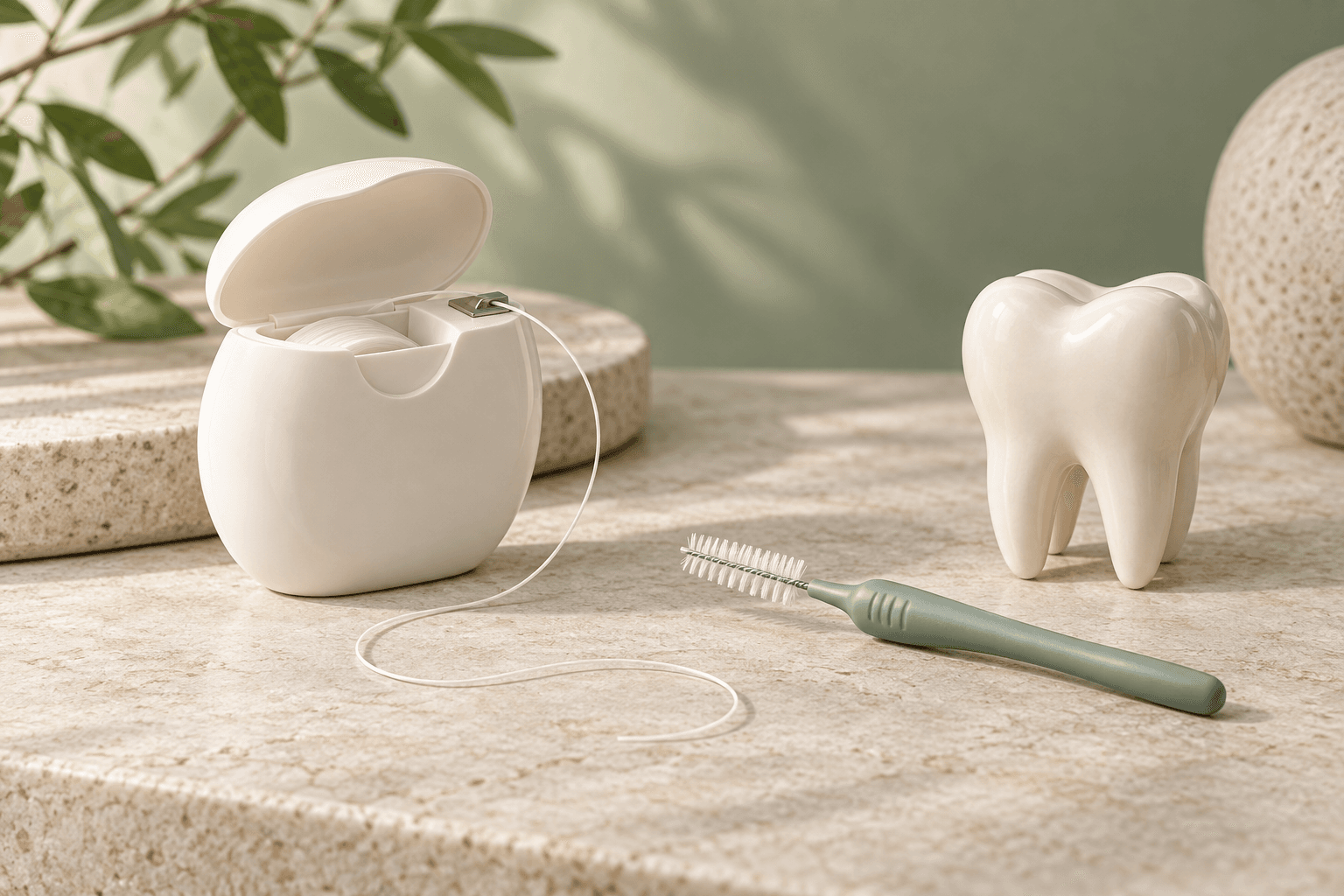
The interdental brush must adapt to the space between the teeth. Understand why not to force the passage and what to ask the dentist when choosing the size.
See why a change in the gums of those who wear porcelain veneers needs evaluation before deciding to change veneers and how to organize the report in the consultation.
Understand why the reflux history should be included in the planning of porcelain veneers and what information to bring, without concluding the indication only by diagnosis.
Here's how to use the CFO's public search before starting porcelain veneers and why checking the registry is not a substitute for evaluating the treatment indication.
Here's how to organize a list of medications for your dental appointment, including over-the-counter products and recent changes, without putting treatments on hold on your own.
Understand why the proposal for porcelain veneers needs to distinguish aesthetic change from jaw pain assessment and what questions to bring to the consultation.
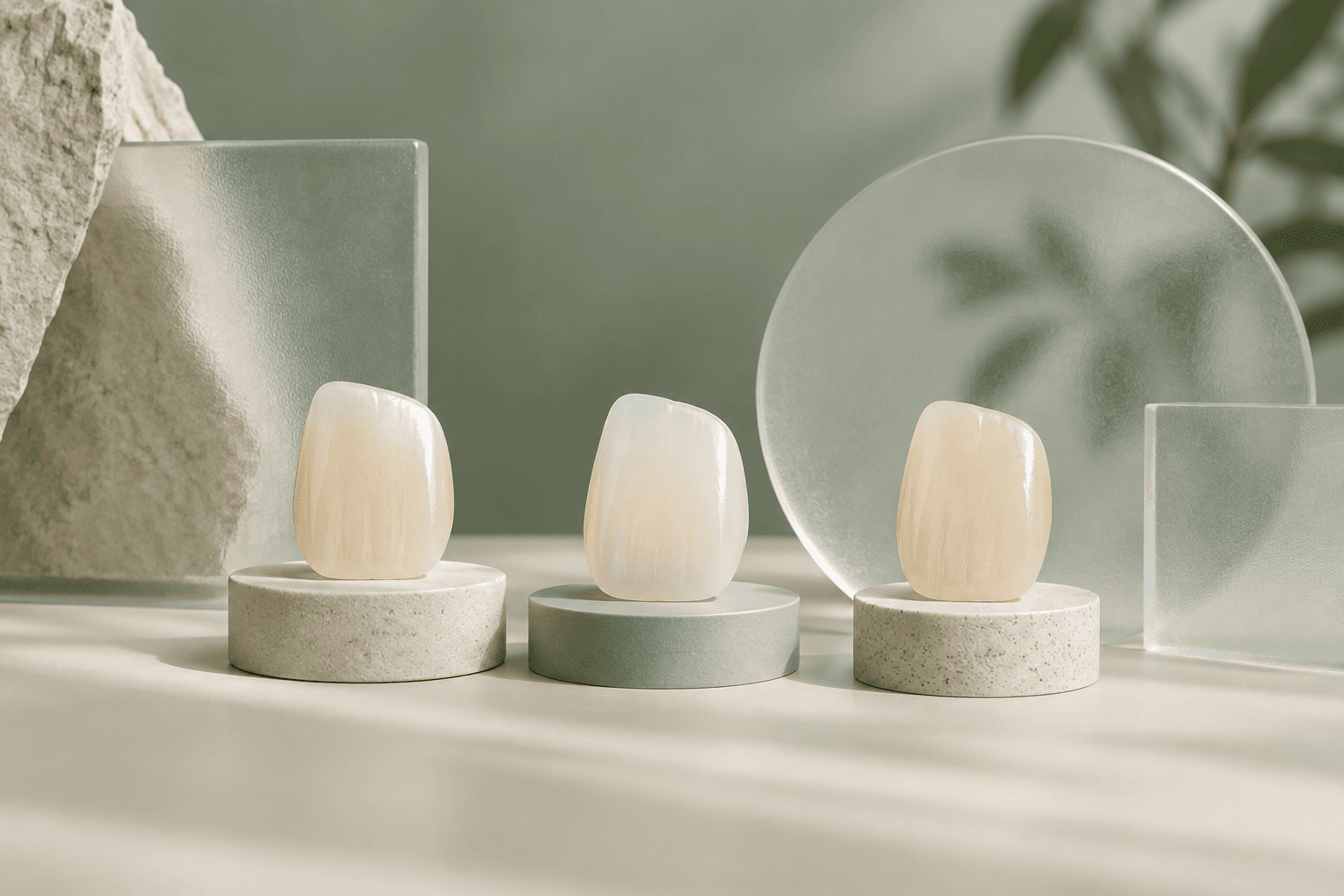
Understand why the name porcelain veneer does not define a single ceramic and what questions help clarify the choice of material with the dentist.
See why oral piercing contact deserves attention in the planning and maintenance of porcelain veneers, without treating ceramic as protection.
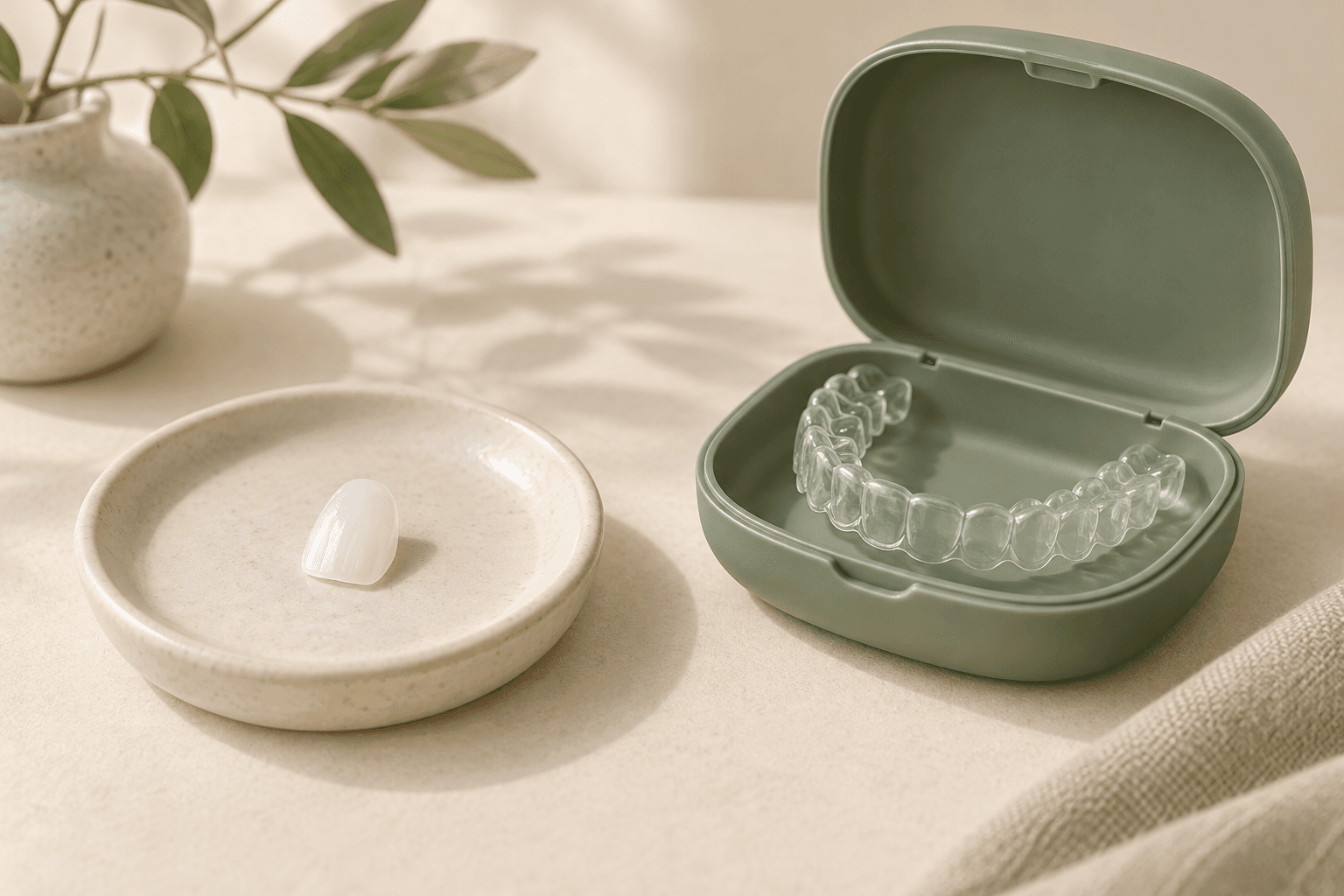
If you use removable orthodontic retainers, here's why discuss your fitting and follow-up before porcelain veneers and what to do if there's pain.
Understand why gentle pressure and soft bristles are part of brushing and why bleeding should not be interpreted as a sign of better cleanliness.
Before putting a porcelain veneer on a darkened tooth after trauma, understand why investigating the cause can change planning and alternatives.
Understand why porcelain veneers do not automatically correct the gummy smile and what to evaluate about teeth, gums and lips before making a decision.
Understand the role of conversation and consent form before porcelain veneers, with questions about the plan, alternatives, risks, and maintenance.
Here's how to include gentle tongue cleaning in your routine, deal with cravings, and recognize changes that need evaluation rather than persistent scraping.
The number of porcelain veneers depends on individual planning. Understand why discuss each tooth, the alternatives and the integration with the smile.
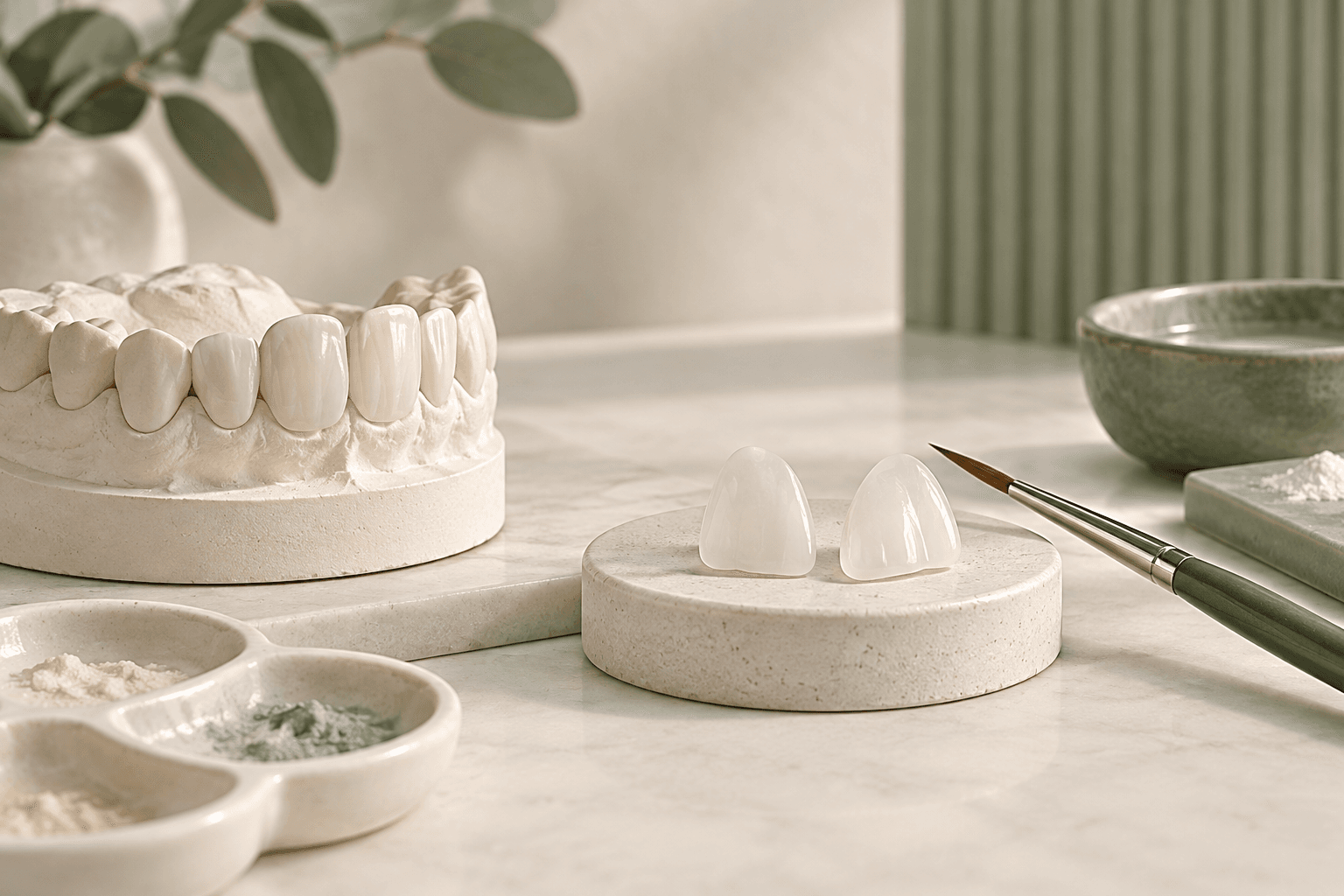
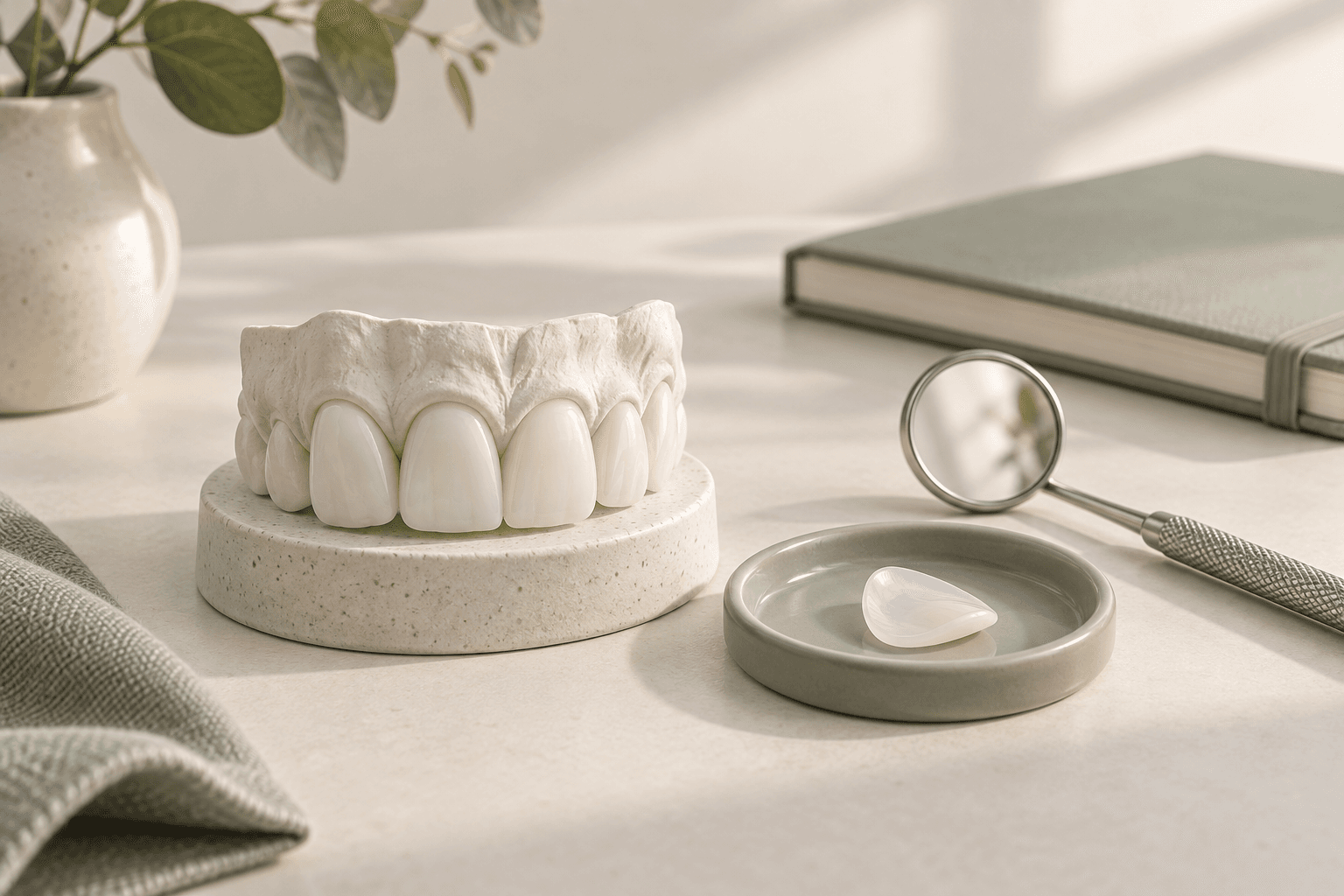
Understand how tooth records arrive at the laboratory, why porcelain veneers are personalized and what is checked in the office before fixation.
Understand how sugar-free gum can stimulate saliva, why it does not replace oral hygiene and when discomfort when chewing deserves evaluation.
Biting nails, biting pens and opening packages with teeth deserve attention in those who use porcelain veneers. See what to talk about with the dentist.
Understand when porcelain veneers can enter the evaluation of a diastema and why investigating the cause of the space comes before the aesthetic choice.
Understand the limits of porcelain veneers' resistance to stains, how to deal with a perceived change in color, and what to talk about with your dentist.
Understand why the common wooden toothpick is not suitable for cleaning between the teeth and how to differentiate with a floss with support and an interdental brush.
Here's how to organize a second opinion before porcelain veneers, what documents to bring and how to compare proposals beyond price and number of pieces.
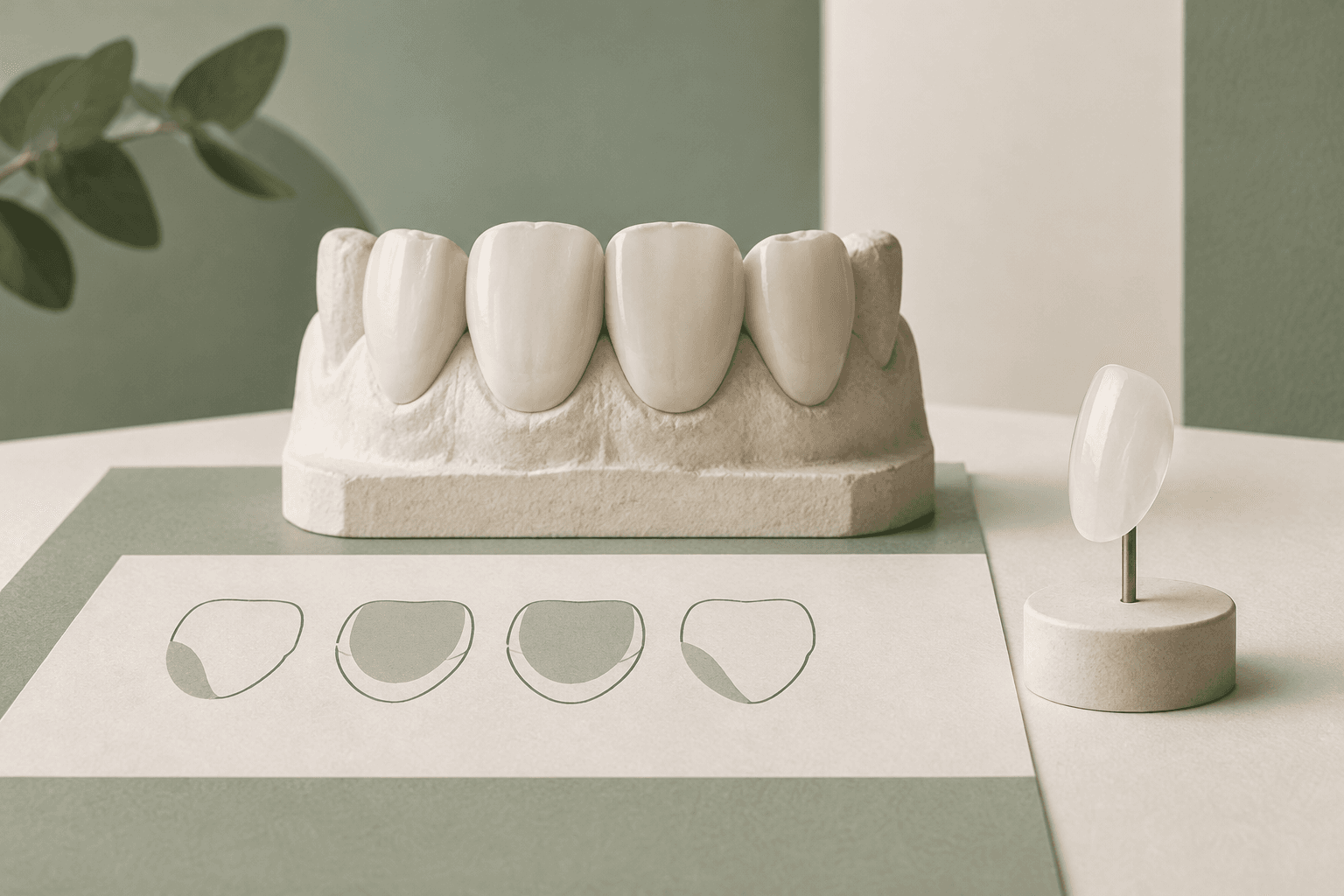
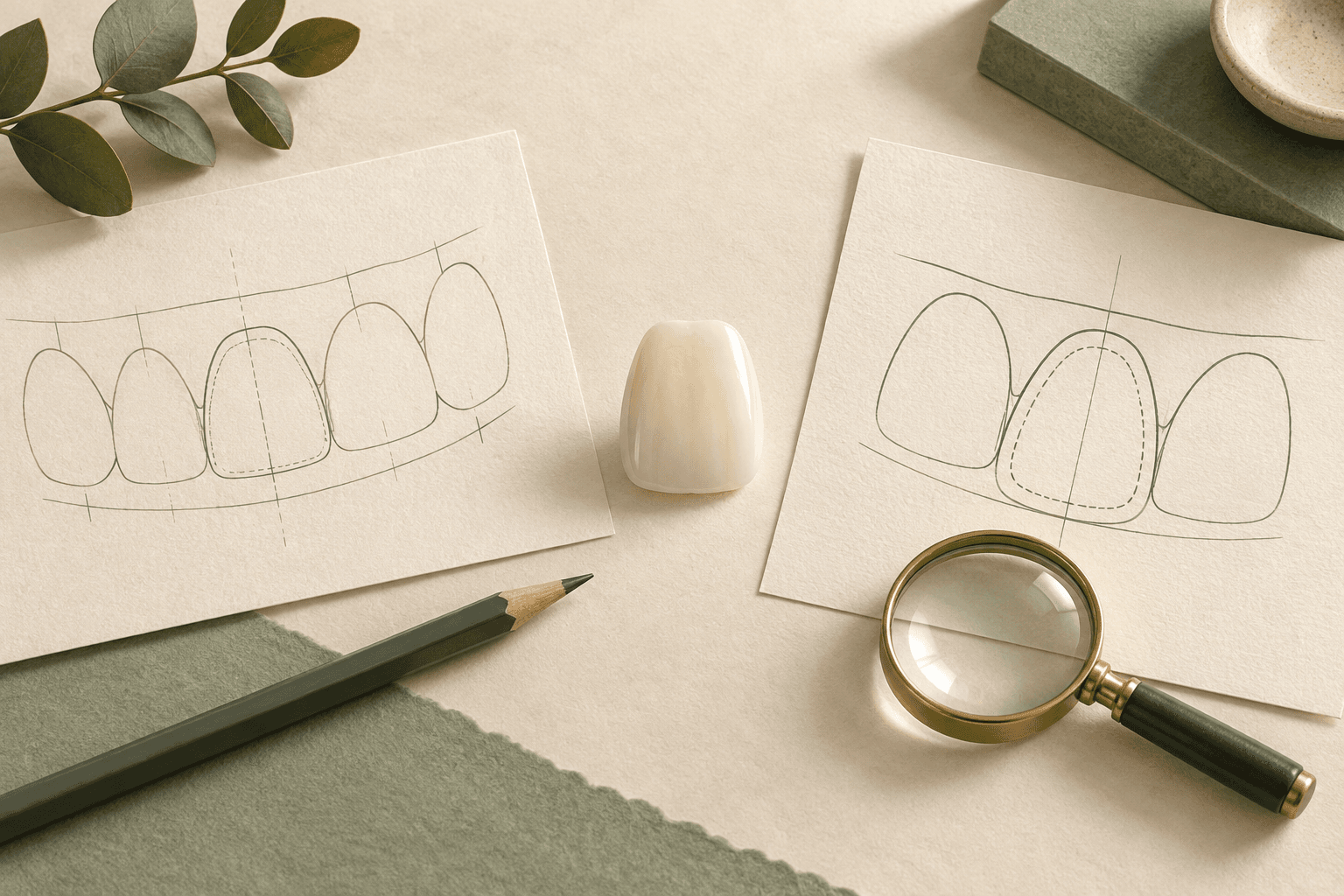
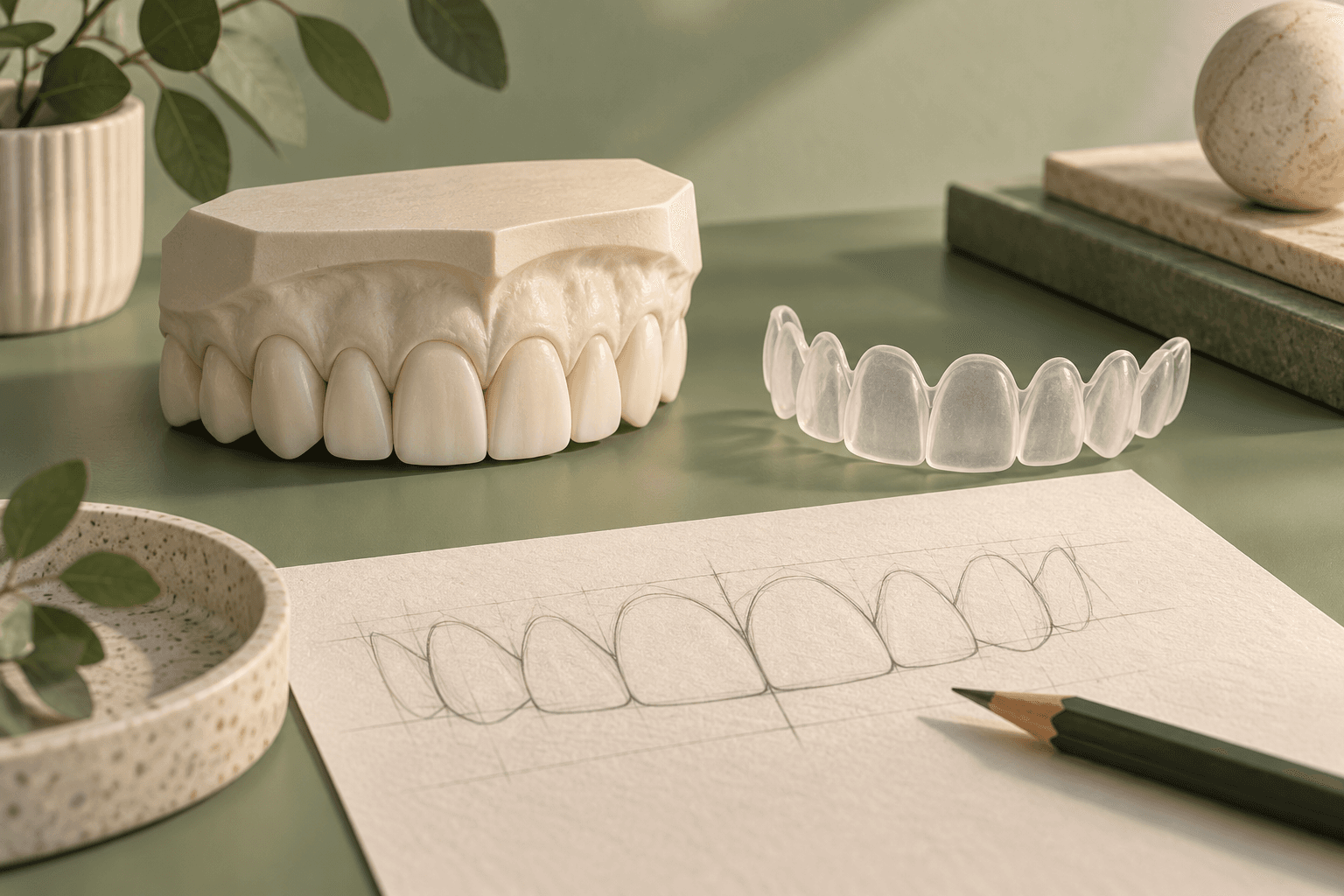
Understand what the mock-up helps to evaluate before porcelain veneers, what their limits are, and what to ask the dentist during the preview.
See the CFO's warning about charcoal dust, the limits of the evidence, and what to clarify when choosing hygiene products for those with porcelain veneers.
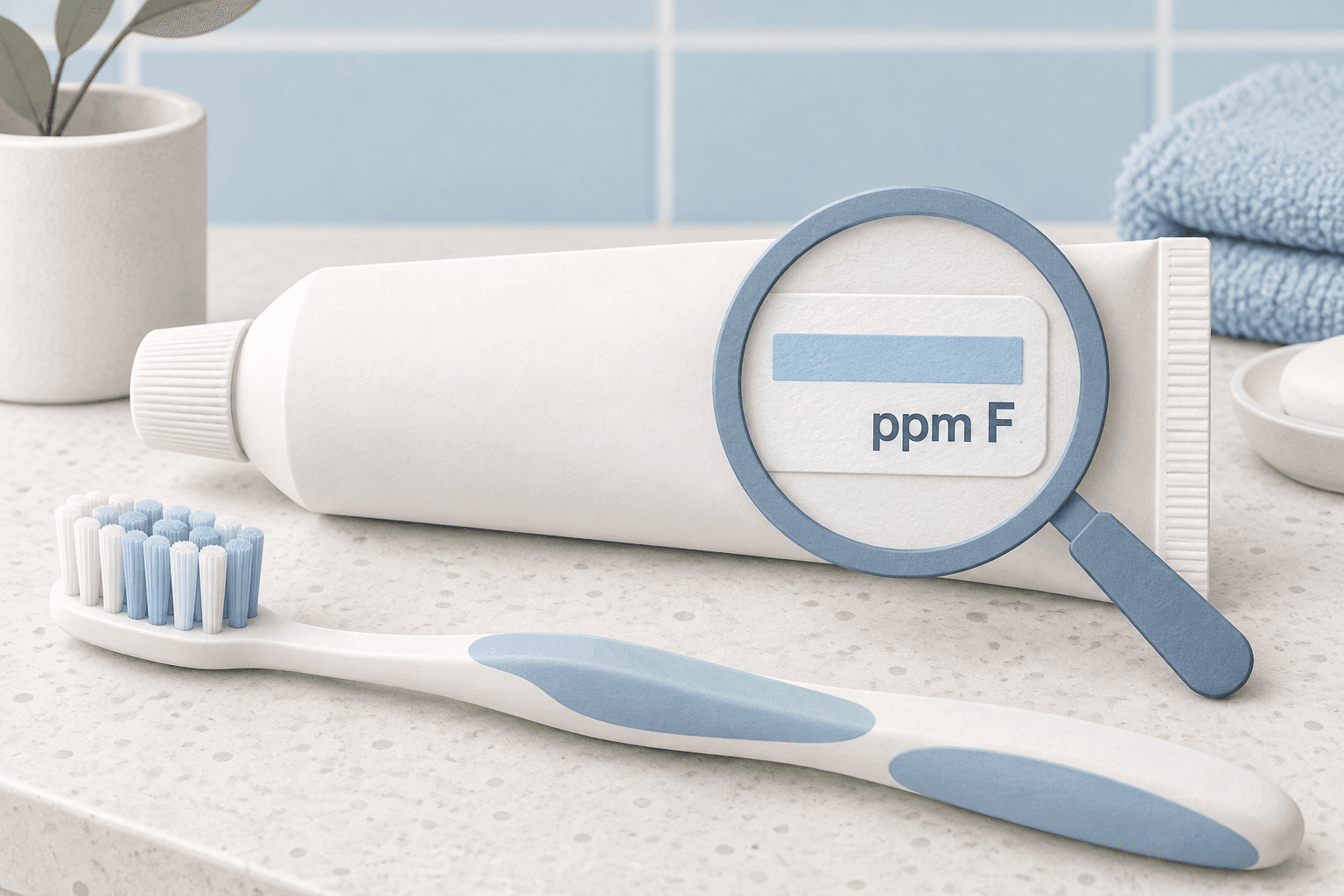
Understand what the fluoride concentration indicated in ppm means, where to find this information and what to clarify with the dentist about your toothpaste.
Learn why you should tell the anesthesiologist you have porcelain veneers, what details to report, and when to talk to your dentist before surgery.
Understand what to report when the bite looks different after placing porcelain veneers and what signs require dental evaluation or emergency.
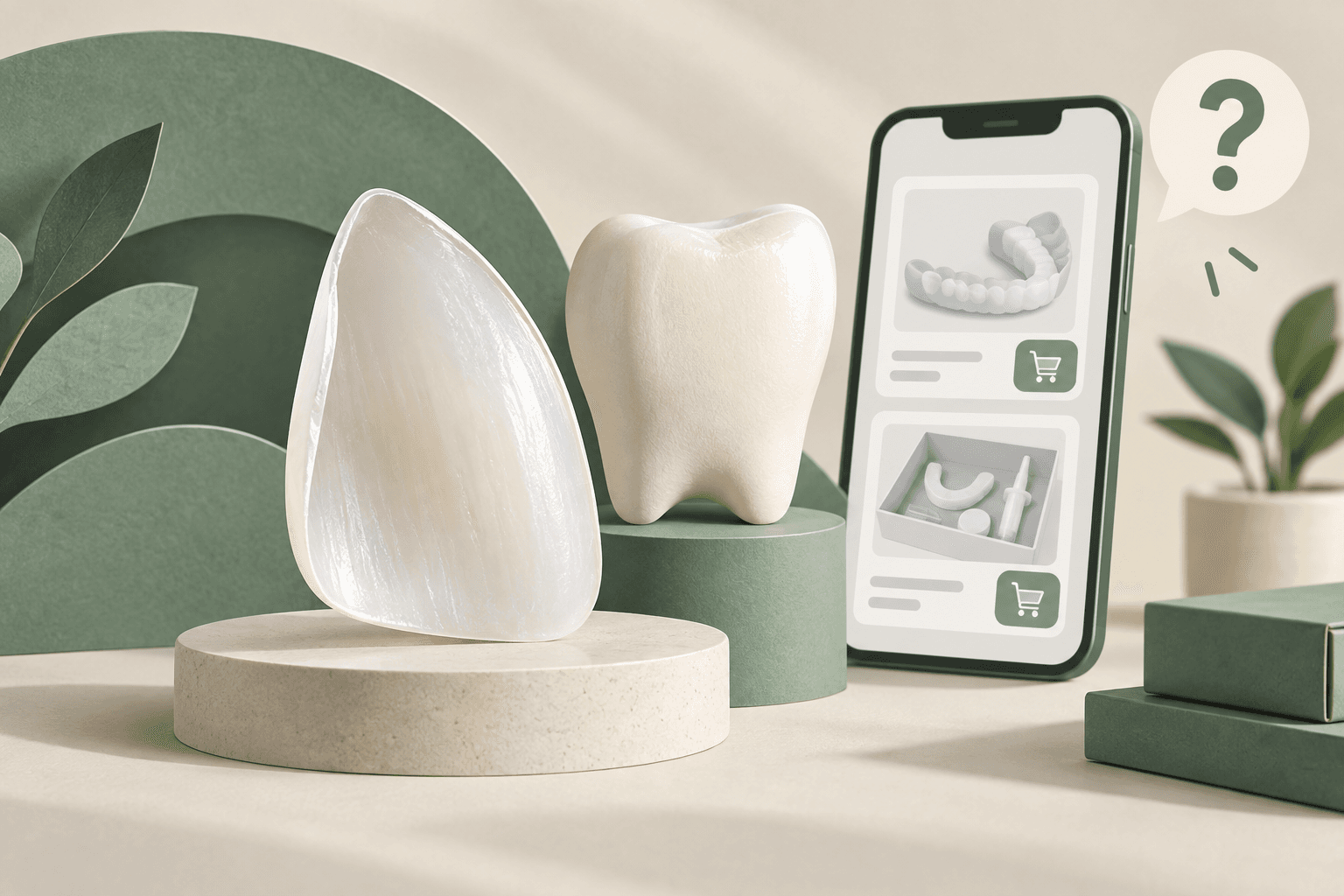
Understand why veneer kits sold online are not equivalent to custom-made ceramic veneers and what precautions to clarify before changing your smile.
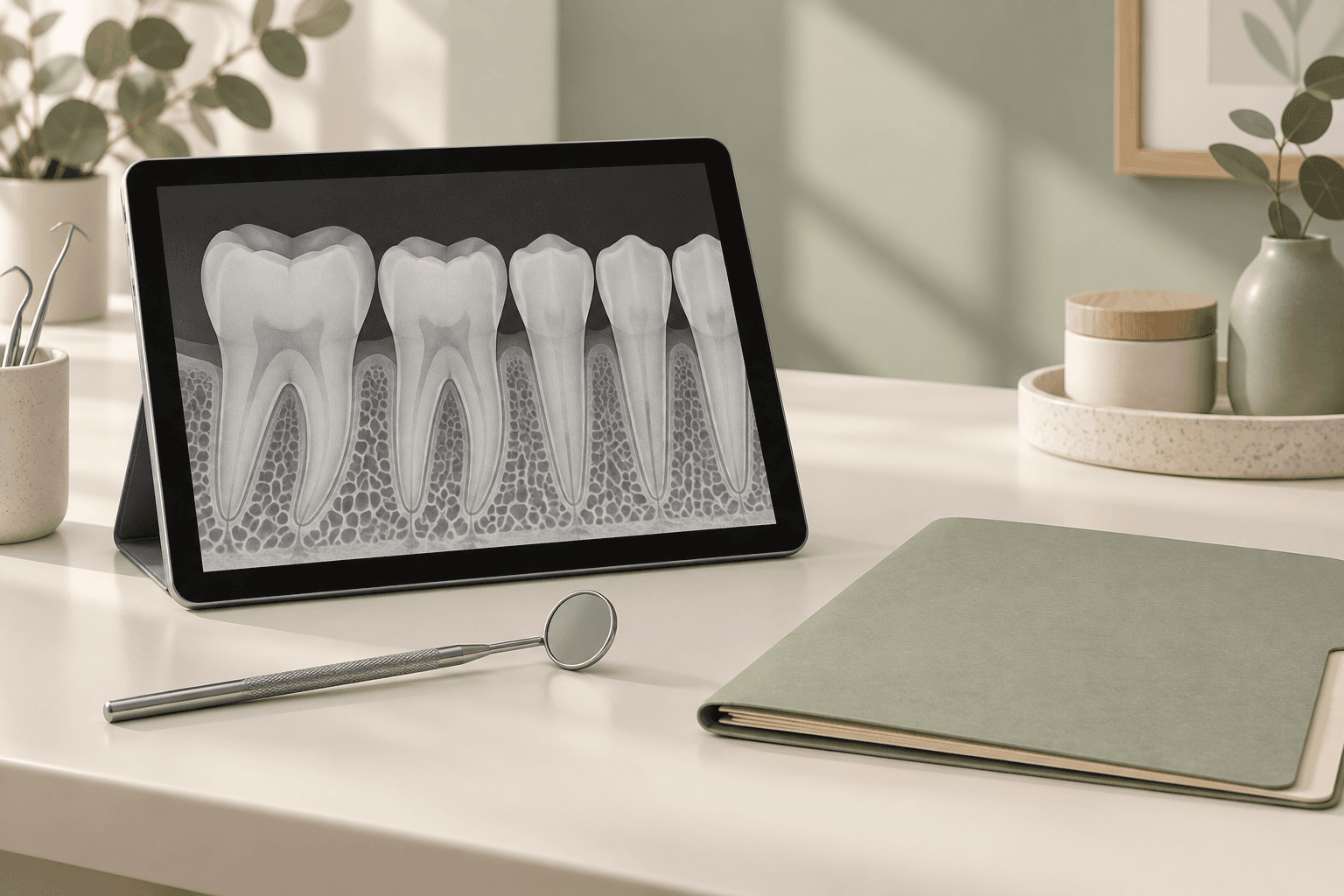
X-rays are not mandatory at every dental appointment. Understand what guides the indication and why taking previous images helps in the evaluation.
A porcelain veneers budget should be included in the treatment plan. See which questions help clarify steps, alternatives, and included items.
A porcelain veneer covers an existing tooth. Understand why masking a gap between teeth is different from replacing a tooth that has been lost.
During the making of porcelain veneers, there may be a stage with provisionals. Understand what this phase means and what guidelines to ask for between appointments.
Mouthwash can complement hygiene in some situations, but the goal and time matter. Here's what to clarify before including it in your routine.
Before placing porcelain veneers, gum health needs to be included in the evaluation. Understand what to clarify about prior treatment and aesthetic planning.
Compare porcelain veneers and resin veneers for execution, preparation, and maintenance, with questions to understand the proposal before deciding.
Learn how to report a loose or broken porcelain veneer, what signs require emergency, and why repairing or replacing depends on evaluation.
Here's how to rinse, dry, and store your toothbrush, why avoid closed containers while it's wet, and what to look out for in the bristles.
Understand the difference between changing your appearance with porcelain veneers and moving teeth with orthodontics, and which questions to bring to the evaluation.
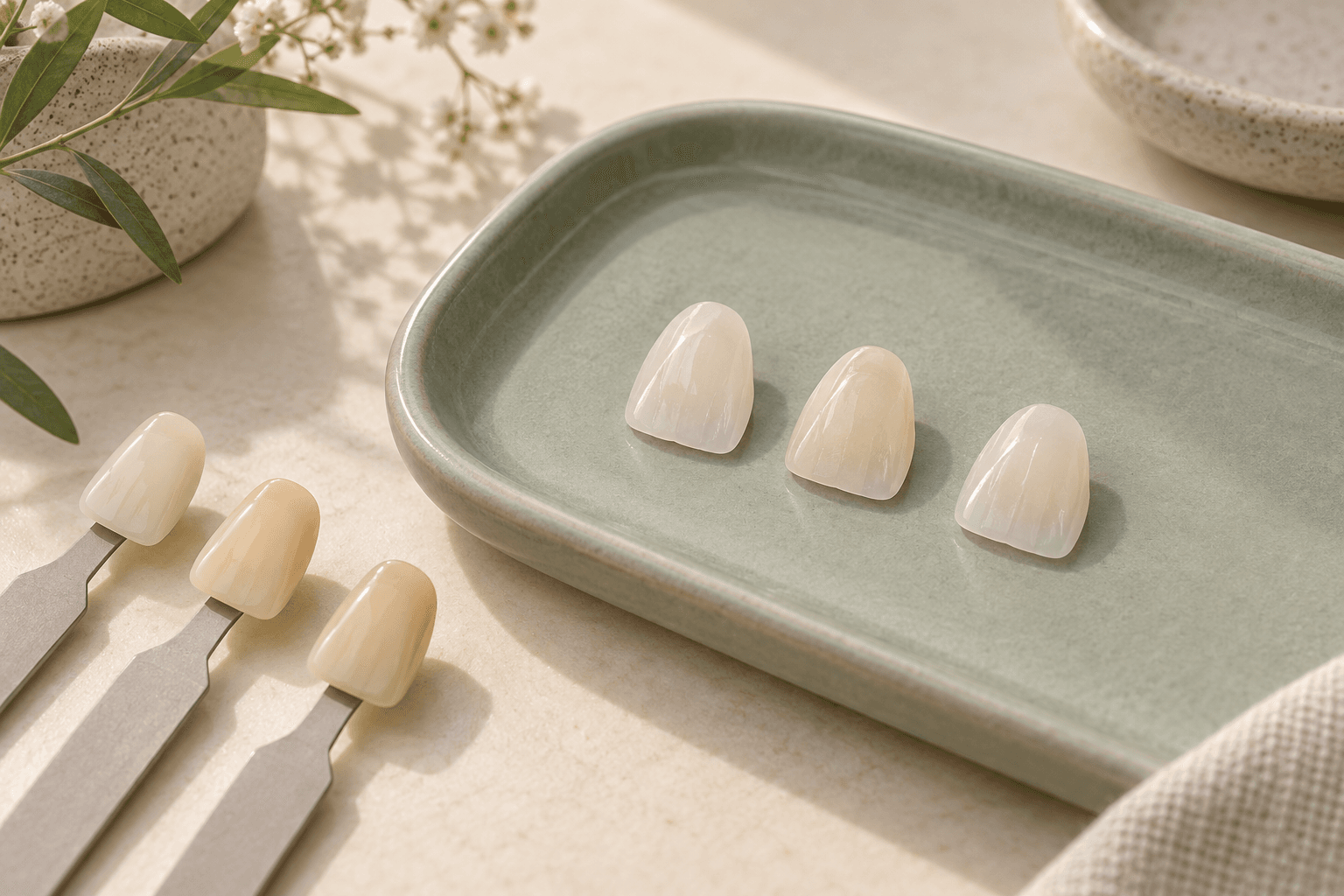
Understand why the choice of the color of porcelain veneers involves the base tooth, the ceramic, and talking about expectations before fixing.
Porcelain veneers do not make teeth immune to decay. Understand why hygiene, pre-treatment assessment, and returns remain important.
Understand how to include the dental consultation in prenatal care, what to bring to the service and why pregnancy is not a reason to postpone the evaluation of the mouth.
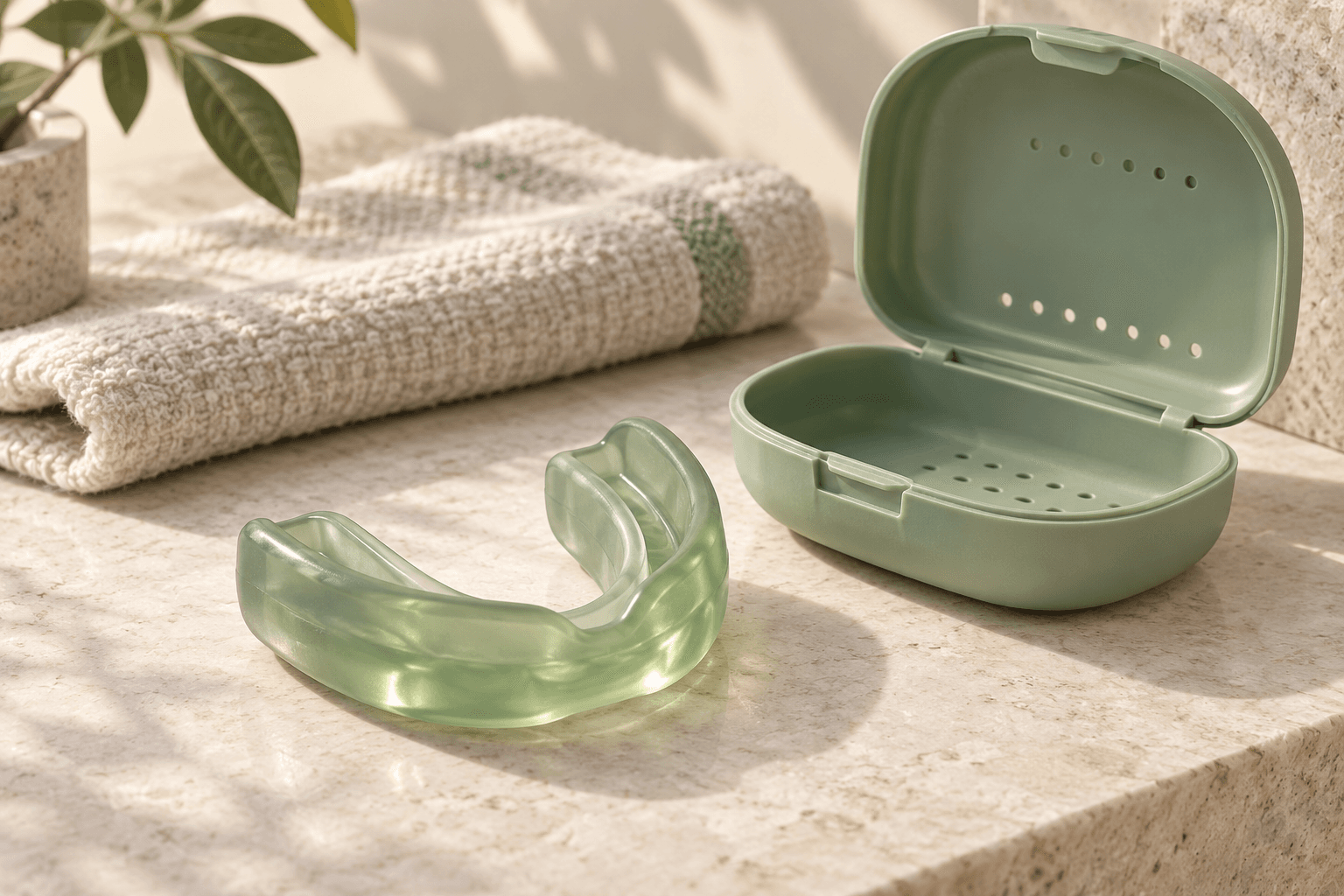
Learn what to consider when adjusting the mouthguard for sports, what types there are and what precautions to discuss with the dentist before use.
Here's how to communicate your fear of the dentist, agree on a pause signal, and clarify what's expected at the appointment, with no promises to eliminate anxiety.
Persistent mouth sores need evaluation. Learn about the Brazilian 15-day guidance, signs to seek help before and how to report the evolution.
Learn why to report diabetes to the dentist, what changes in the mouth deserve evaluation and how to organize information before dental procedures.
Understand how tobacco can affect gum and healing, what information to bring to the consultation and where to seek guidance on smoking cessation support.
Understand what free sugars are and why honey and juices deserve attention in your routine, even when there is no sugar added during preparation.
The interval between appointments depends on the assessment and individual risk. Understand what to ask and how to distinguish routine review from continuity of care.
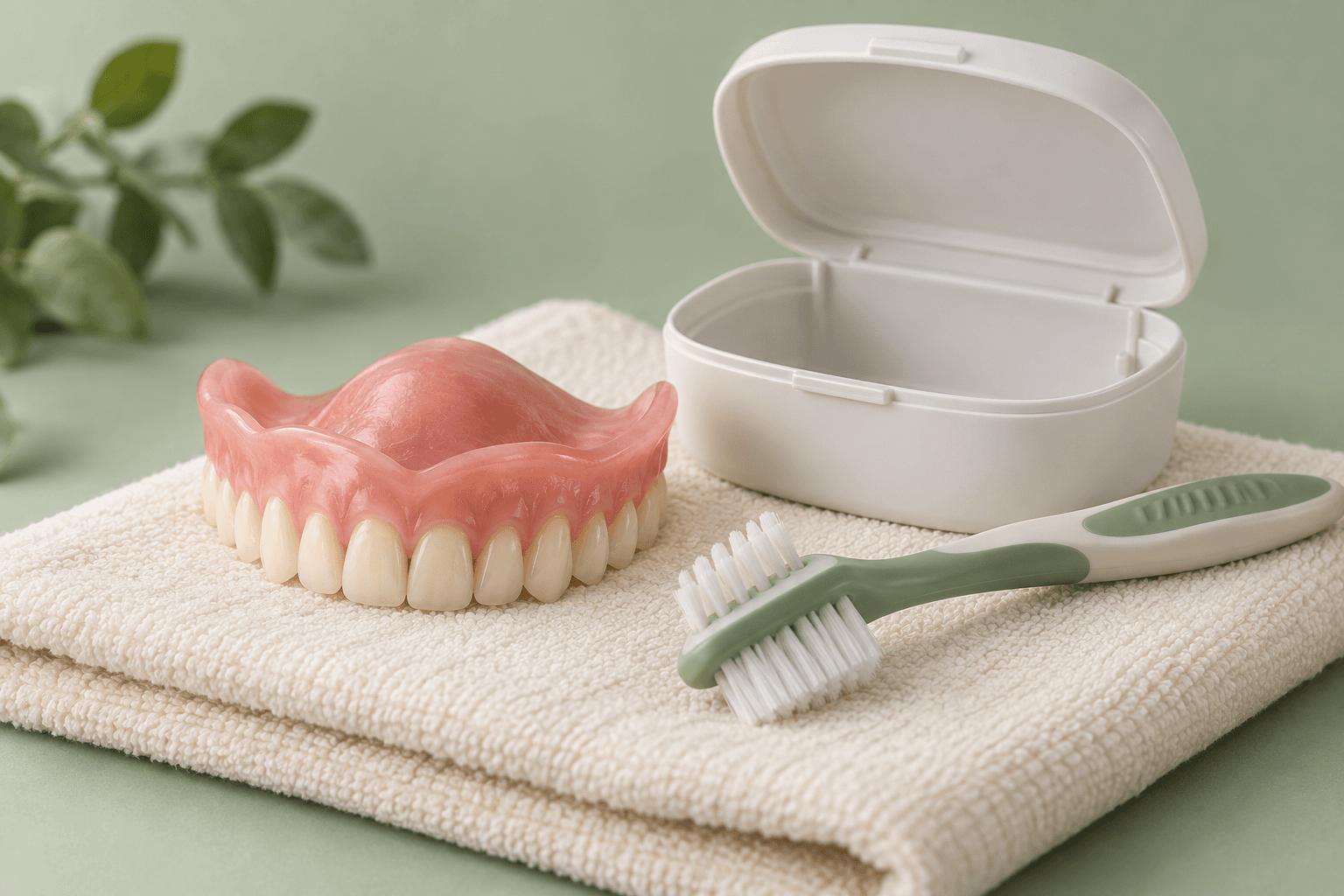
Understand the care of cleaning and storing the removable prosthesis, why the mouth also needs hygiene and when the fitting calls for evaluation.
The absence of pain does not rule out caries. Understand the difference between initial changes and cavities and which questions help to understand the dental evaluation.
Understand why cleaning between the teeth complements brushing, how to organize the schedule and what difficulties it is worth taking to the dental appointment.
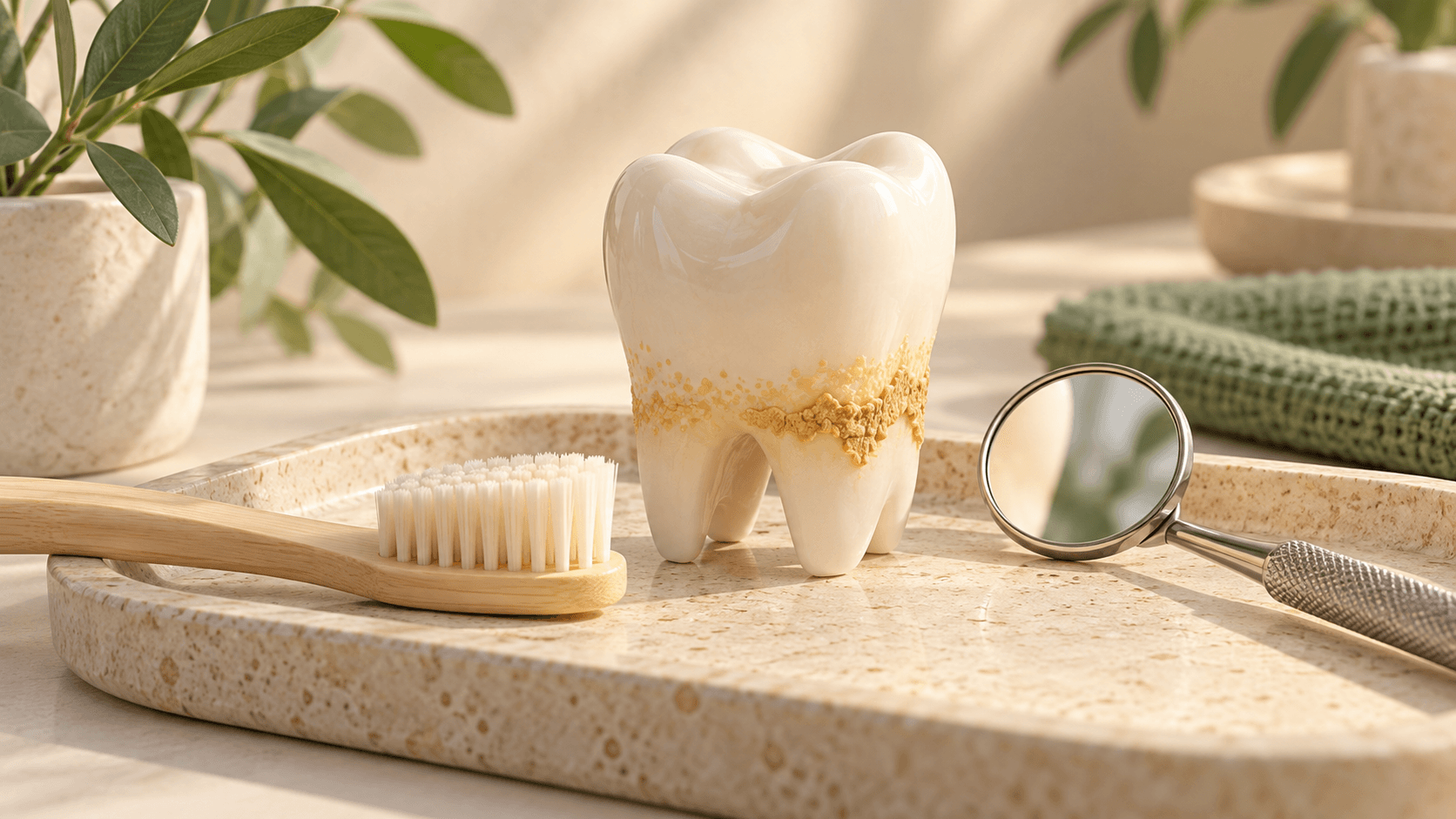
Plaque can be removed by daily hygiene, but hardened tartar needs professional cleaning. Understand the difference and what to clarify in the consultation.
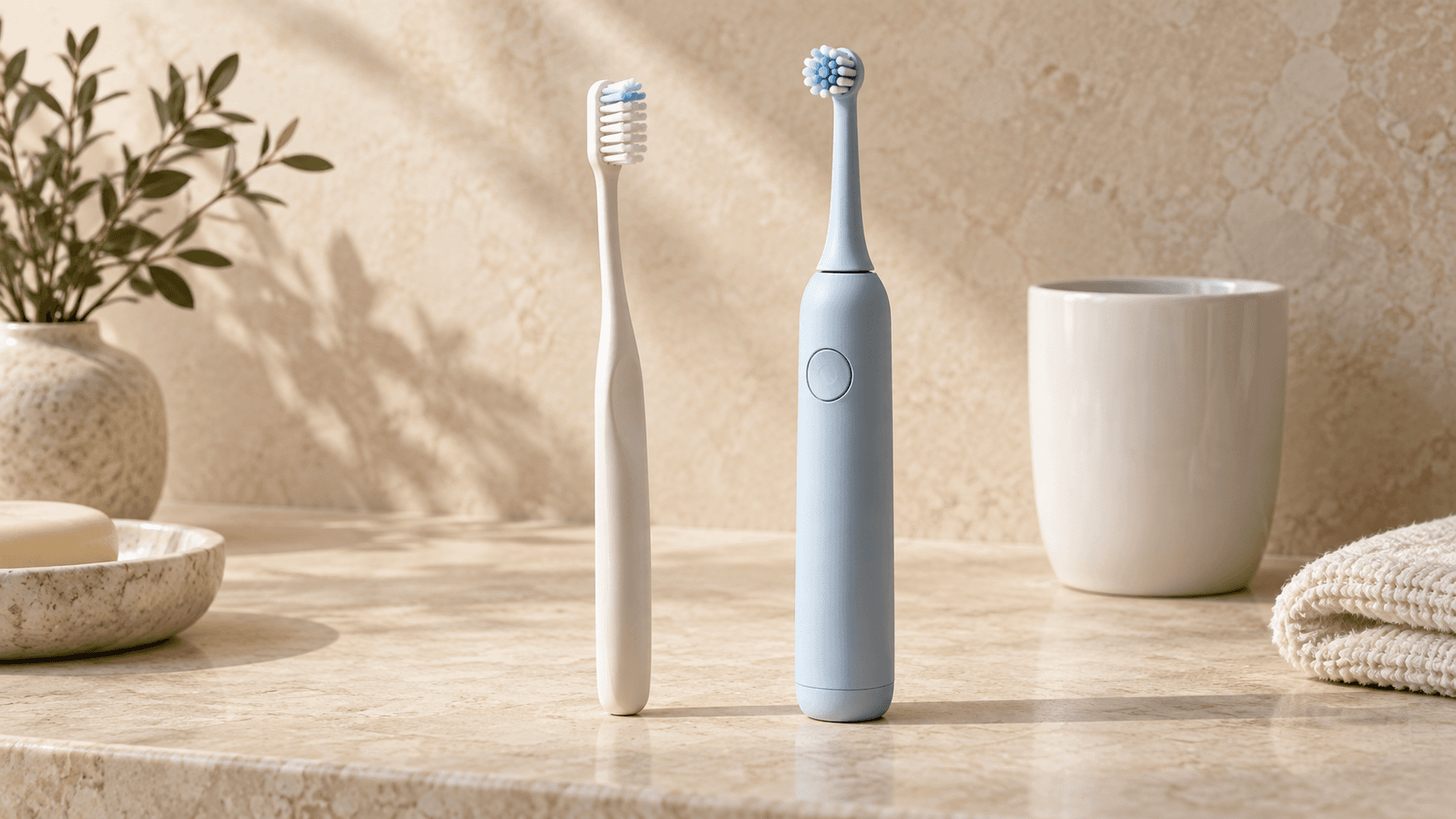
Both options can clean your teeth effectively. See how ease of use, bristles, technique, and maintenance help you choose a brush for your routine.
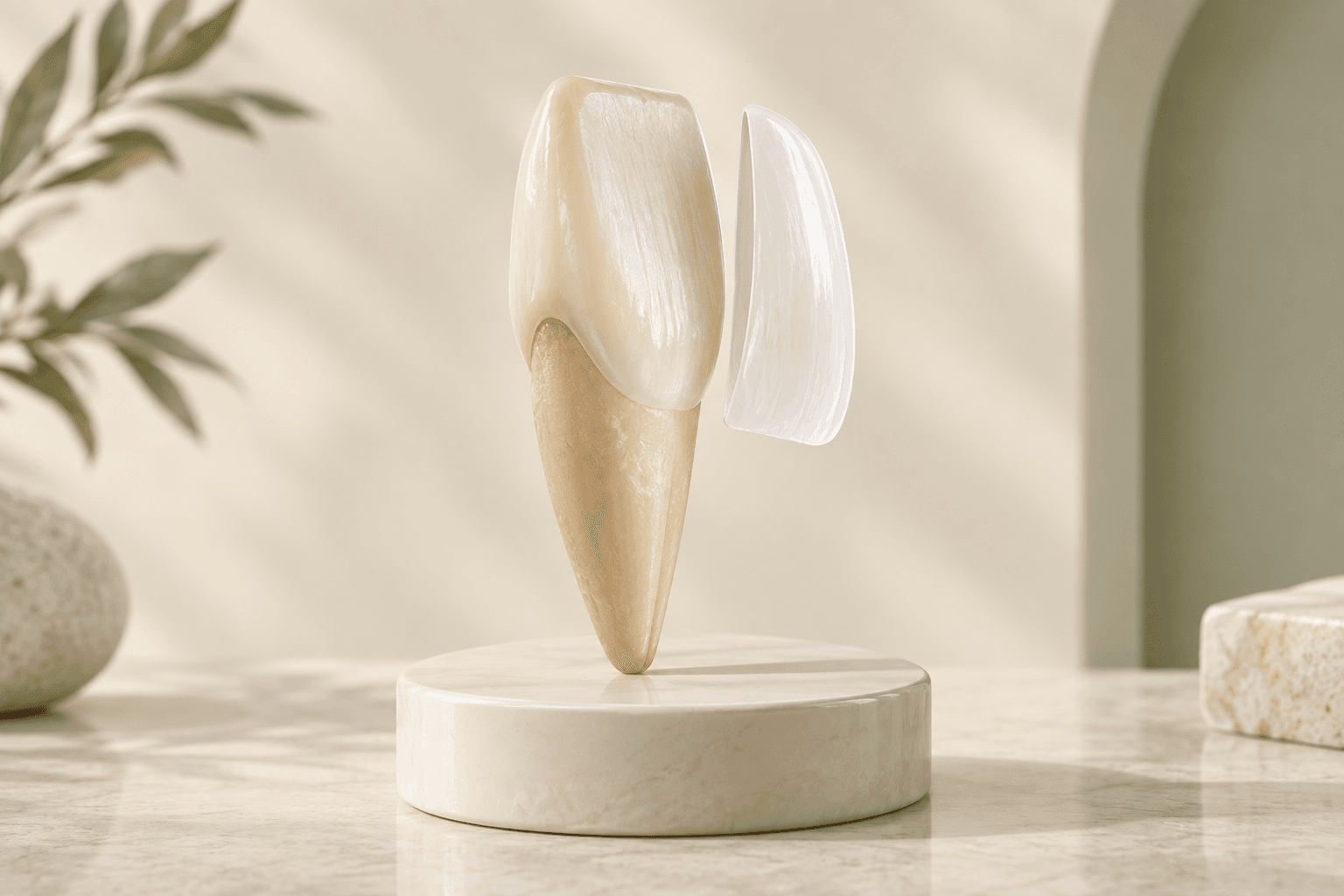
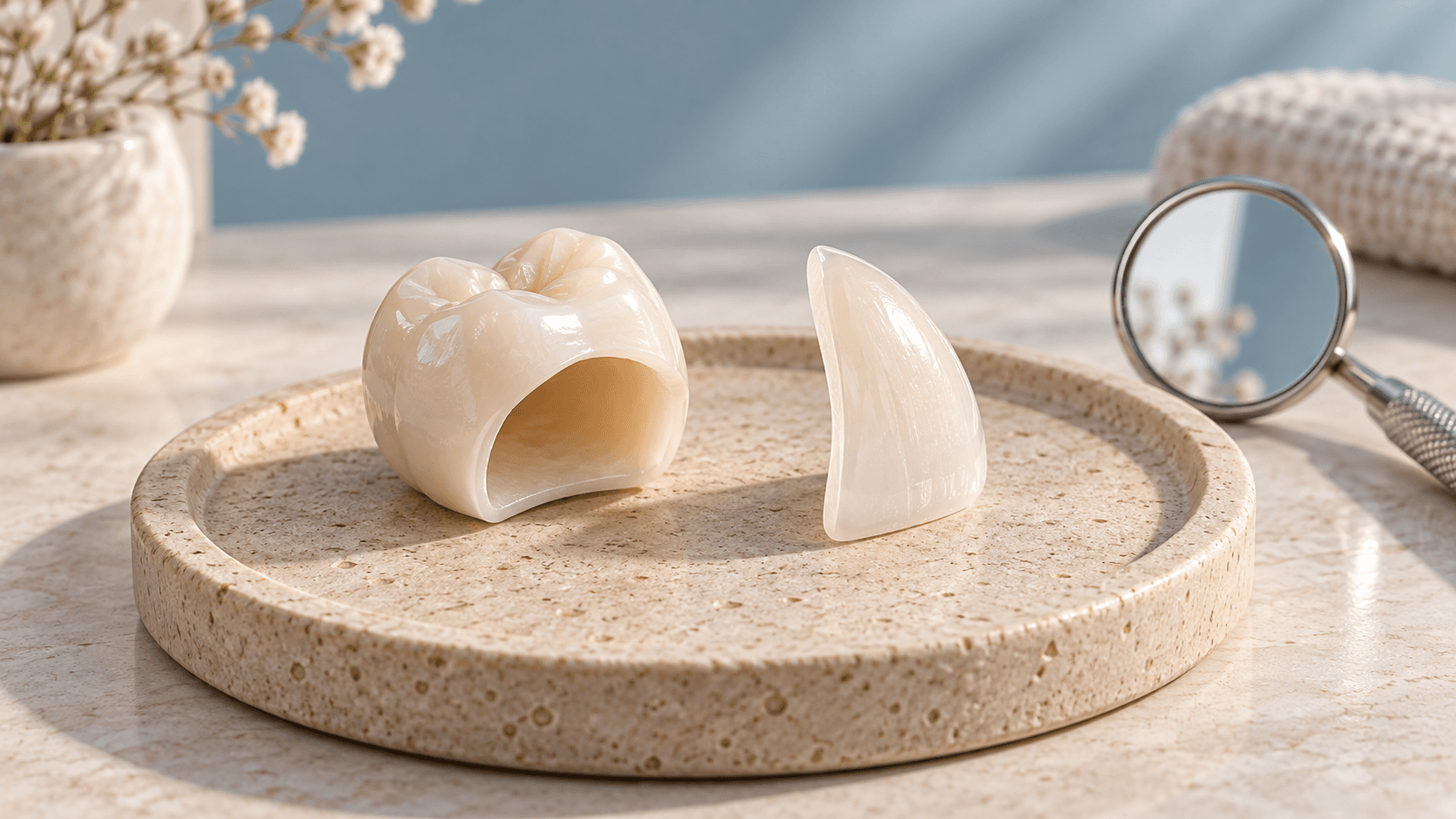
Crowns and veneers cover the tooth in different ways. Understand what changes in the purpose of the restoration and what questions to ask before deciding on treatment.
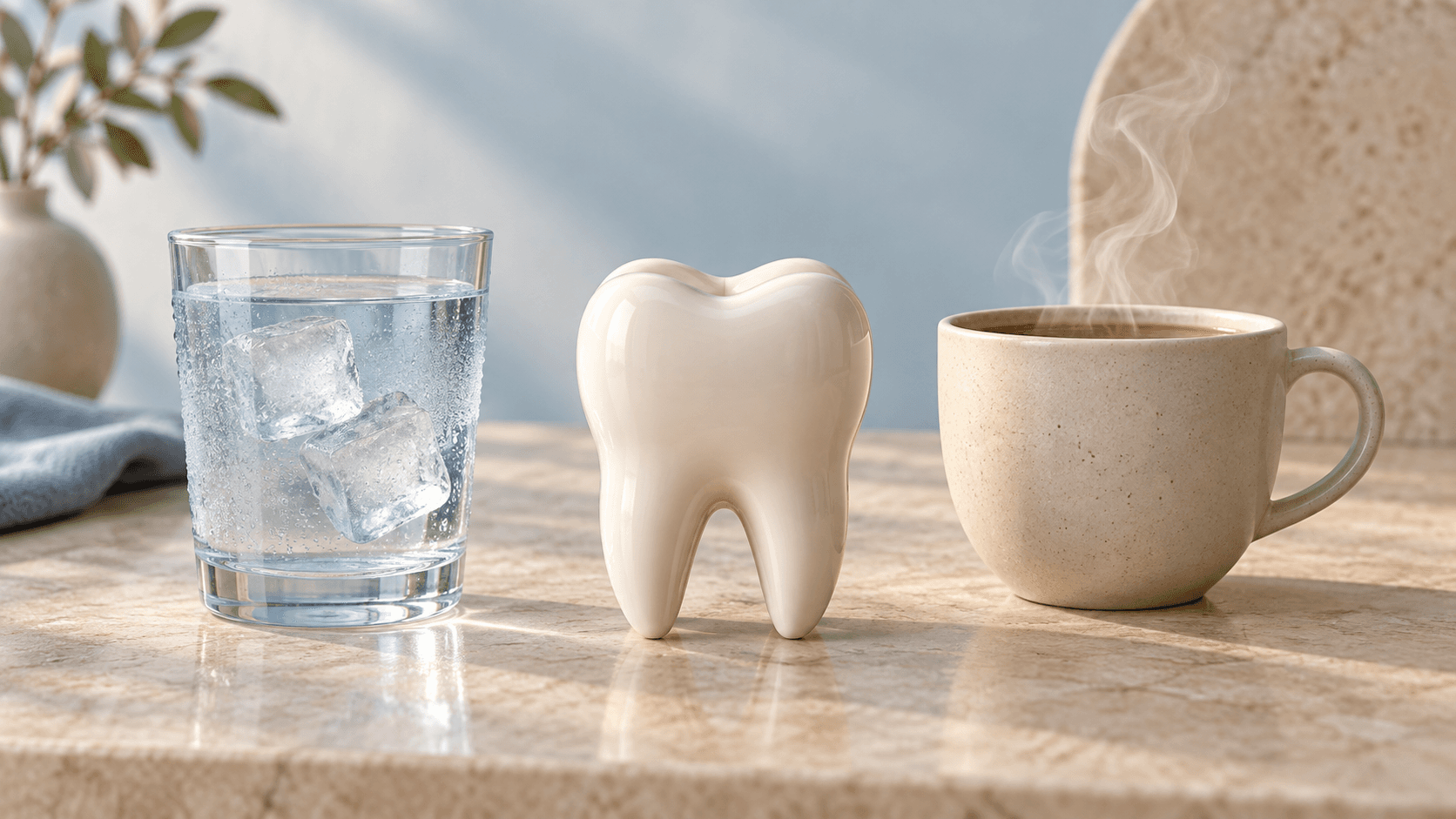
Pain with cold or hot drinks can have different causes. Understand the limits of the paste for sensitivity, what to report to the dentist, and what signs require attention.
Before removing a tooth, understand what to ask about root canal treatment, restoration, and alternatives. The individual evaluation defines the possibilities of preservation.
Mouthwash can bring freshness without solving the source of bad breath. Understand what to look for in hygiene, gums and dentures and when to seek evaluation.
Persistent dry mouth can interfere with eating and comfort with dentures. Know what to look out for, what information to bring to the consultation and the limits of home care.
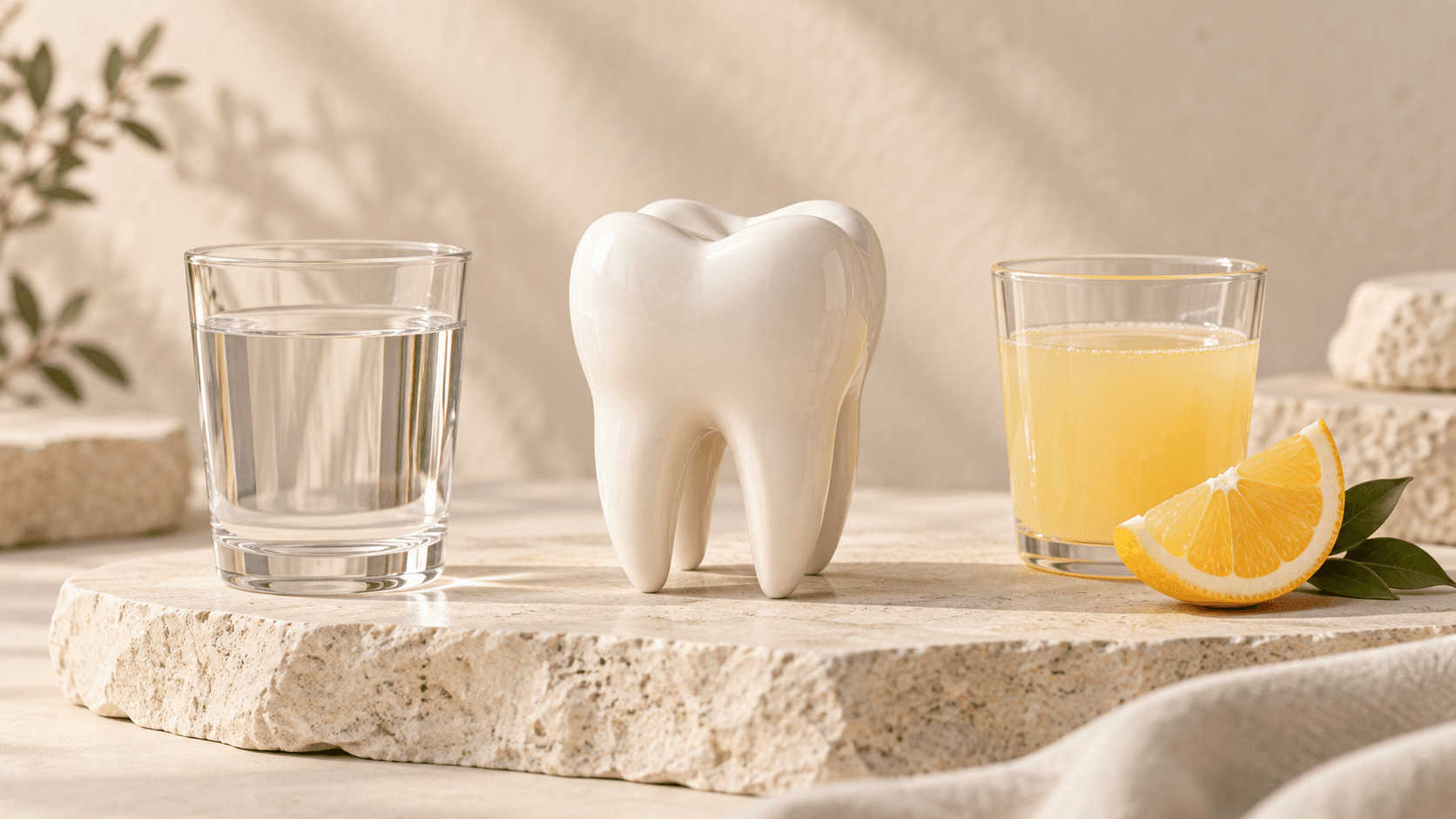
Dental erosion involves loss of structure due to the action of acids. Understand the possible sources, general care, and questions that help in dental evaluation.
Whitening acts on natural teeth, but does not change the color of resins and ceramics as if they were teeth. Understand the possible contrast and what to clarify in the consultation.
Understand, in clear language, why the volume and quality of the bone enter into the planning of the dental implant, what reference sources describe about bone grafting, and why only the clinical evaluation defines whether this step makes sense in your case.
Understand what "lasting" means in the dental implant: the pin (fixture) and the crown are different parts, which habits and maintenance influence longevity and when to return for evaluation — with no promise of a single deadline for everyone.
Understand the difference between peri-implant mucositis and peri-implantitis, which signs call for evaluation, and how prevention connects to dental implant hygiene and maintenance.
Immediate loading and conventional loading describe different timetables after implantation: early provisional versus waiting for osseointegration before permanent crown. See what educational sources explain — and why the choice is clinical.
Osseointegration is the phase in which the bone joins the dental implant before the definitive crown. Understand what the educational sources describe about the deadline, stages and care – and why the individual calendar only leaves the clinical evaluation.
After the implant, hygiene around the crown and gums remains part of the care. Understand what usually goes into the daily routine, the role of cleaning between the teeth, and when professional evaluation matters.
Bleeding when brushing or flossing deserves attention, even without pain. Understand the relationship with the gums, hygiene care and when to seek care.
Anyone who clenches or grinds their teeth needs to discuss this habit before placing porcelain veneers. Understand the signs, limits, and the role of planning.
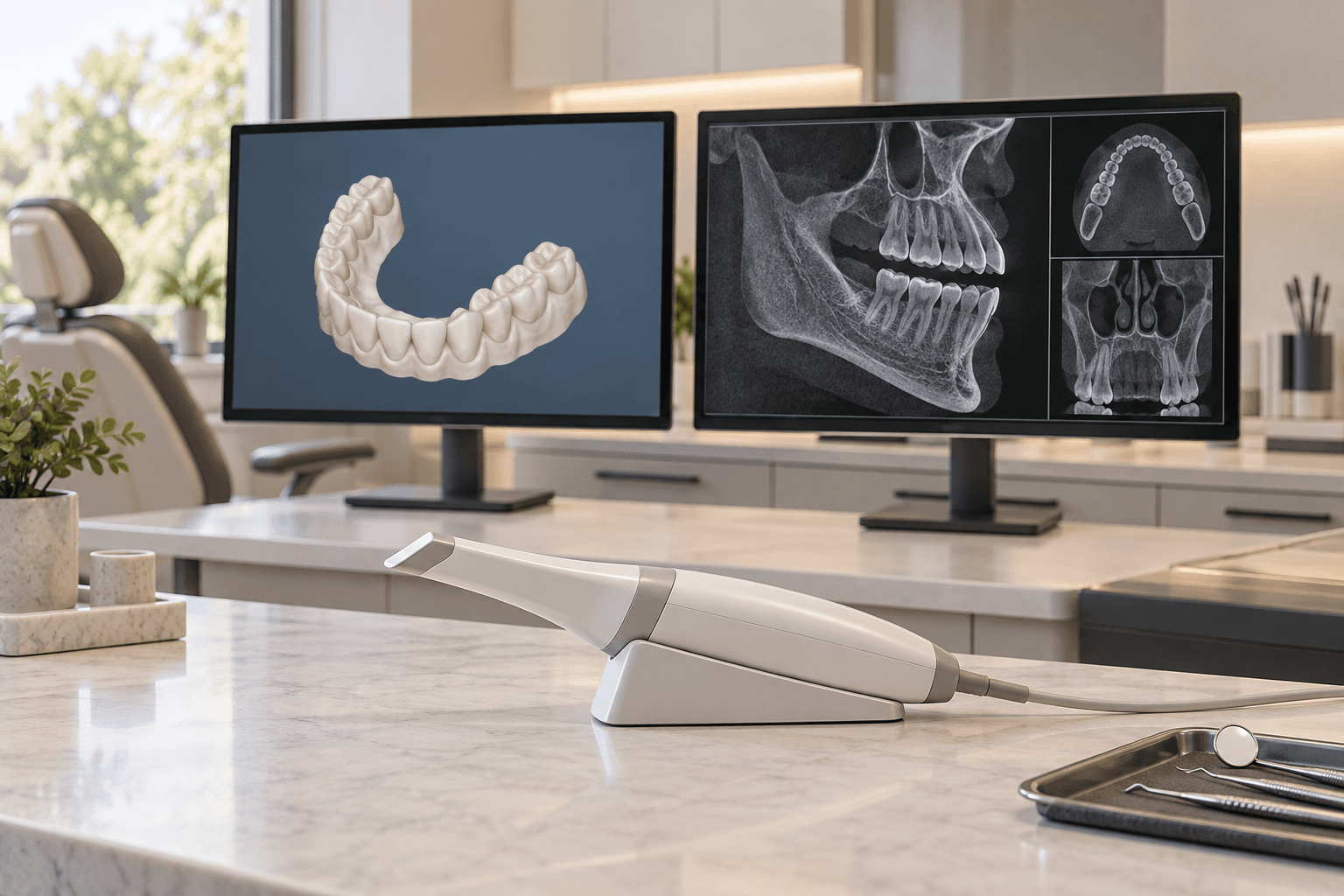
The scanner records the surface of the teeth; the CT scan shows internal structures in three dimensions. Learn why these features have different functions.
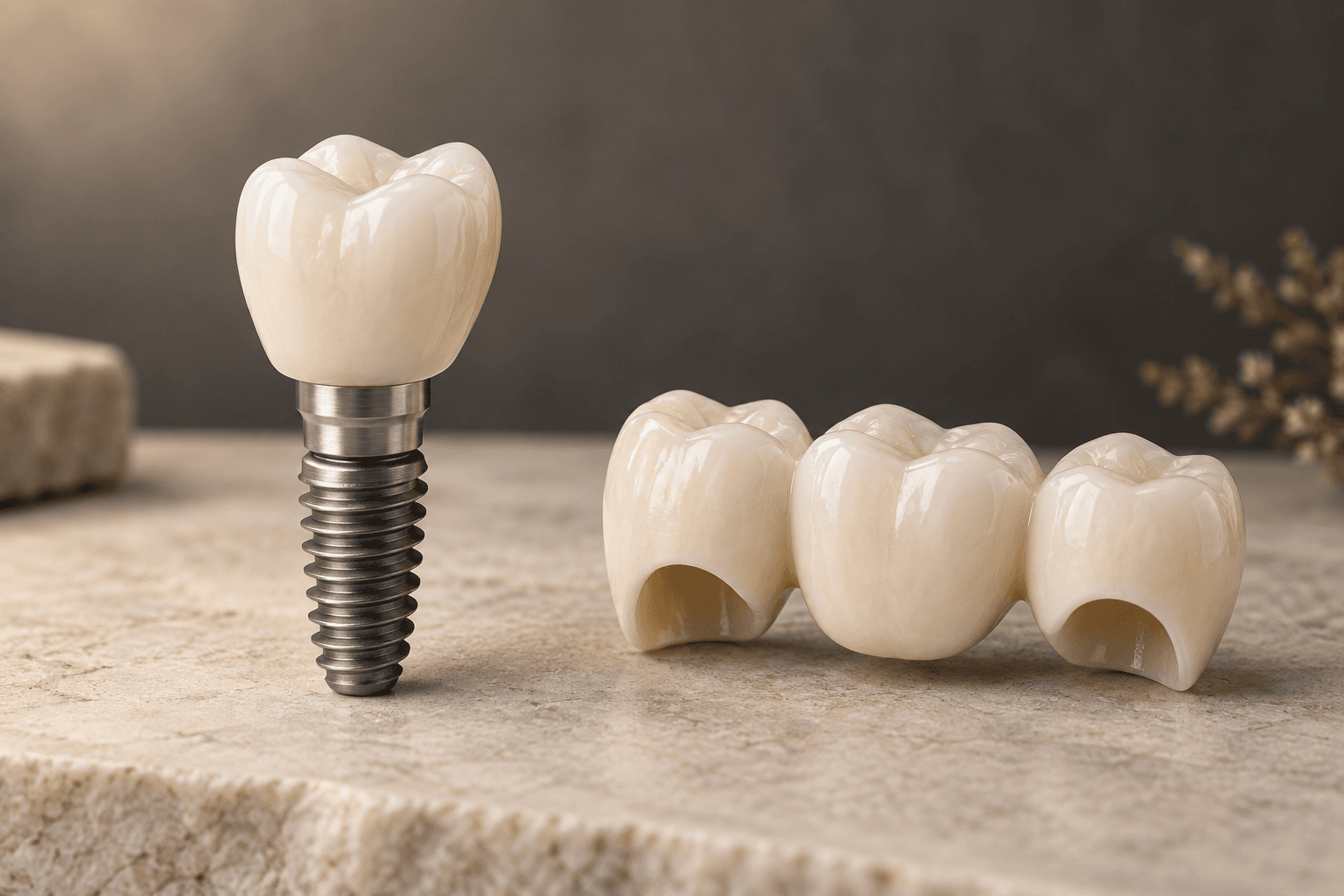
Implant and dental bridge have different supports, steps and care. Understand what to evaluate with the dentist before choosing how to replace a lost tooth.
Stains, rough edges, and small chips can appear on resin restorations. Learn what can be evaluated, when polishing or repair comes into discussion, and how to care for it without trying to correct it at home.
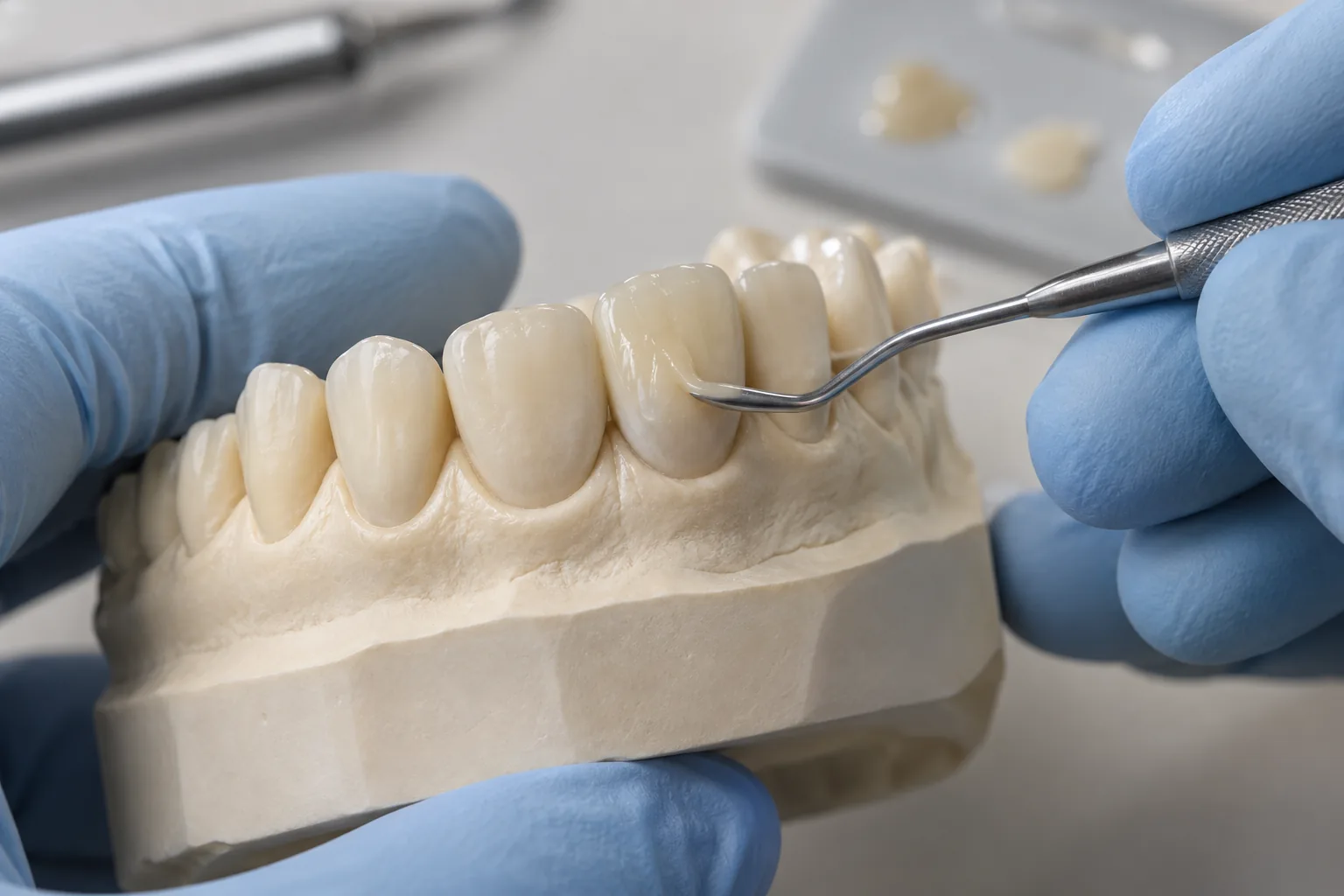
The direct resin veneer is sculpted over the tooth in consultation, after evaluation and planning. Understand the steps, what influences the result and what are the limits and care.
The durability of a porcelain veneer depends on the case, the execution and habits over time. See what the studies measure, what care helps and when to see the dentist.
Does a porcelain veneer always require wear? Understand why the preparation varies according to enamel, position, volume, bite, and restorative objective — and which conservative alternatives can be discussed in the evaluation.
Understand the differences between supervised and in-office home whitening, why dental evaluation comes before gel, and what evidence and the CFO advise on sensitivity and unsupervised products.
Implantation does not start with choosing a piece. Understand how general health, available bone, gums, bite, and expectations go into responsible planning.
A fixed prosthesis on implants involves surgery, prosthetic design, hygiene, speech, chewing and maintenance. See the questions that organize this decision.
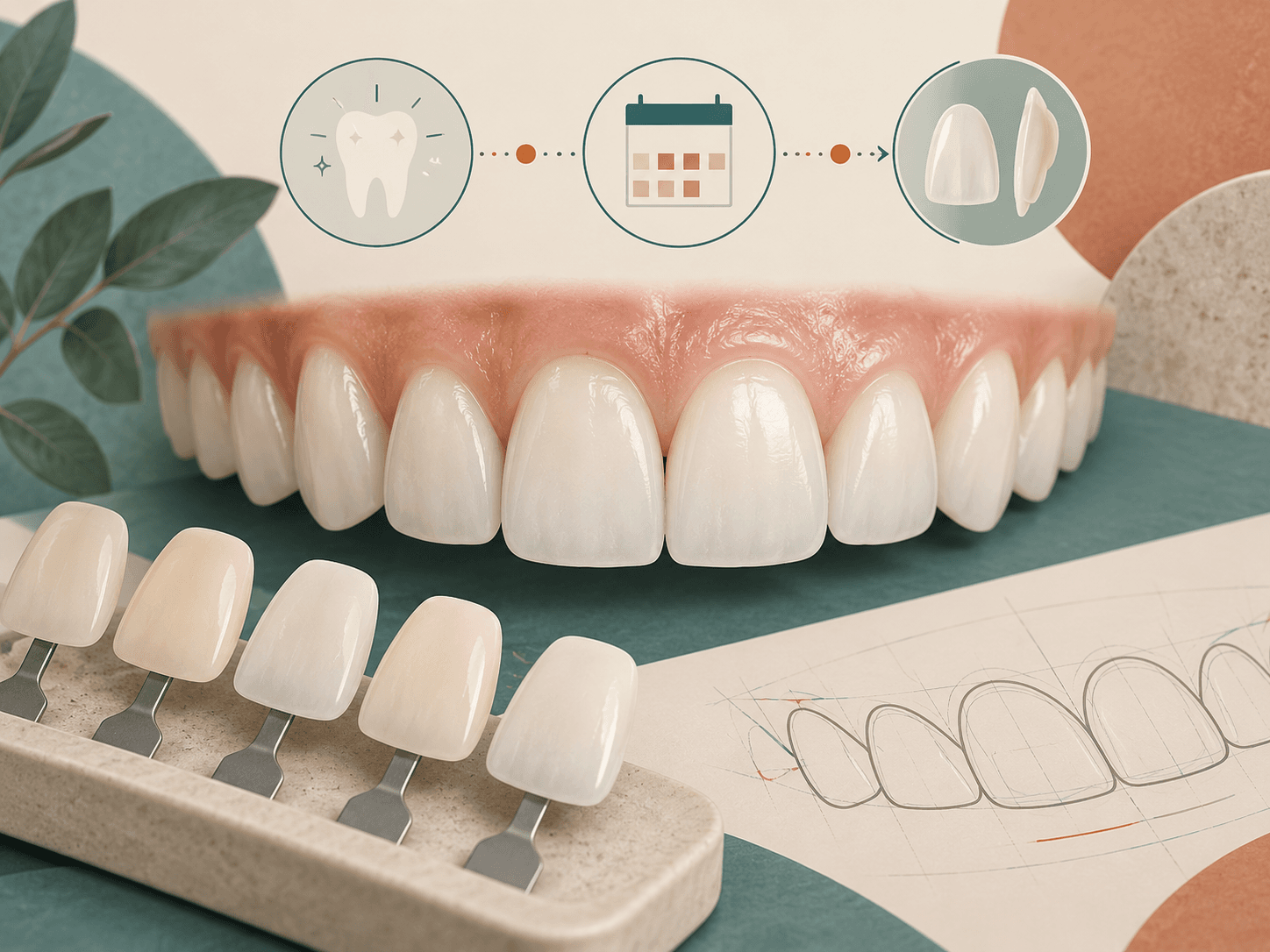
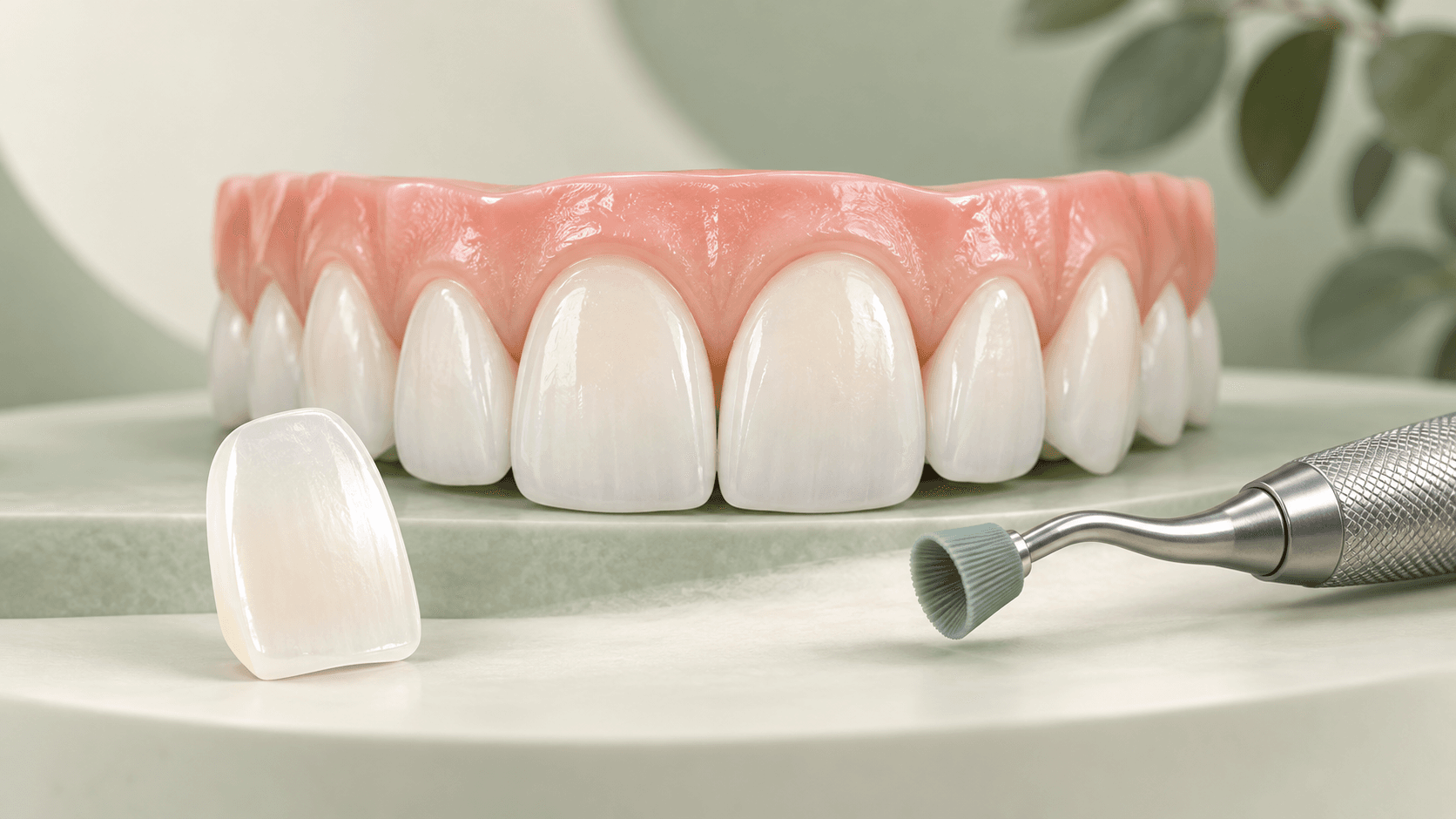
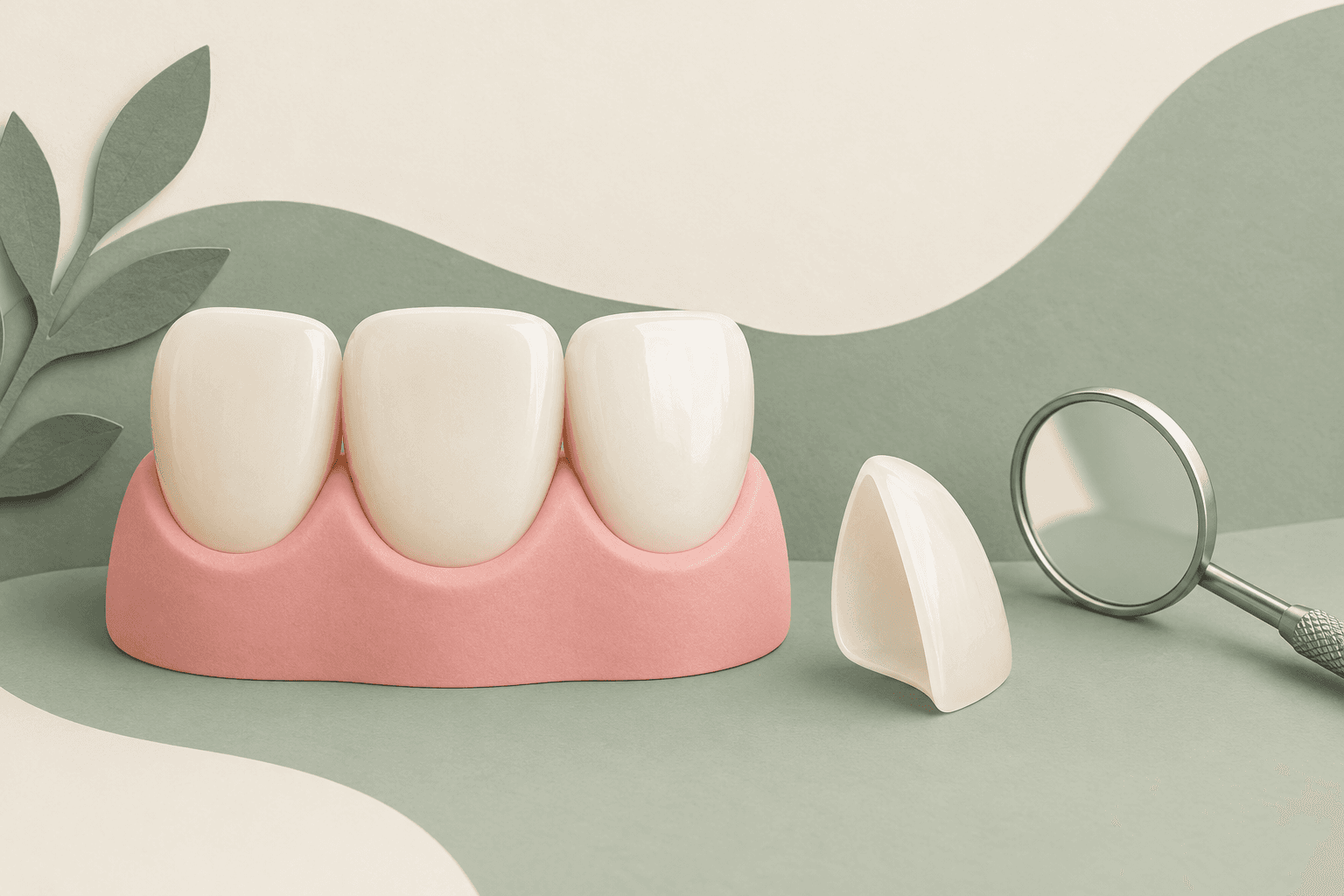
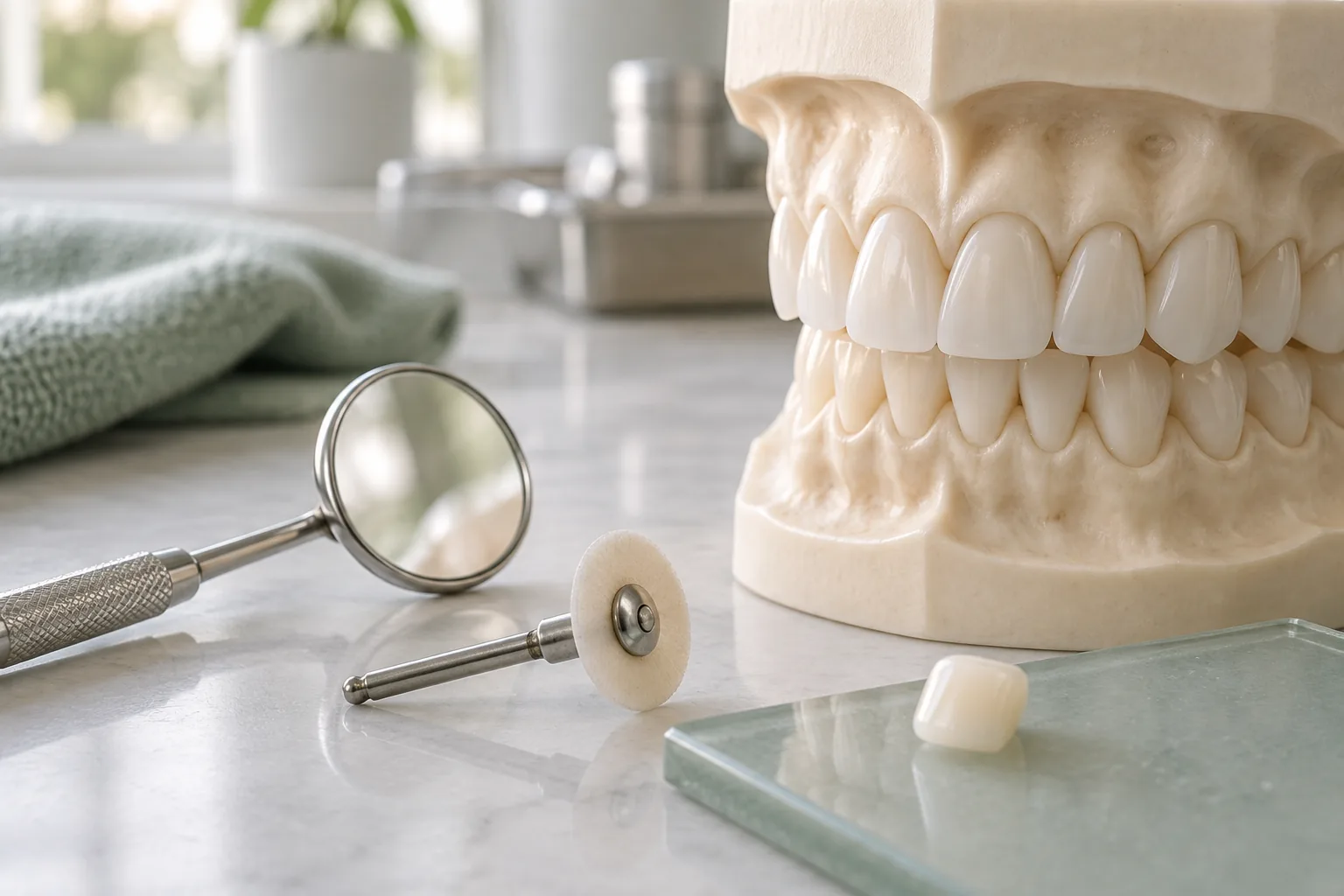
Before deciding on porcelain veneers, it is necessary to understand available enamel, bite, proportions, conservative alternatives, and future maintenance.