Smile aesthetics
Different bite after porcelain veneers: when to notify the dentist?
Understand what to report when the bite looks different after placing porcelain veneers and what signs require dental evaluation or emergency.
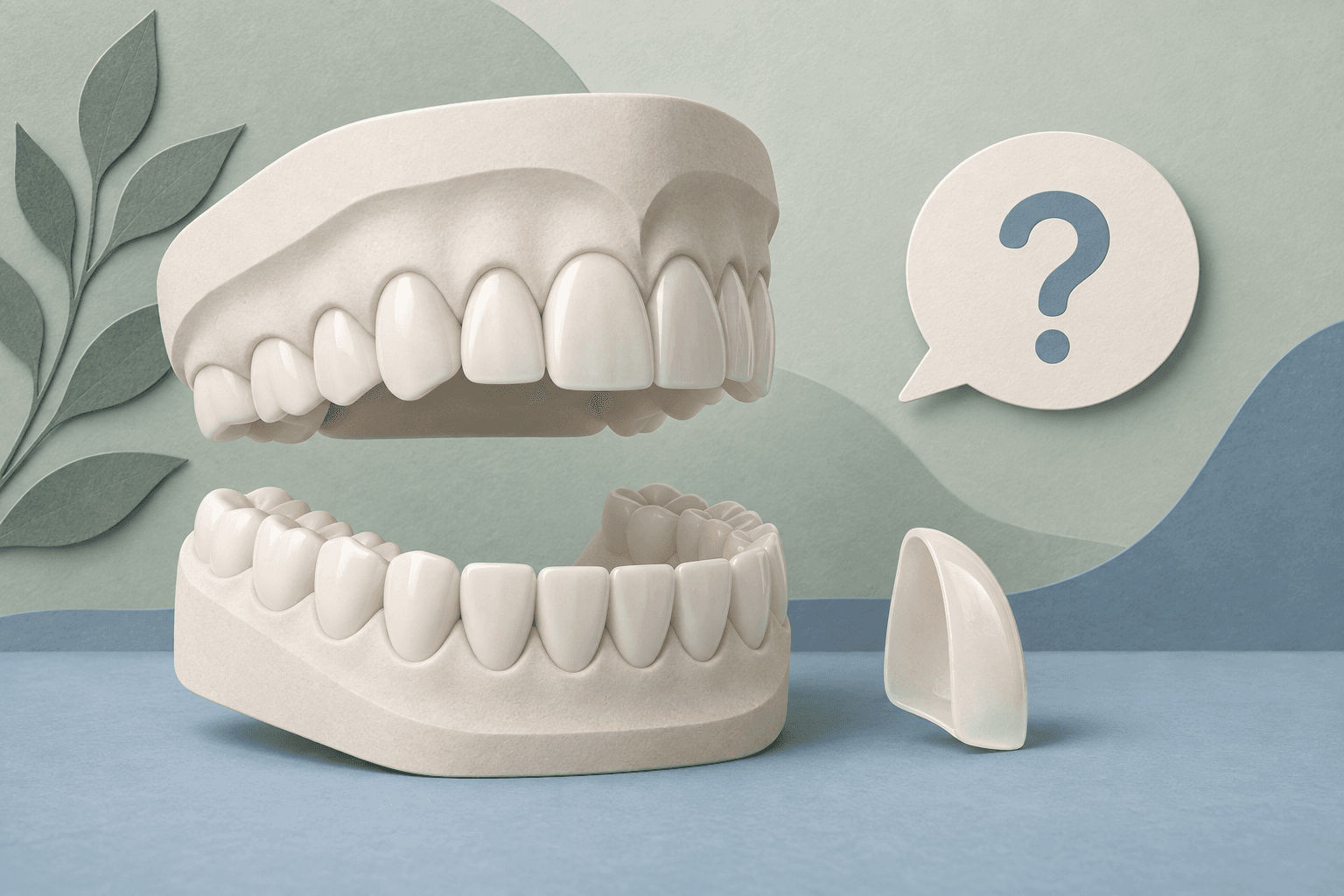
If the bite feels different or uncomfortable after placing porcelain veneers, let the dentist who performed the treatment know. The American Dental Association (ADA) recognizes that it can take a few days to get used to veneers, but advises communicating when the teeth fit doesn't look right. You don't have to wait for a routine return to report the change.
New sensation does not identify the cause
Noticing a new piece in the mouth and feeling that the teeth are not as they were before are reports that deserve to be differentiated in the consultation. The description helps to guide the evaluation, but does not allow us to conclude from a distance that the veneer is high, that it needs to be worn or that it should be changed.
The ADA describes the check of shape and adaptation before the fixation of the veneers. Still, if something bothers you after placement, contact with the professional remains important. The conduct depends on the examination; this text does not prescribe a specific adjustment.
How to explain discomfort to the dentist
- Tell when the sensation started and was gone shortly after the veneers were placed.
- Explain if the discomfort appears when closing the mouth, chewing or even at rest.
- Tell them where you notice the discomfort and if there is also pain, tenderness, or swelling.
- Count if the sensation is improving, worsening, or staying the same.
A simple message might be: "After the veneers were placed, I noticed that my bite was uncomfortable. This happens when chewing and started yesterday. How should I proceed to be evaluated?" The example serves to organize the report; it does not describe a real clinical case.
Pain and swelling change the priority of care
Pain when biting, fever, bad taste in the mouth or swelling in the cheek or jaw are all reasons to seek dental evaluation, as advised by the NHS. Toothache that lasts more than two days also requires evaluation. These signs should not be automatically attributed to the adaptation of veneers.
If there is swelling in the mouth or neck with difficulty breathing, swallowing or speaking, seek emergency care immediately. The NHS also recommends emergency when the pain is accompanied by swelling around the eye or neck.
Care while waiting for guidance
Do not attempt to file or modify veneers at home. Follow the instructions received for your treatment and contact the office. If there is tooth pain, the NHS advises soft foods and avoid chewing with a sore tooth while waiting for care; this does not solve the cause of the problem.
The CFO reinforces that the conservation of veneers and veneers depends on the guidelines of the dental surgeon and daily care. The natural tooth is still subject to problems: maintaining follow-up is not limited to checking the color and shine of the porcelain.
Sources and further reading
See below for original guidance and related articles. Educational content produced with AI-assistance, with no individual assessment or clinical review alleged.
Frequently asked questions
Doubts that help prepare the conversation.
Do I need to wait for the return to talk about the bite?
No. Contact us and report the sensation. The ADA advises to notify the dentist if the bite does not look correct after placing the veneers.
Does the different feel mean that the veneers need to be swapped?
The report alone does not determine this conduct. Evaluation is necessary to identify the problem and define what to do.
Traceability
Sources
- Veneers: adaptation and careAmerican Dental Association — MouthHealthy
- Toothache: symptoms and seeking care — review of 01/07/2024NHS
- Veneer and veneer care — 02/12/2025Federal Council of Dentistry — Rita Siqueira
- Further reading: loose or broken veneerBlog Dr. Rodolfo Segawa
- Further reading: provisional veneersBlog Dr. Rodolfo Segawa