Smile aesthetics
Does teeth whitening whiten resins, crowns and veneers?
Whitening acts on natural teeth, but does not change the color of resins and ceramics as if they were teeth. Understand the possible contrast and what to clarify in the consultation.
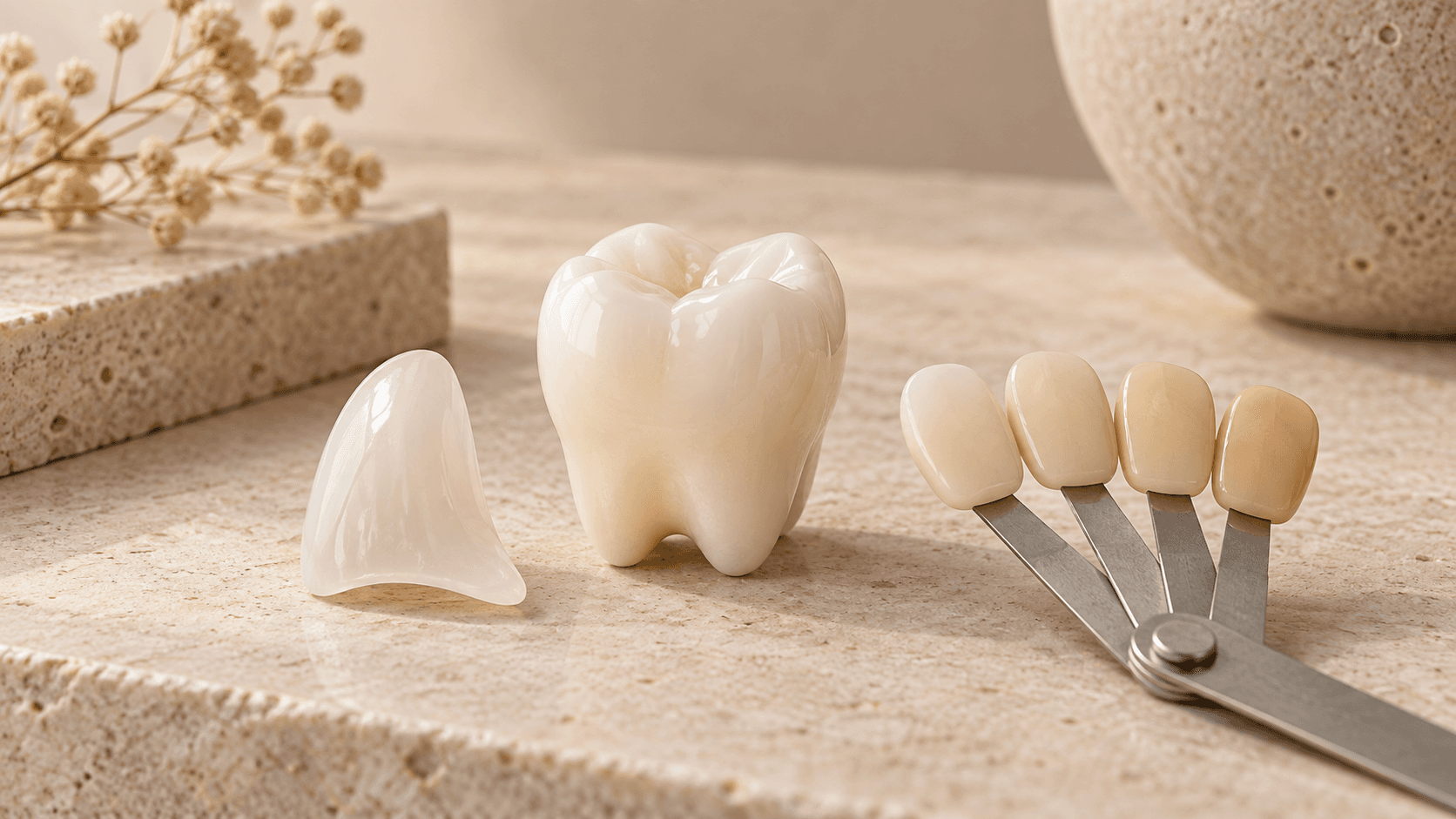
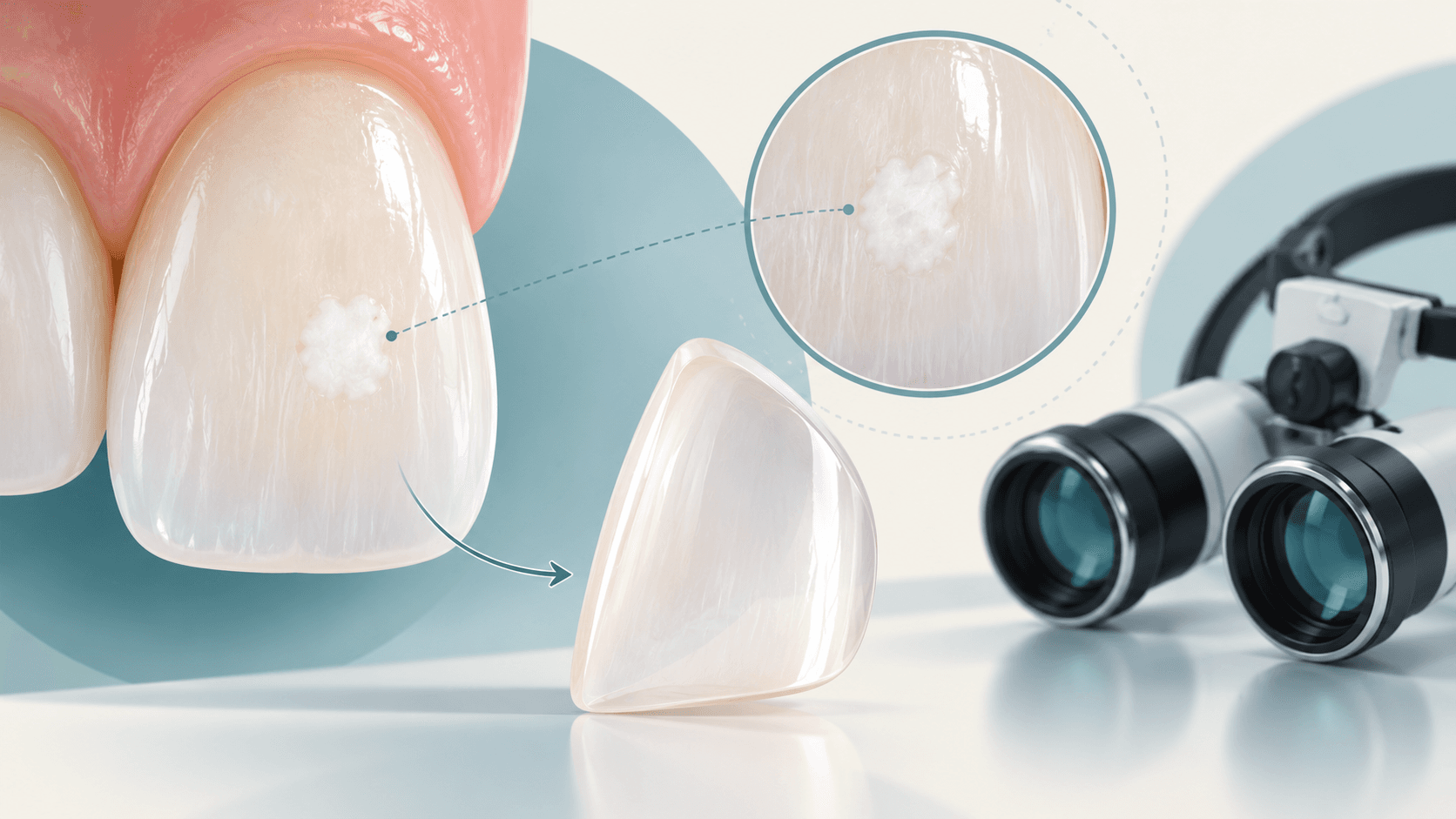
No. Teeth whitening does not whiten resin restorations, crowns or porcelain veneers as it whitens natural teeth. The American Dental Association (ADA) points out that this difference in response can create a contrast between the tooth and the restoration. Therefore, those who already have any of these materials should inform the dentist before starting treatment.
Why do the tooth and the filling respond differently?
The whitening agent acts on pigments present in the tooth structure. Resins and ceramics are restorative materials: they should not be expected to follow the change in color of the teeth. This is the distinction presented by the ADA in its guidance on whitening. If the question is to choose between techniques, the blog article "Home vs professional teeth whitening" addresses this comparison; here, the focus is on the coexistence between natural teeth and restorations.
What can happen to the appearance of the smile?
A restoration that today looks like neighboring teeth can become more evident if only the natural teeth whiten. This is a possibility of contrast, not a prediction of the individual result. Before starting, it is worth asking which teeth have resin or ceramic and what difference in shade would be acceptable to you. The existence of a restoration does not allow you to decide, through a text on the internet, whether whitening is indicated.
Are porcelain veneers and resin veneers the same thing?
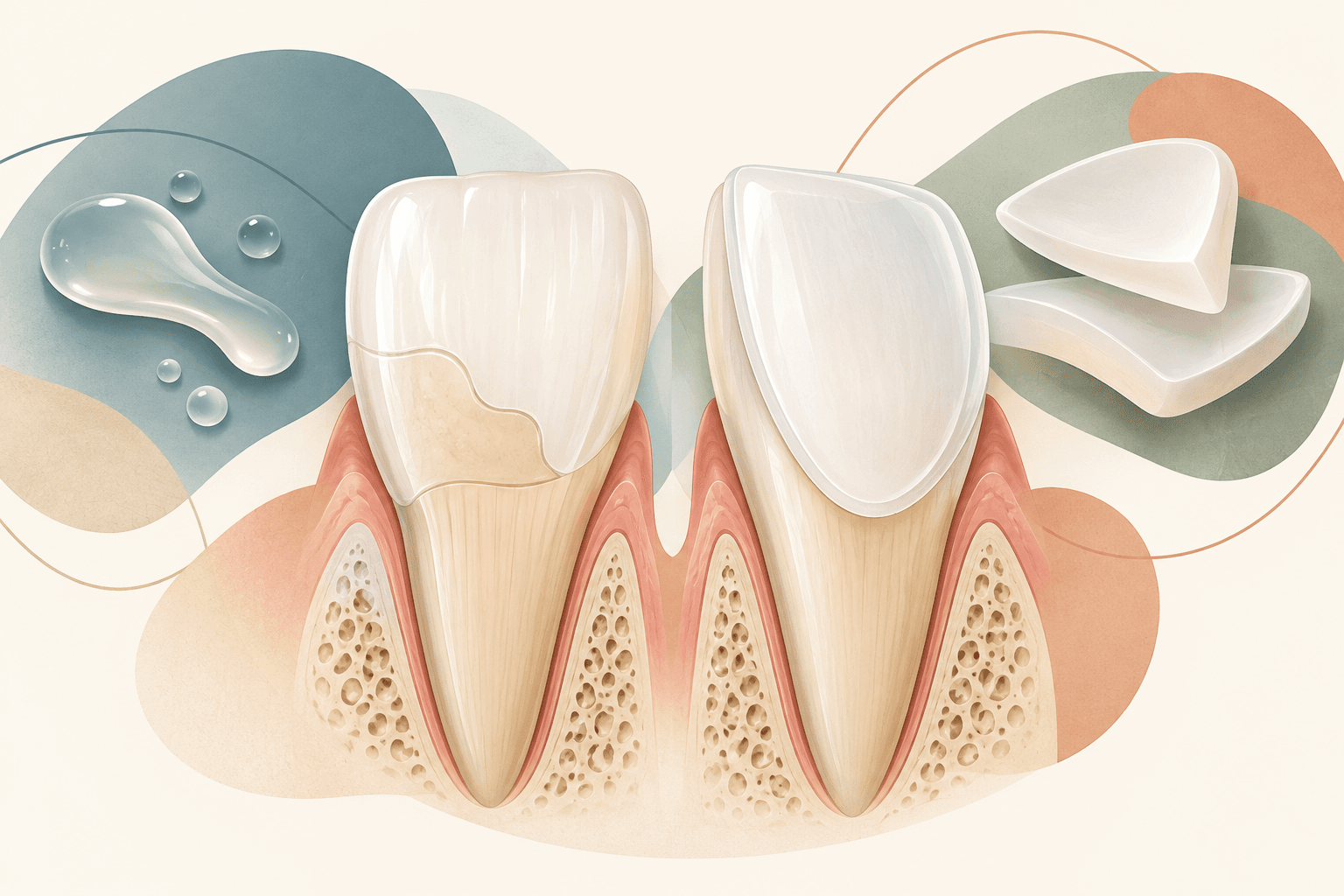
They are different materials. The ADA's guidance on veneers describes porcelain as a blade made to cover the face of the tooth; the resin veneer is constructed of restorative material adhered to the tooth. The choice involves more than color. If the discomfort is in an existing veneer, ask the dentist to identify the material and evaluate what is happening before deciding on any intervention. It is not possible to conclude from the appearance of a photograph that the entire piece needs to be replaced.
What to bring and ask in the consultation?
Write down which teeth bother you, if there has been whitening, and if there is sensitivity. If you have records of previous treatments, take them with you. Organize the conversation into four questions: Which parts of my smile are natural teeth and which are restorations? What can change color and what tends to stay the same? Are there any problems that need to be evaluated first? If contrast appears, what options can be discussed and what costs are not yet included? This script organizes expectations; it does not define a treatment plan.
Care before choosing a product
The NHS advises assessing the health of teeth and gums before whitening and informs that sensitivity and irritation may occur. Having a crown or veneer is not a reason to increase the amount or time of use of the gel on your own. Ask for individual guidance on the indication and use of the product. If there is discomfort, talk to the professional who accompanies the treatment. This content offers general information and does not prescribe technique, concentration or duration for your case.
Frequently asked questions
Doubts that help prepare the conversation.
If I already have a crown, do I need to change it to whiten my teeth?
This cannot be concluded without evaluation. Whitening does not change the color of the crown as it does that of natural teeth. Before starting, discuss the possible contrast and options for you; this article does not recommend replacing a filling.
Traceability
Sources
- Whitening — restorative materials and planning (accessed on 27/09/2026)American Dental Association
- Teeth whitening — evaluation and limits (accessed on 27/09/2026)NHS
- Veneers — differences between porcelain and resin (accessed on 27/09/2026)American Dental Association — MouthHealthy
- Further reading: At-Home vs Professional Teeth WhiteningBlog Dr. Rodolfo Segawa