Smile aesthetics
At-home vs professional teeth whitening: what to compare safely
Understand the differences between supervised and in-office home whitening, why dental evaluation comes before gel, and what evidence and the CFO advise on sensitivity and unsupervised products.
The most common question is not "which product lightens the most", but rather: which path – supervised home or in the office – makes sense after an evaluation of oral health, the cause of the darkening and realistic color expectations.
What changes between supervised caretaker and office
In general, supervised home whitening uses trays and gels in lower concentrations, with gradual action over days. In-office whitening uses more concentrated gels in shorter sessions. There is also the mixed protocol, which combines both. In all cases, professional guidance is the central point: the Federal Council of Dentistry (CFO) reinforces that the procedure involves chemical processes and must be indicated and monitored by a dental surgeon.
- Supervised homemade: more gradual action; personalized tray; rhythm and concentration defined by the professional.
- Office: shorter sessions with gel of higher concentration; face-to-face monitoring of the protocol.
- Mixed: combines an in-office stage with supervised continuity at home, when clinically appropriate.
Why the evaluation comes before the gel
Before discussing "home or office", it is necessary to understand if the mouth is in a condition to receive the whitening agent. Cavities, gingival inflammation, root exposure, restorations and prostheses (which do not whiten like the natural tooth), previous sensitivity, habits and medical history enter this conversation. The CFO points out that oral health in balance is a prerequisite and discourages homemade recipes or products purchased without guidance.
What whitening usually (and doesn't usually) change
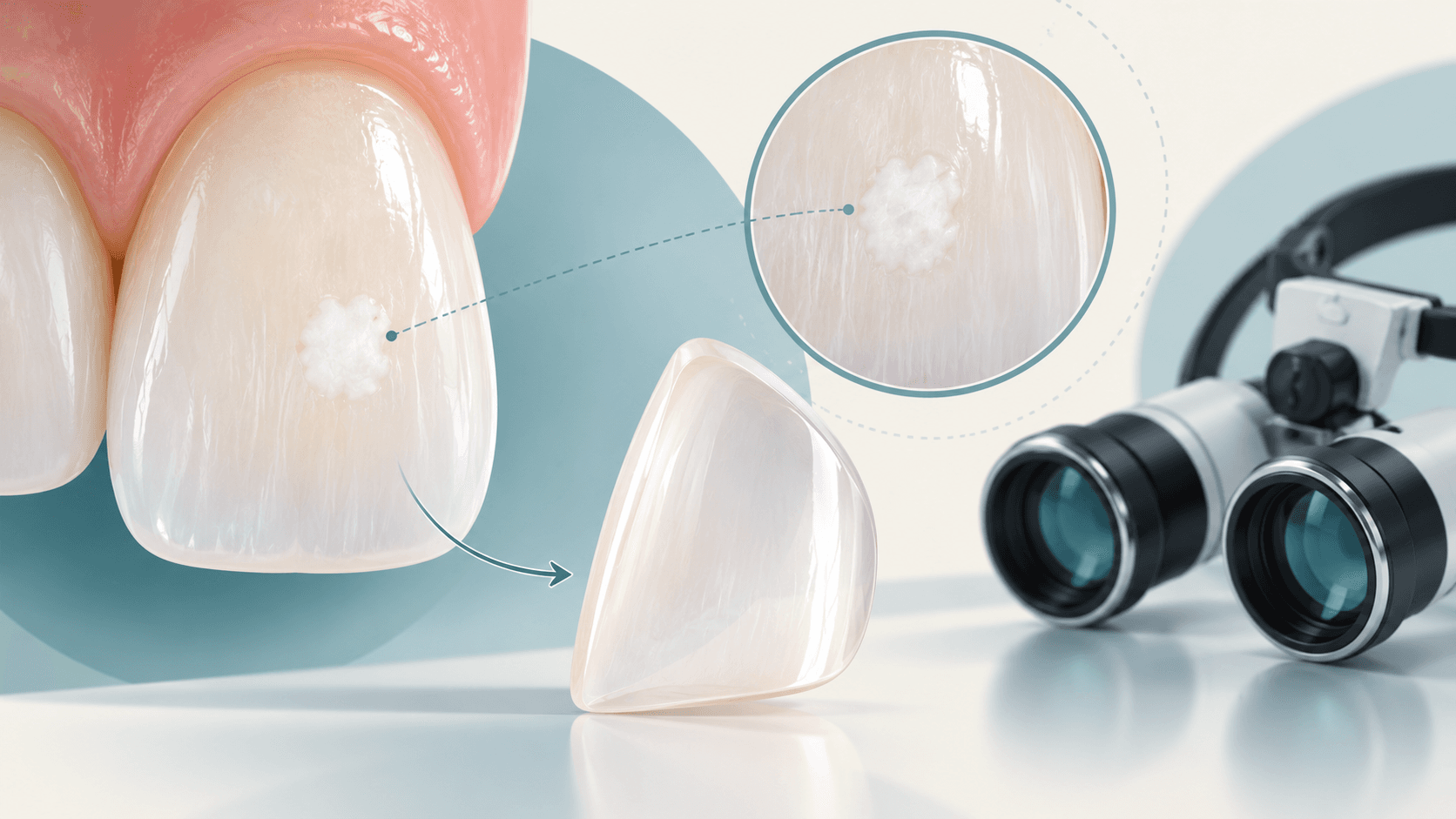
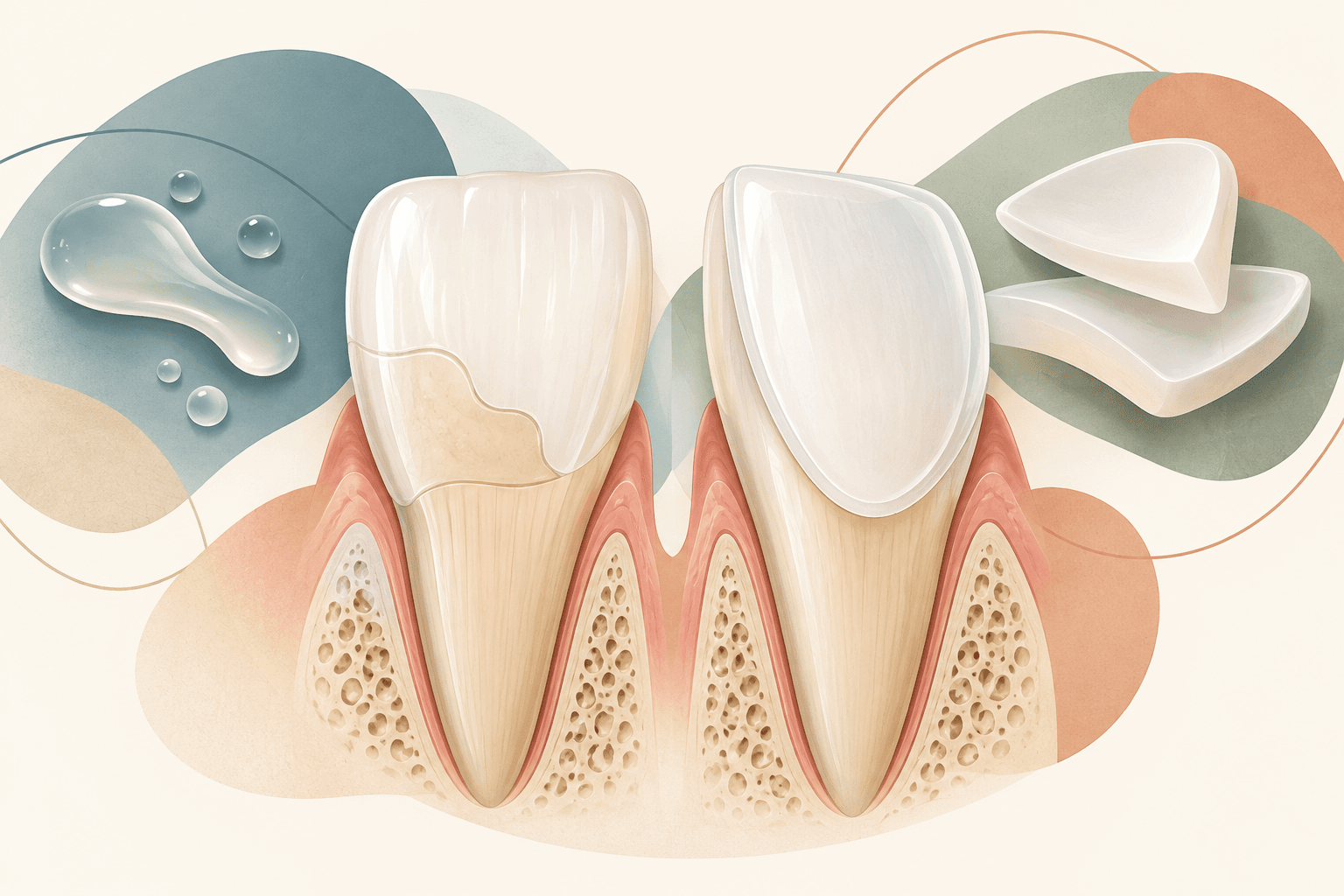
The expected effect is the reduction of pigments in the natural tooth, bringing it closer to a lighter shade within what the structure and history of that tooth allows. Restorations, crowns and veneers do not respond in the same way. It is also unrealistic to expect an "artificial blank" from edited images: the clinical goal is usually naturalness and harmony, not a promised single tone.
Sensitivity and irritation: what the evidence usually shows
Transient tooth sensitivity and gum irritation are among the most reported adverse effects of whitening. Reviews and clinical syntheses suggest that, in global comparison, supervised home and office can achieve similar color changes, and that sensitivity depends heavily on concentration, contact time, and protocol—not just the "place" where the gel is applied. The American Dental Association (ADA) describes sensitivity associated with whitening as typically mild and transient when use is appropriate, and reinforces the value of prior dental examination.
Unsupervised products and prescriptions increase the risk of damage to the gums and tooth structure; professional supervision exists to protect oral health, not just to "accelerate whitening".
Educational synthesis based on CFO guidelines
Over-the-counter products and homemade "tricks"
Off-the-shelf items, abrasive pastes, charcoal, and homemade mixtures often promise unattended whitening. In addition to variable effectiveness and often limited to surface stains, improper use can wear down enamel or irritate fabrics. The useful question is not "does it work on the internet?", but "was it evaluated for my case, with the right product and time?".
How to use this information in practice
- List what bothers you the most: blemishes, general tone, sensitivity, or disharmony with fillings.
- Take health history, medications and habits (coffee, tea, tobacco) to the consultation.
- Ask for clarification about what whitening can and cannot change in your smile.
- Discuss with the professional whether supervised home, office or mixed fits your context — without rushing for maximum results.
If your question also involves adhesive aesthetics, it is worth reading the content about [porcelain veneers](/blog/porcelain-veneers-conservative-decision) and the page of [porcelain veneers](/treatments/porcelain-veneers): whitening and laminates respond to different logic and, in some planning, the order of the procedures matters. To know the service structure, see the [units](/units).
Frequently asked questions
Doubts that help prepare the conversation.
Is supervised home whitening weaker than in-office whitening?
Not necessarily. Supervised home care is usually more gradual; in-office care uses higher concentrations in fewer sessions. Reviews point to color efficacy that is often similar when protocols are adequate; the choice depends on individual evaluation.
Can I use products from the internet or homemade recipes?
The CFO discourages homemade recipes and products without professional guidance, due to the risks to the gums and dental structure. Supervision exists to indicate if and how to whiten safely.
Do restorations and prostheses whiten together?
In general, not in the same way as the natural tooth. That is why prior evaluation and alignment of expectations are important in aesthetic planning.
Traceability
Sources
- CFO Clarifies: before teeth whitening, oral health must be in full balanceFederal Council of Dentistry (CFO)
- Whitening (Oral Health Topics)American Dental Association (ADA)
- Home-based chemical bleaching of teeth in adultsCochrane