Smile aesthetics
I have porcelain veneers: can oral piercing bring risks?
See why oral piercing contact deserves attention in the planning and maintenance of porcelain veneers, without treating ceramic as protection.
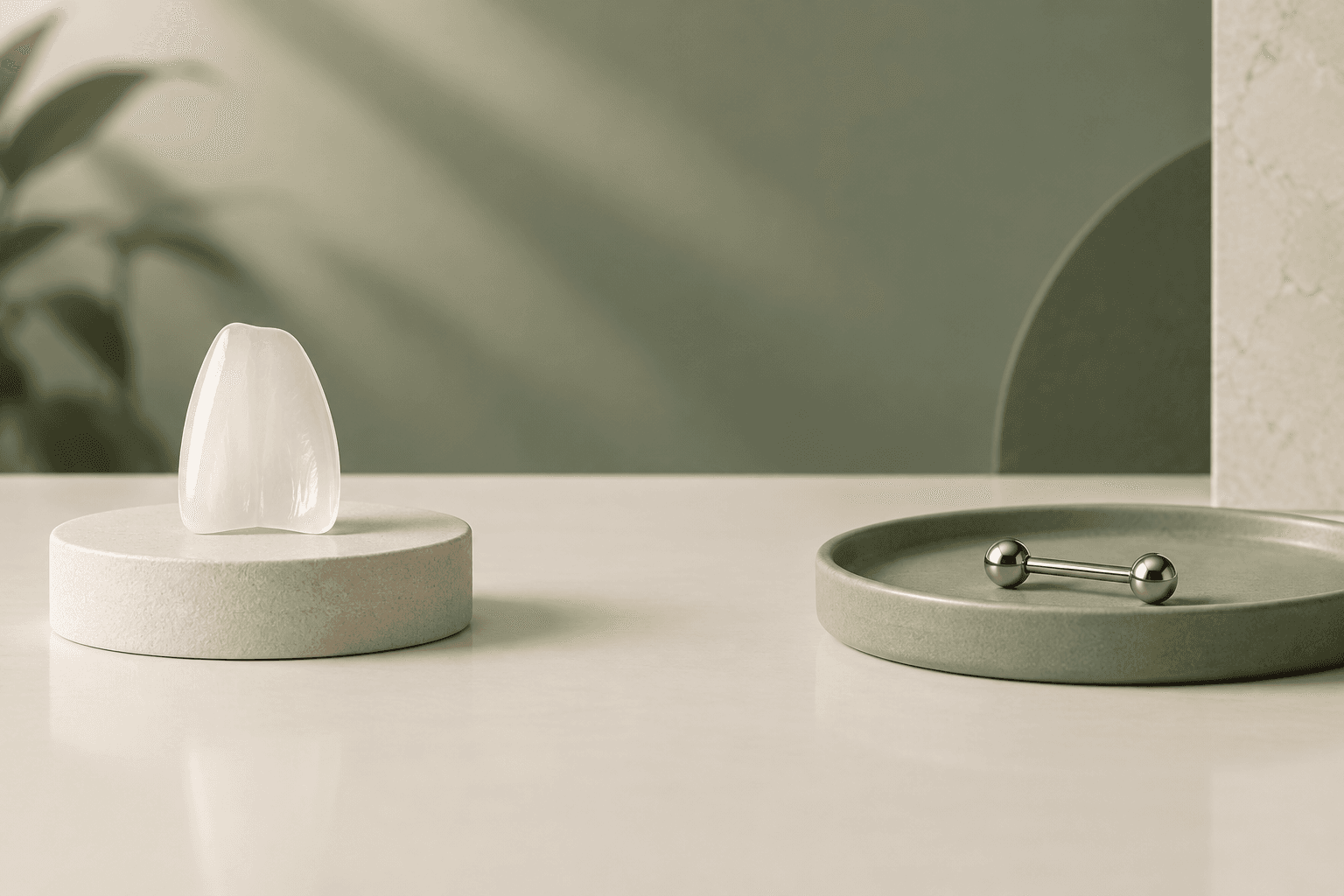
Those who have porcelain veneers should talk to their dentist about using a tongue or lip piercing. The American Dental Association (ADA) links oral piercings to damage to teeth, restorations, and fixed dentures. Ceramic should not be treated as a protection against jewelry contact, and the risk deserves attention when planning new veneers as well.
Why does this matter for veneer maintenance?
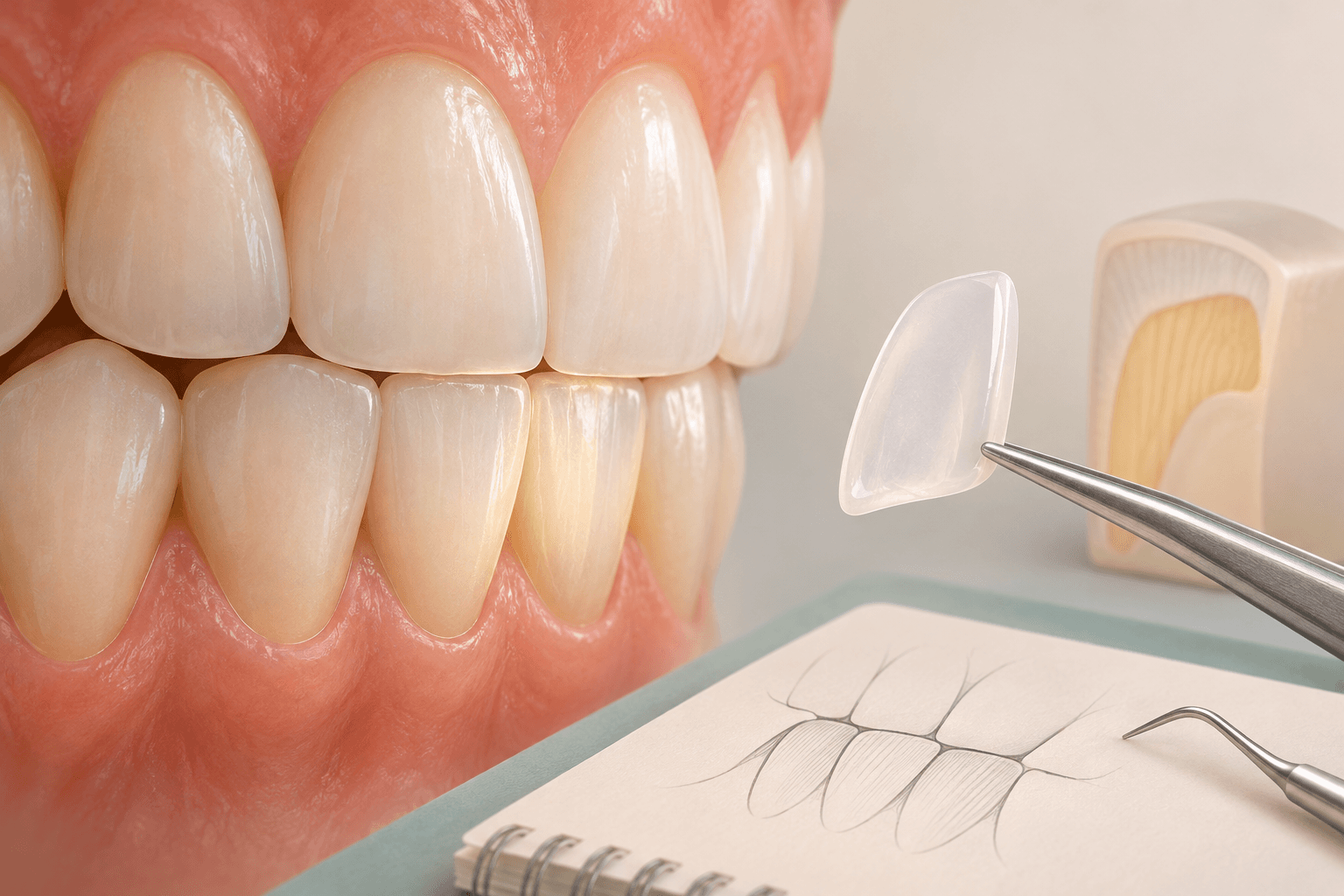
Veneers are custom covers of the front of the teeth. In the veneer material, the ADA reminds that they can chip, crack or come loose and need repair or replacement. The document on piercings, on the other hand, describes damage to restorations among the possible complications. Together, this information supports the care of jewelry impacts; it does not provide a specific risk percentage for each type of veneer.
Repeated contact should not become a habit
The ADA's public guidance warns that biting the piercing or repeatedly hitting the jewelry on the teeth can cause damage. For those who wear veneers, it is worth reporting to the dentist if this contact happens during speech, chewing or playing with the jewelry. Avoid provoking knocks to test if the porcelain can handle it.
What to clarify before adding new veneers
- Advise that you wear an oral piercing before approving the veneer plan.
- Tell them if the jewelry usually touches their teeth or if there has been any damage.
- Ask for an evaluation of your teeth, existing fillings, and gums.
- Discuss the ADA's recommendation to avoid oral piercings and the removal of jewelry with proper guidance.
The ADA advises against oral piercings for their possible negative health effects. This recommendation goes beyond the preservation of the ceramic. Therefore, choosing tougher veneers should not be presented as a way to make piercing safe.
If you notice a change in the veneer, seek evaluation
A chip, crack, or looseness needs to be examined to define proper care; the ADA predicts that veneers may need repair or replacement. Report contact with the jewelry, without assuming that it is the only possible cause. The article listed below details how to act when a veneer loosens or breaks.
Also do not ignore signs at the piercing site: the ADA advises immediate contact with a dentist or doctor if there is pain, swelling, fever or other signs of infection. This text is educational and does not estimate individual risk or determine what intervention will be necessary on your veneers.
Frequently asked questions
Doubts that help prepare the conversation.
Is there a percentage risk of veneer breakage from piercing in this article?
No. The sources describe damage to restorations by piercings and the possibility of fracture of the veneers, but do not allow us to calculate here an individual or specific probability for each ceramic.
Traceability
Sources
- Oral Piercing/Jewelry — complications in teeth and restorationsAmerican Dental Association (ADA)
- Oral Piercings — public orientationMouthHealthy / American Dental Association
- Veneers — fractures, repairs, and maintenanceAmerican Dental Association (ADA)
- Further reading: veneer loosened or brokeBlog Dr. Rodolfo Segawa