Smile aesthetics
Do porcelain veneers replace a missing tooth?
A porcelain veneer covers an existing tooth. Understand why masking a gap between teeth is different from replacing a tooth that has been lost.
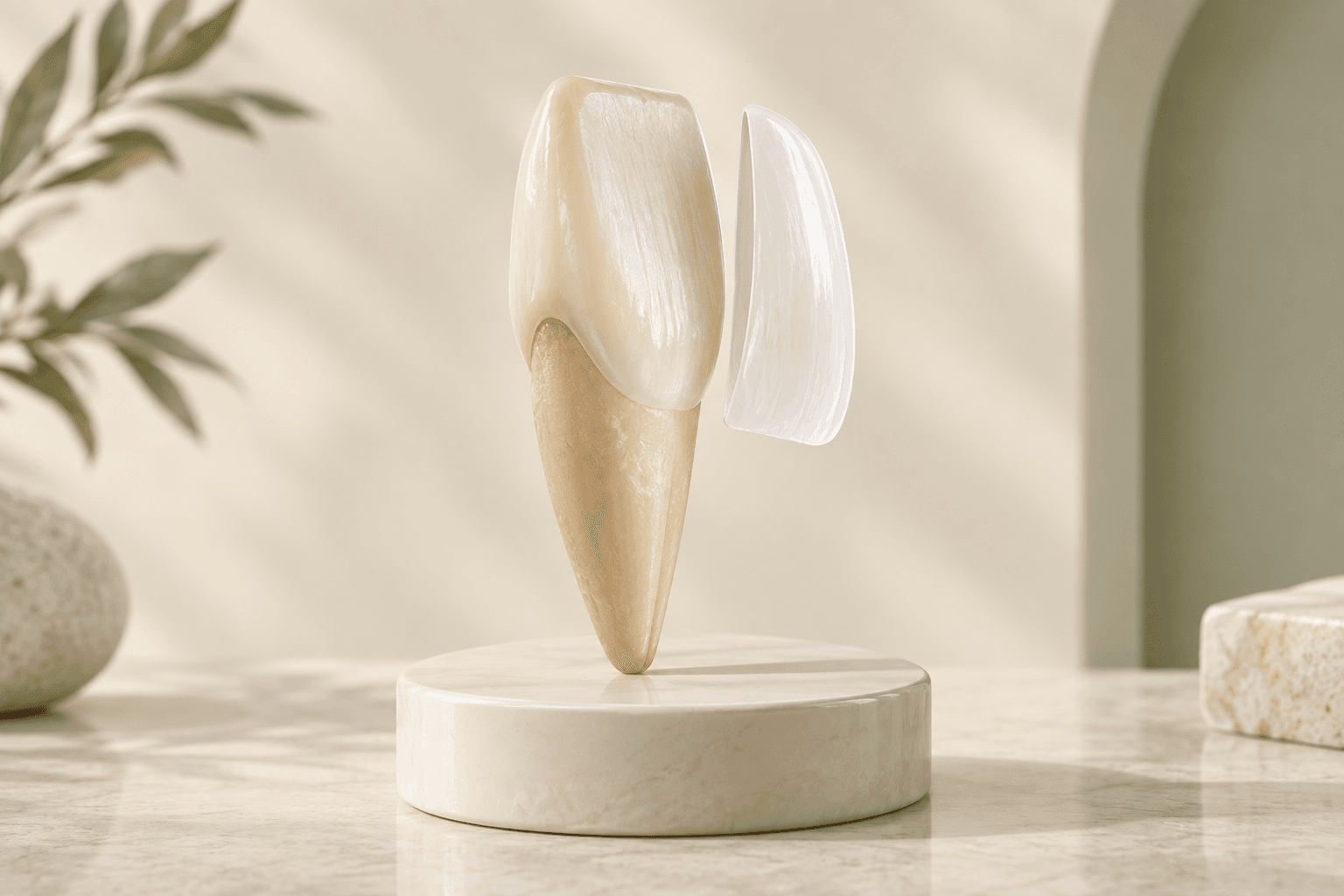
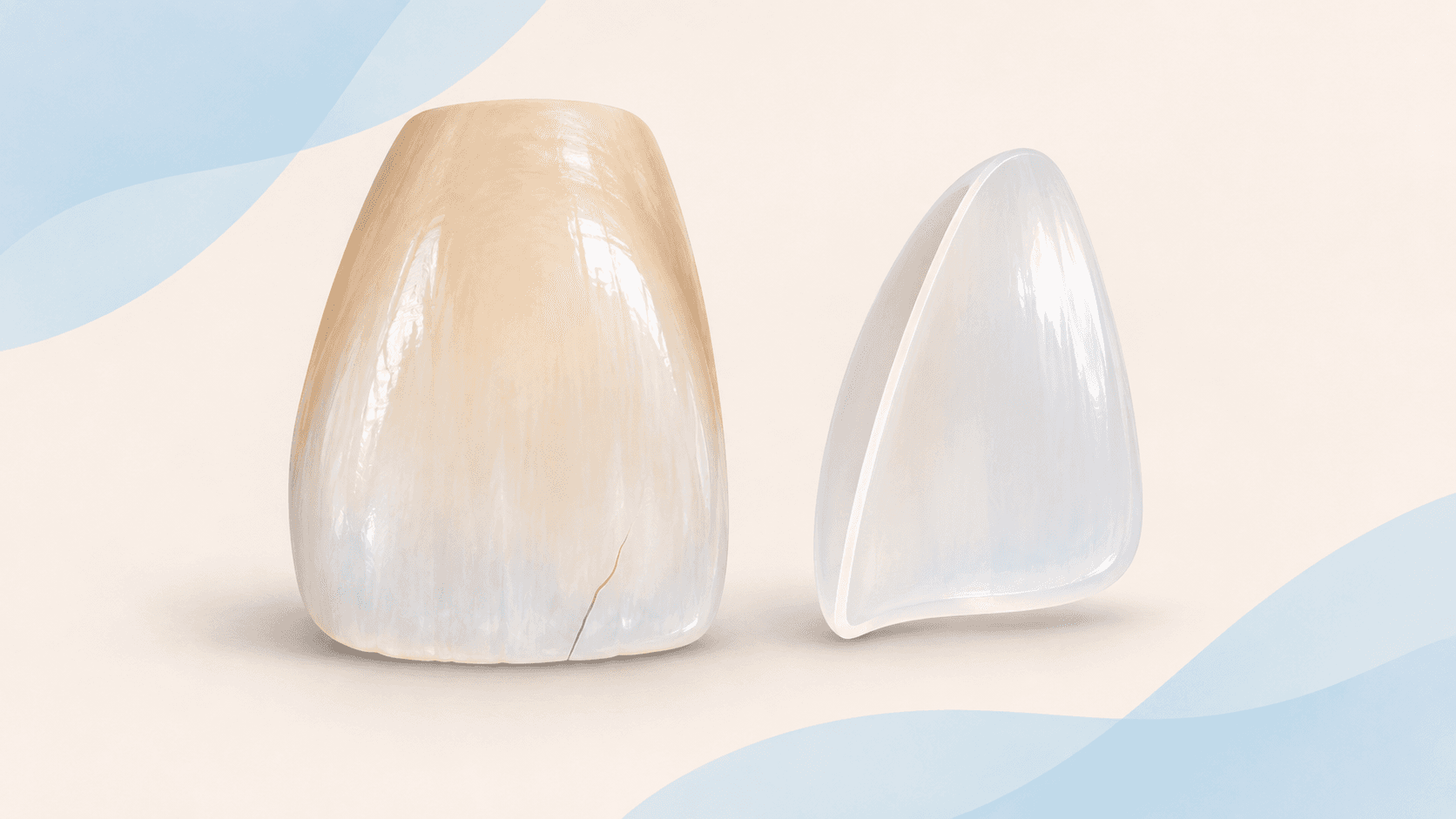
No. A porcelain veneer is a veneer attached to the surface of an existing tooth; it does not replace a missing tooth on its own. The American Dental Association (ADA) describes veneers as coverings of the anterior face of the teeth. When a tooth is missing, the conversation needs to include replacement alternatives, rather than just starting from a veneer proposal.
A space in the smile can represent different situations
The ADA informs that veneers can mask spaces between teeth. This is not equivalent to saying that the piece takes the place of an absent tooth. Two teeth present with an interval between them and a region where there was tooth loss are different situations. The popular name "smile failure" does not clarify which one is happening.
Before evaluating an aesthetic proposal, ask the dentist to identify the situation in your mouth. A photograph used as an appearance reference does not answer, by itself, which structures are present or what treatment may be indicated.
The veneer depends on the tooth that receives it
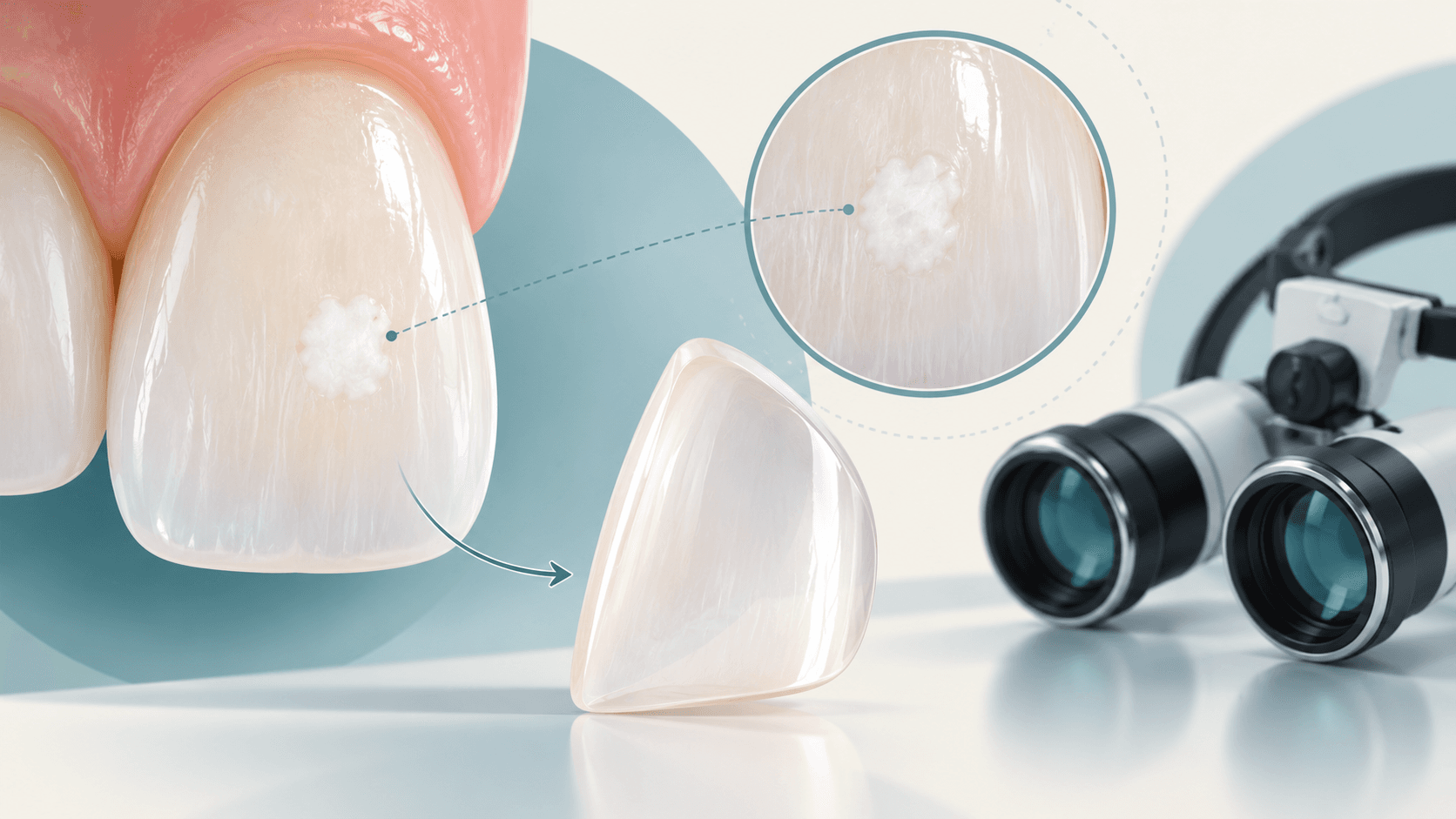
In the ADA's description, the porcelain veneer is a thin piece custom-made for the front of the tooth. This relationship helps to understand its limit: modifying the appearance of a tooth surface is a different task than replacing an element that is no longer there.
If a tooth is missing, the evaluation needs to consider replacement
In the material on missing teeth, the ADA presents bridges, prostheses and implants among the replacement options and advises discussing the choice with the dentist. The same material explains that absence can affect chewing or speech and that remaining teeth can change position. Therefore, the decision is not limited to the color that will appear on the smile.
This article does not indicate which of these alternatives is suitable for a specific person. Its purpose is to clarify why buying or planning "veneers" does not automatically respond to the need for a missing tooth. The comparison between implant and bridge is in the further reading below.
Questions that make the proposal clearer
- Is my discomfort a gap between teeth present or the absence of a tooth?
- Which teeth would receive veneers and what is the purpose in each one?
- If there is a missing tooth, what part of the plan addresses that absence?
- What alternatives will be evaluated before defining the aesthetic stage?
- How will the steps and their costs be described in the plan?
Request that the names of the procedures be accompanied by their purpose. This allows you to understand what is included in the proposal and avoids comparing different treatments just because they all promise to change the appearance of the smile.
Bring the right question to the consultation
If you're looking for veneers because you notice a "flaw," say exactly where it is and what you want to improve. Report if a tooth has been lost or extracted, and take previous exams if you have them. Individual evaluation will clarify the problem before choosing the material or technique.
In the sources and complementary readings, the texts on tooth replacement and veneers versus orthodontics delve into different decisions. Educational content prepared with AI assistance, without replacing consultation or promising an aesthetic result.
Frequently asked questions
Doubts that help prepare the conversation.
Is masking a space with veneers the same as replacing a tooth?
No. The veneer covers an existing tooth. A gap between present teeth and the absence of a tooth need to be differentiated in the evaluation.
If I have lost a tooth, do I necessarily need an implant?
It is not possible to define this over the internet. ADA presents different replacement options, and the choice requires individual evaluation.
Traceability
Sources
- Veneers — Definition and Boundaries of VeneersAmerican Dental Association (ADA) — MouthHealthy
- Missing Teeth — Missing Teeth Assessment and Replacement OptionsAmerican Dental Association (ADA) — MouthHealthy
- Do porcelain veneers replace orthodontic braces?Blog Dr. Rodolfo Segawa
- Dental implant or bridge: what to consider when replacing a tooth?Blog Dr. Rodolfo Segawa