Smile aesthetics
Interdental brush: how to choose the size without forcing the passage
The interdental brush must adapt to the space between the teeth. Understand why not to force the passage and what to ask the dentist when choosing the size.
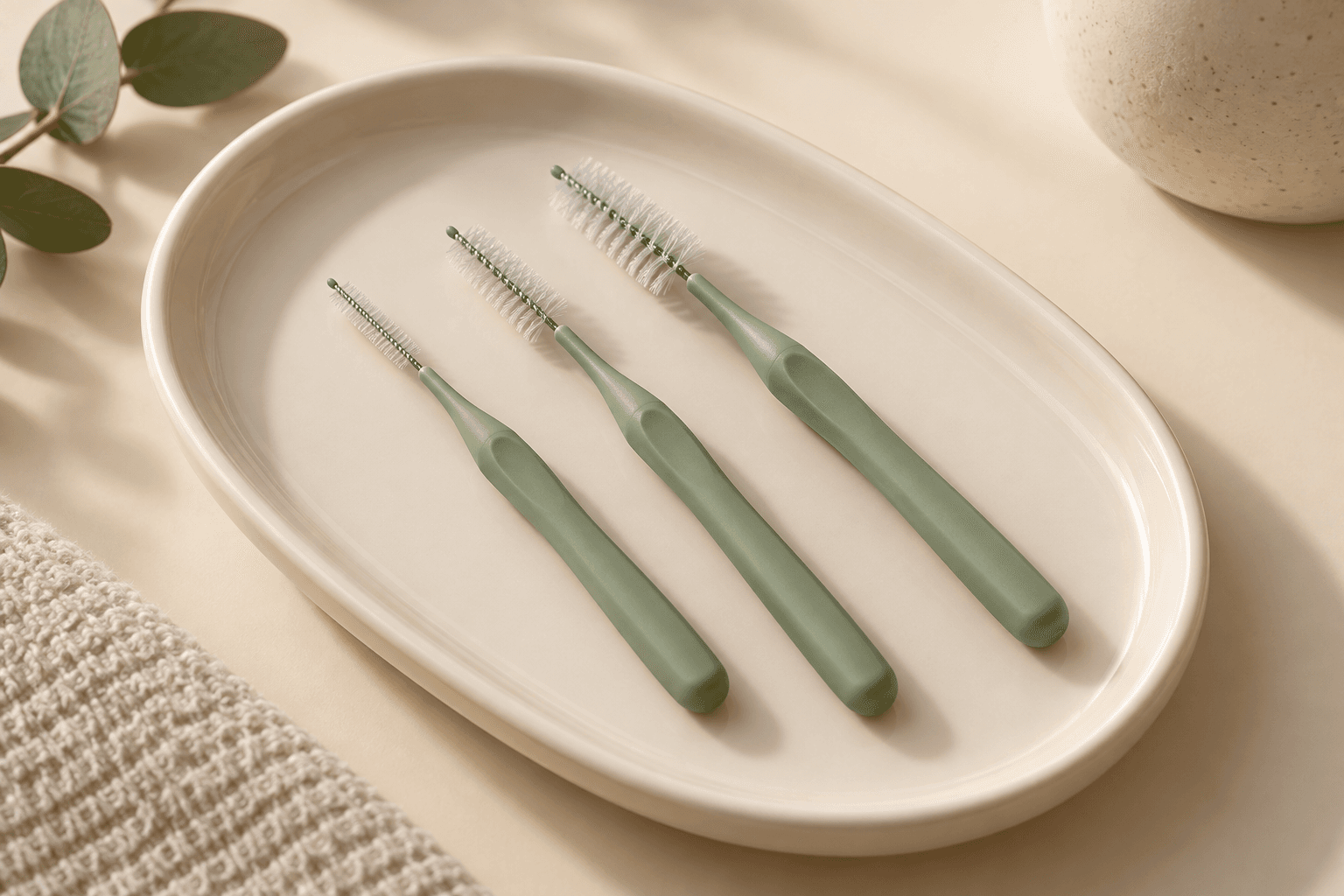
The interdental brush needs to adjust to the space between the teeth without being forced. The size should be guided by the dentist: if it does not fit gently, do not try to overcome resistance by pushing harder. The choice of cleaning feature depends on the space available.
What is the interdental brush used for?
It is a small brush intended for cleaning between the teeth. The NHS presents this feature as an alternative to dental floss, especially when there are spaces between the teeth. This does not mean abandoning brushing other surfaces with fluoride toothpaste.
How to choose the size?
The NHS advises that the brush be adjusted between your teeth. Dorset County Hospital, on the other hand, recommends using the size indicated by your dentist. A photo of the packaging or the appearance of the brush, alone, does not replace this orientation for your mouth.
What if the brush doesn't go through?
Do not force the passage. The guidance of Dorset County Hospital is to introduce the brush gently, as the use of force can hurt the gums. Ask the dentist to show you the resource and the way to clean that space; it is not necessary to insist on a brush that does not adapt.
What to ask for at the next appointment
- Show the brush you bought and say which spaces you have difficulty with.
- Ask for a demonstration of the fit and movement, so you can safely repeat it at home.
- Write down the indication received and confirm how to clean the places where this brush will not be used.
If there is pain, bleeding or a bruised area, report it to the dentist. These signs do not allow you to conclude, from a distance, if the problem is only in the size of the brush. Individual guidance is also important when you are already undergoing dental treatment.
A choice that needs to work in your routine
Take the concrete question to the consultation: "is this model suitable for this space?". The goal is to leave with an orientation that you can execute, and not choose the size that seems most efficient. The readings listed below help organize other parts of oral hygiene.
Frequently asked questions
Doubts that help prepare the conversation.
Should I push harder if the interdental brush doesn't go in?
No. Forcing can hurt the gums. Ask your dentist for guidance on the proper size and resource to clean that space.
Traceability
Sources
- How to keep your teeth clean — NHSNHS
- Teeth & Gum Care — Pamela EllisDorset County Hospital
- Floss before or after brushing?Blog Dr. Rodolfo Segawa