Smile aesthetics
I have porcelain veneers and the gums have changed: do I need to change the veneers?
See why a change in the gums of those who wear porcelain veneers needs evaluation before deciding to change veneers and how to organize the report in the consultation.
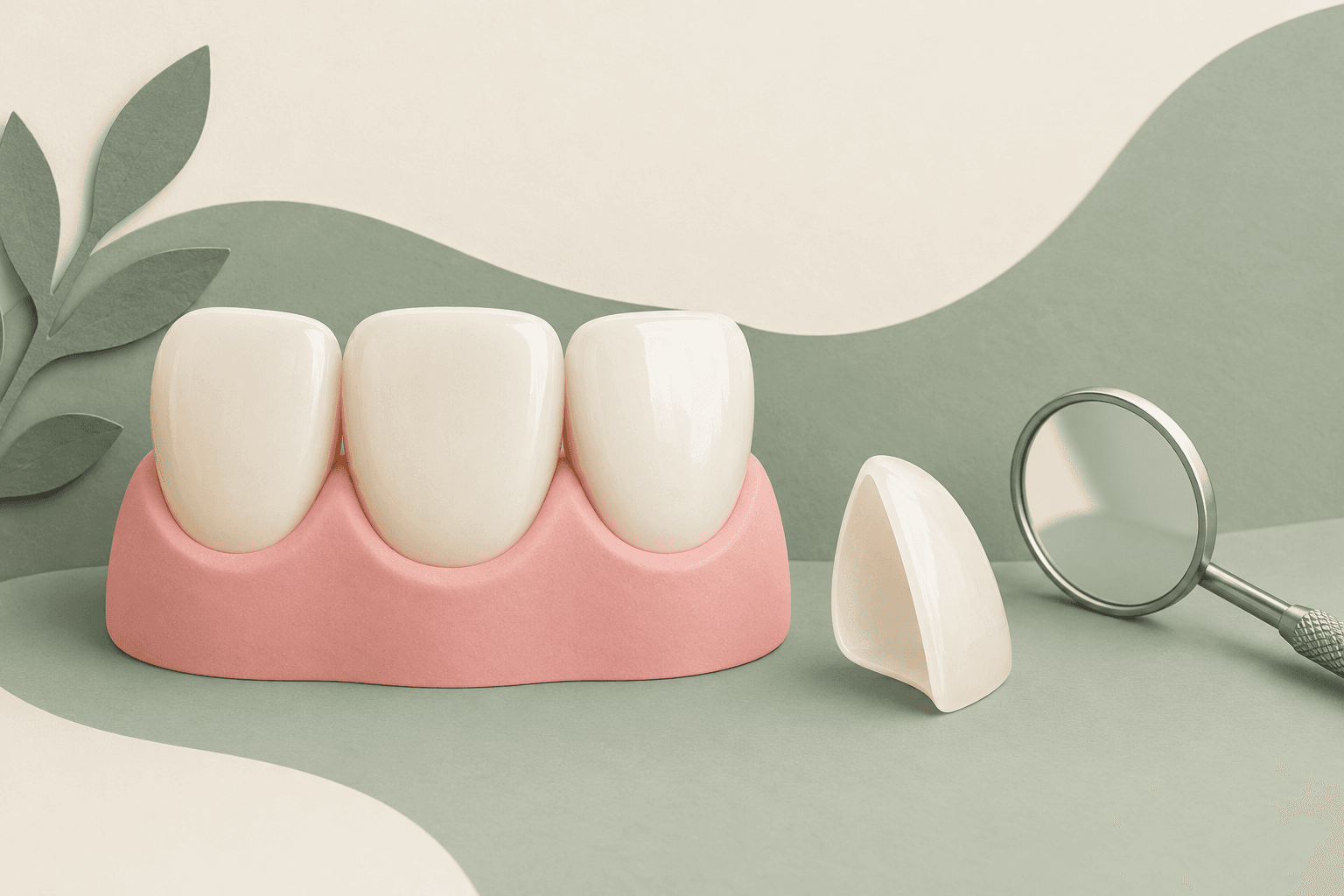
If you wear porcelain veneers and notice that your gums appear to have receded, seek evaluation before deciding to change veneers. The change in appearance does not alone determine the cause or treatment. The examination needs to consider the teeth, gums, and restorations; a new veneer should not be assumed to be an automatic response to a gum change.
What does it mean to notice the longest tooth?
The NIDCR, the NIH institute in the United States, describes the separation of the gums from the teeth, with the appearance of longer teeth, among the signs that can accompany periodontal disease. This does not allow diagnosing the cause by looking at a photo or in the mirror. The institute explains that the evaluation includes an examination of the gums, teeth and health history.
Having veneers does not dispense with gum examination
The American Dental Association (ADA) explains that veneers cover the front of the teeth and that gum disease should be treated before placing them. For those who already have veneers and notice a change, the practical conclusion is to also evaluate the surrounding tissues, rather than just discussing the color or shape of a new piece. This conclusion does not attribute the change to ceramics.
Information that helps with consultation
- Tell us when you noticed the change and if it seems to be increasing.
- Tell us when the veneers were placed and which teeth received the treatment.
- Report bleeding, tenderness, pain when chewing, or a feeling of mobility, if present.
- Take back records you already have and ask what needs to be examined before deciding on the pieces.
Writing down this information is a way to organize the report. Do not try to reproduce symptoms or conclude on your own that the veneer has become short, that the gums are diseased, or that there has been a failure in treatment. These are different hypotheses, which require evaluation.
The exchange of veneers depends on what is found
The ADA recognizes that veneers may need repair or replacement when they chip, crack, wear out, or come loose. The NIDCR, on the other hand, informs that periodontal treatment varies according to the extent of the disease identified. These guidelines do not create a rule of changing veneers in the face of every gum change. Ask that the diagnosis and purpose of each intervention be explained.
Daily care and monitoring are still necessary
The ADA recommends brushing with fluoride toothpaste twice a day and cleaning between your teeth daily even with veneers. At the appointment, ask for guidance on hygiene in the region that has changed. This article does not indicate gum grafting, veneer change or other individual procedure; further reading on second opinion may help if the treatment proposal is still unclear.
Frequently asked questions
Doubts that help prepare the conversation.
Is one photo enough to decide whether to change veneers?
It is not possible to define this decision by a photo in this article. Take the report of the change to the consultation so that the professional examines teeth, gums and restorations and explains the indication of any intervention.
Traceability
Sources
- Periodontal (Gum) Disease — signs and evaluation; Review August 2026National Institute of Dental and Craniofacial Research (NIDCR/NIH)
- Veneers — veneer care and repair possibilitiesAmerican Dental Association (ADA)
- Further reading: second opinion on veneersBlog Dr. Rodolfo Segawa