Smile aesthetics
Porcelain veneers: how to seek a second opinion?
Here's how to organize a second opinion before porcelain veneers, what documents to bring and how to compare proposals beyond price and number of pieces.
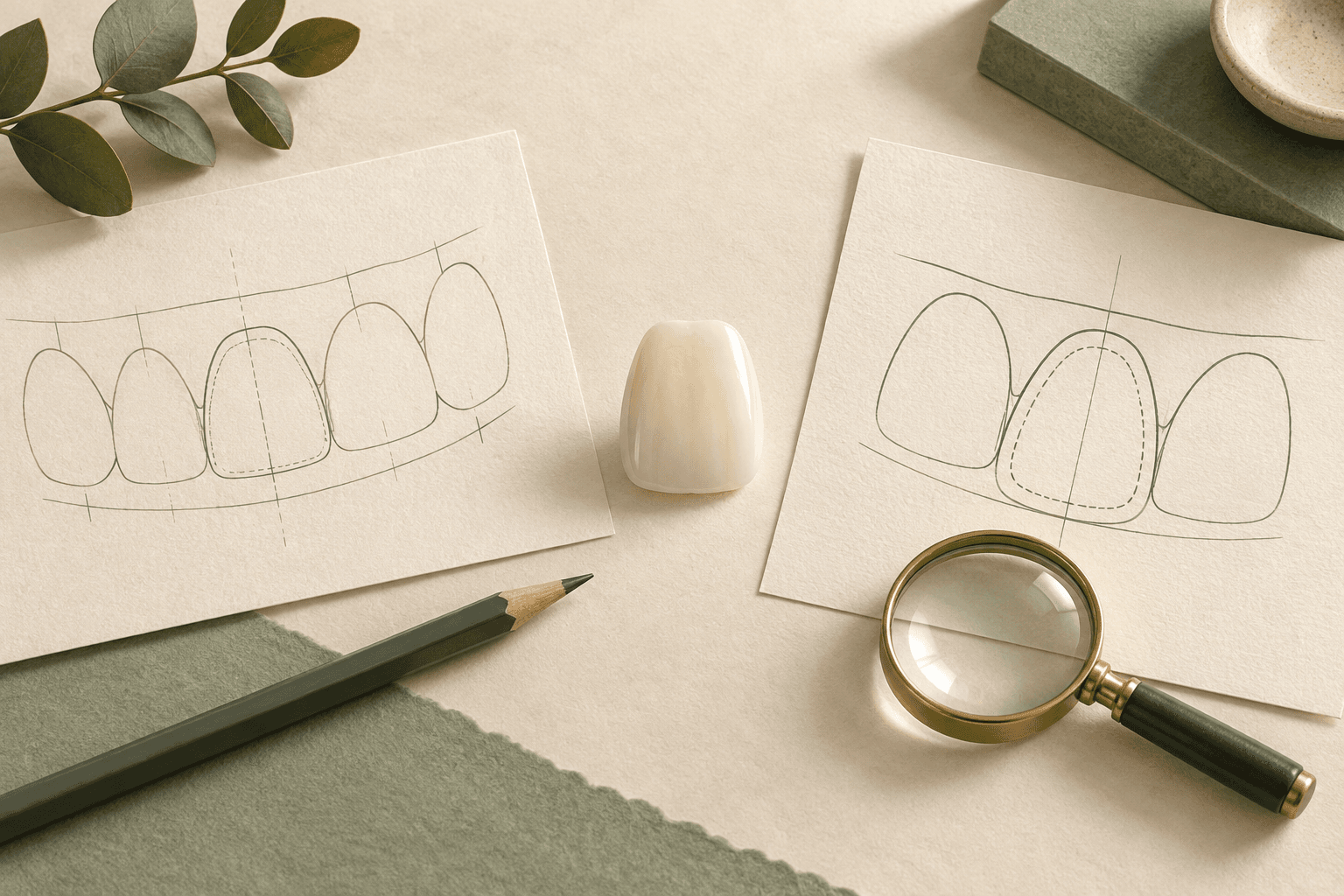
Yes. If you still have doubts about the indication of porcelain veneers, you can seek the evaluation of another dentist before deciding. The second opinion should help you understand the plan and its alternatives. Receiving two different proposals does not demonstrate, by itself, that one is wrong.
Why clarify the indication before starting?
The American Dental Association (ADA) reminds that veneer placement may involve enamel removal and that the treatment should not be understood as reversible. It also advises talking about expectations and oral problems before placement. This makes it especially important to understand the reason for each proposed veneer, rather than deciding on just one photograph or the number of pieces.
What to bring to the second appointment
Organize the plan received, the exams and records you already have, and a short list of questions. Ask the clinic for guidance to obtain copies of the relevant documents and share them directly with the chosen professional. The ADA includes the patient's participation in decisions and access to information useful for the continuity of care in its principles of autonomy. This international ethical reference does not replace the applicable Brazilian rules.
How to Compare Two Veneer Proposals
- What problem does each proposal intend to solve in each tooth?
- Why were these veneers and number of teeth suggested?
- What alternatives were considered and why were they discarded?
- What would be modified in the teeth and what limits need to be accepted?
- What monitoring and maintenance are planned?
Use the same questions in both visits. If there is a difference, ask for it to be explained based on the findings and goals of treatment. A cheaper budget, a proposal with more veneers, or a more attractive image do not alone clarify the clinical indication.
Second opinion is not just another budget
Make it clear that you want to understand the indication, not just quote the same procedure. A helpful assessment needs to explain the reasoning for the proposal. The ADA code of ethics treats the second opinion as an activity that should preserve the patient's interest; this is a benchmark of conduct, not a promise that professionals will come to the same conclusion.
What if I still don't have the confidence to decide?
Before authorizing an aesthetic change, ask for clarification on the point that remains uncertain. You can say, "I want to better understand why the veneers were indicated and what alternatives exist before I begin." This script helps organize the conversation; it does not determine which plan is right for you.
Frequently asked questions
Doubts that help prepare the conversation.
Do two different proposals mean that a dentist got it wrong?
Not necessarily. Ask each professional to explain the findings, objectives, and alternatives considered before comparing the proposals.
Can I take the exams I already have?
Take the available records and ask for guidance to obtain relevant copies. The professional will assess whether this information is sufficient for the new consultation.
Traceability
Sources
- Veneers: information for patientsAmerican Dental Association (ADA)
- Patient autonomy and participation in decisionsAmerican Dental Association (ADA)
- Ethics in consultations and second opinionsAmerican Dental Association (ADA)
- Related Read: Porcelain Veneers BudgetBlog Dr. Rodolfo Segawa