Smile aesthetics
Floss before or after brushing? How to organize the routine
Understand why cleaning between the teeth complements brushing, how to organize the schedule and what difficulties it is worth taking to the dental appointment.
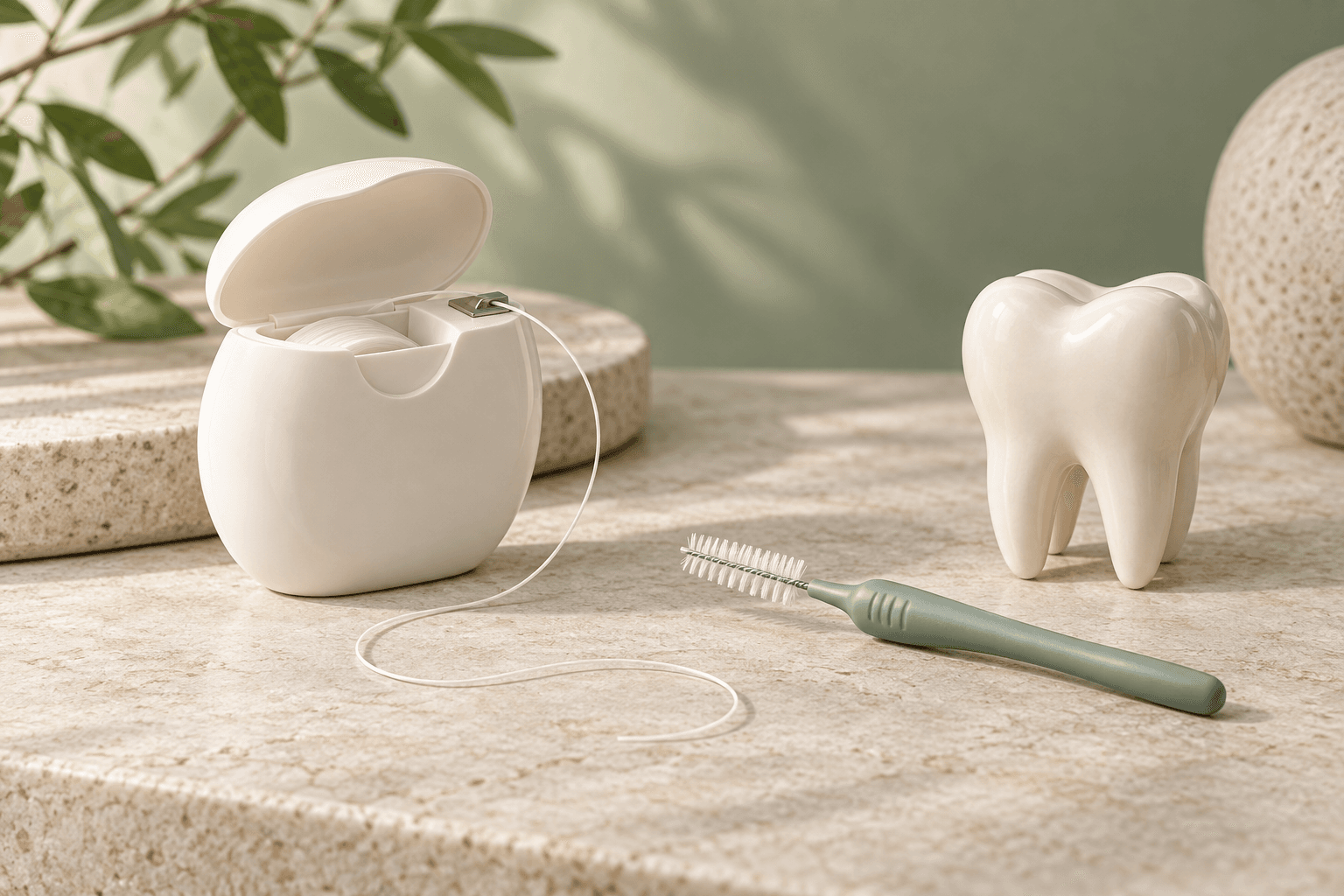
Flossing can be used before or after brushing. According to the American Dental Association (ADA), the essential thing is to clean thoroughly between your teeth every day. Choosing a feasible time helps turn this step into a routine; order alone does not guarantee proper cleaning.
Why doesn't the brush do all the work?
The ADA explains that the brush does not completely reach the spaces between the teeth. Interdental cleaning complements brushing by removing plaque and food debris from these regions. This is true even when the brush is electric.
How to pass without hurting
The educational guideline of the NIDCR, an institute of the NIH in the United States, is to guide the floss gently between the teeth, without forcing it against the gums. It should follow the side of the tooth in a curve similar to the letter C, with up and down movements. A demonstration in the consultation helps to adapt this movement to your mouth.
If the common wire is difficult to use
The NIDCR presents alternatives such as a floss holder, floss thread, interdental brush and oral irrigator. Difficulty holding the floss does not have to mean abandoning cleaning between the teeth. The choice of resource deserves guidance, especially when there are prostheses or spaces with difficult access.
It is not necessary to buy several accessories to start a conversation about hygiene. Take what you already use and explain where you find difficulty. The professional can observe the technique and indicate what makes sense for that region.
A simple roadmap to lead to the consultation
- Show which spaces the wire doesn't pass through or is difficult to control.
- Ask for a demo and repeat the movement to check if you understand.
- Ask which resource can clean the region of a bridge or prosthesis that you have.
- Choose a time when you can clean up without rushing.
Pain should not become part of the habit
The ADA advises talking to the dentist when cleaning between the teeth continues to cause pain. Using force majeure does not solve the difficulty of access. This content is educational and does not identify the cause of an individual discomfort.
To understand what daily hygiene removes and what requires professional cleaning, also see the article on plaque and tartar in the sources and further reading below.
Frequently asked questions
Doubts that help prepare the conversation.
Do I need to floss only at night?
No. The ADA advises choosing a time when it is possible to clean well between the teeth daily. The routine can be organized in the morning, after lunch or at night.
Traceability
Sources
- Flossing — flossing guidanceAmerican Dental Association (ADA)
- Oral Hygiene — Oral HygieneNIDCR / National Institutes of Health (NIH)
- Plaque and tartar: what's the difference?Blog Dr. Rodolfo Segawa