Smile aesthetics
How to clean and store your toothbrush on a daily basis
Here's how to rinse, dry, and store your toothbrush, why avoid closed containers while it's wet, and what to look out for in the bristles.
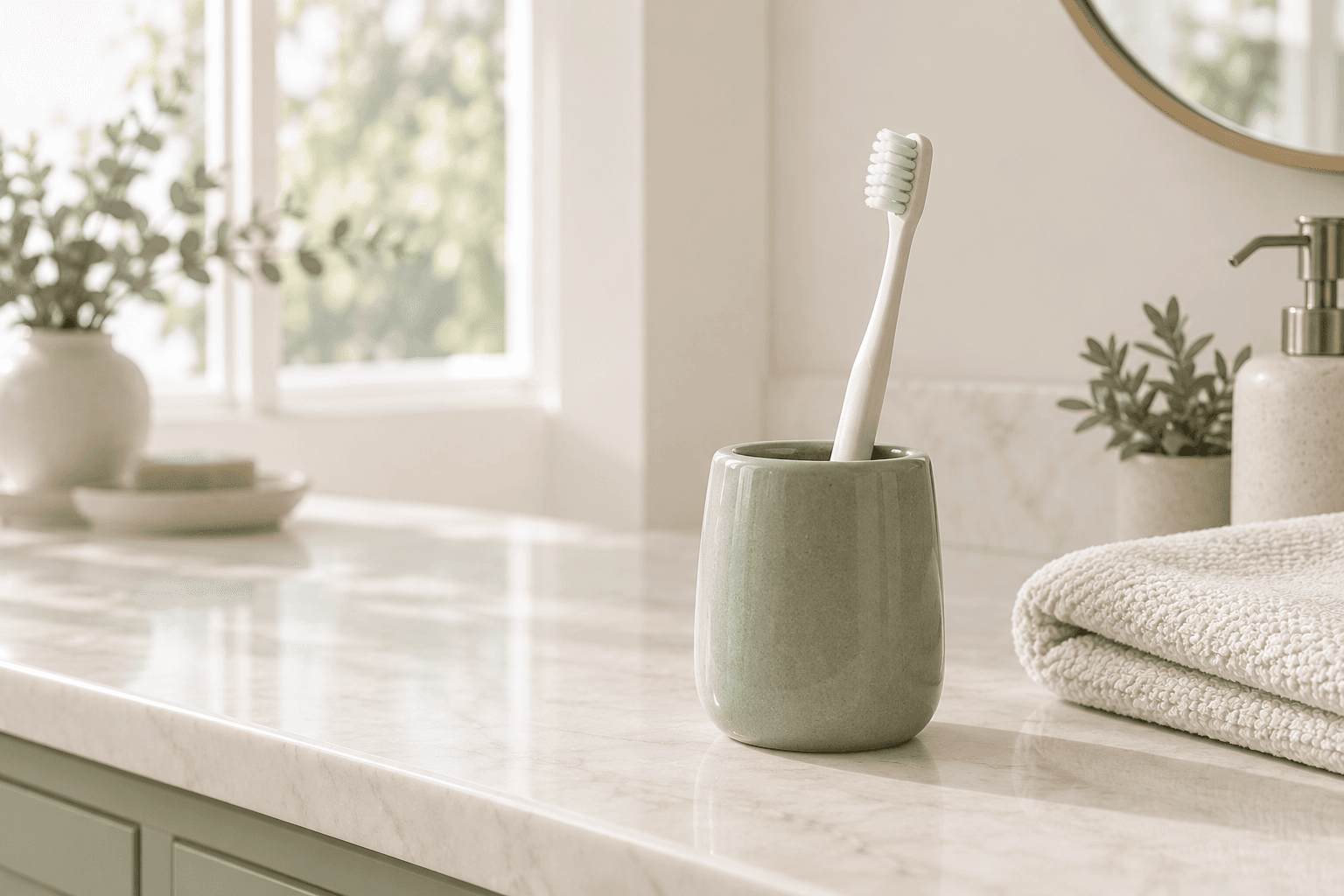
After brushing your teeth, rinse the brush, let it stand upright, and allow it to air dry. The American Dental Association (ADA) advises against routinely storing a wet brush in a closed container. Daily care can be simple: remove residues, promote drying, and maintain individual use.
Rinsing is the first step
The ADA public guideline, at MouthHealthy, is to use running water to remove toothpaste remnants and residue after brushing. Observe the brush head before storing it. If the cleaning of your model has any particularity, also check the manufacturer's instructions.
Why avoid the closed wet brush?
According to the ADA, the humidity of a closed container favors the growth of microorganisms compared to air drying. Therefore, the recommendation for habitual storage is to leave the brush in an upright position, without keeping it covered while it remains wet.
When organizing the space, the practical question is whether the brush head can dry out. An accessory that seems to protect from dirt shouldn't just be evaluated by appearance; also consider whether it keeps moisture retained.
Family brushes should be separated
MouthHealthy advises keeping brushes separate when they are stored together, avoiding contact between them. The brush should also not be shared. Differentiating cables or reserving a place for each person can facilitate this organization, without having to turn the bathroom into a sterile environment.
Do I need to heat or sterilize the brush?
The ADA's technical page, updated in August 2026, informs that finding bacteria in brushes does not, by itself, demonstrate harmful effects on health. The entity does not recommend putting the brush in the microwave or dishwasher: heat can damage it. This article does not indicate homemade chemical disinfection solutions.
Also check the condition of the bristles
Cleaning and storing properly does not recover worn bristles. The ADA recommends changing the brush approximately every three to four months, or sooner if the bristles are deformed or frayed. If you notice wear too early, it is worth taking the brush to the consultation and asking the professional to observe its way of use.
- After use: remove residues with running water.
- When storing: stand upright and allow air drying.
- If there are other brushes: keep the heads separate.
- Periodically: check the wear of the bristles and the need for replacement.
To compare models, see the article on electric or manual toothbrush in the further readings. Educational content prepared with AI assistance. Individual guidance from your dentist and manufacturer-specific instructions should be considered.
Frequently asked questions
Doubts that help prepare the conversation.
Can I store the wet brush in a closed case every day?
The ADA advises against this usual storage. The recommendation is to rinse, store upright and allow the brush to air dry.
Traceability
Sources
- Toothbrushes - brush care; August 2026 updateAmerican Dental Association (ADA)
- Toothbrush — guidelines for the publicAmerican Dental Association (ADA) — MouthHealthy
- Electric or manual toothbrush: what to consider when choosingBlog Dr. Rodolfo Segawa