Implants and rehabilitation
Electric or manual toothbrush: what to consider when choosing
Both options can clean your teeth effectively. See how ease of use, bristles, technique, and maintenance help you choose a brush for your routine.
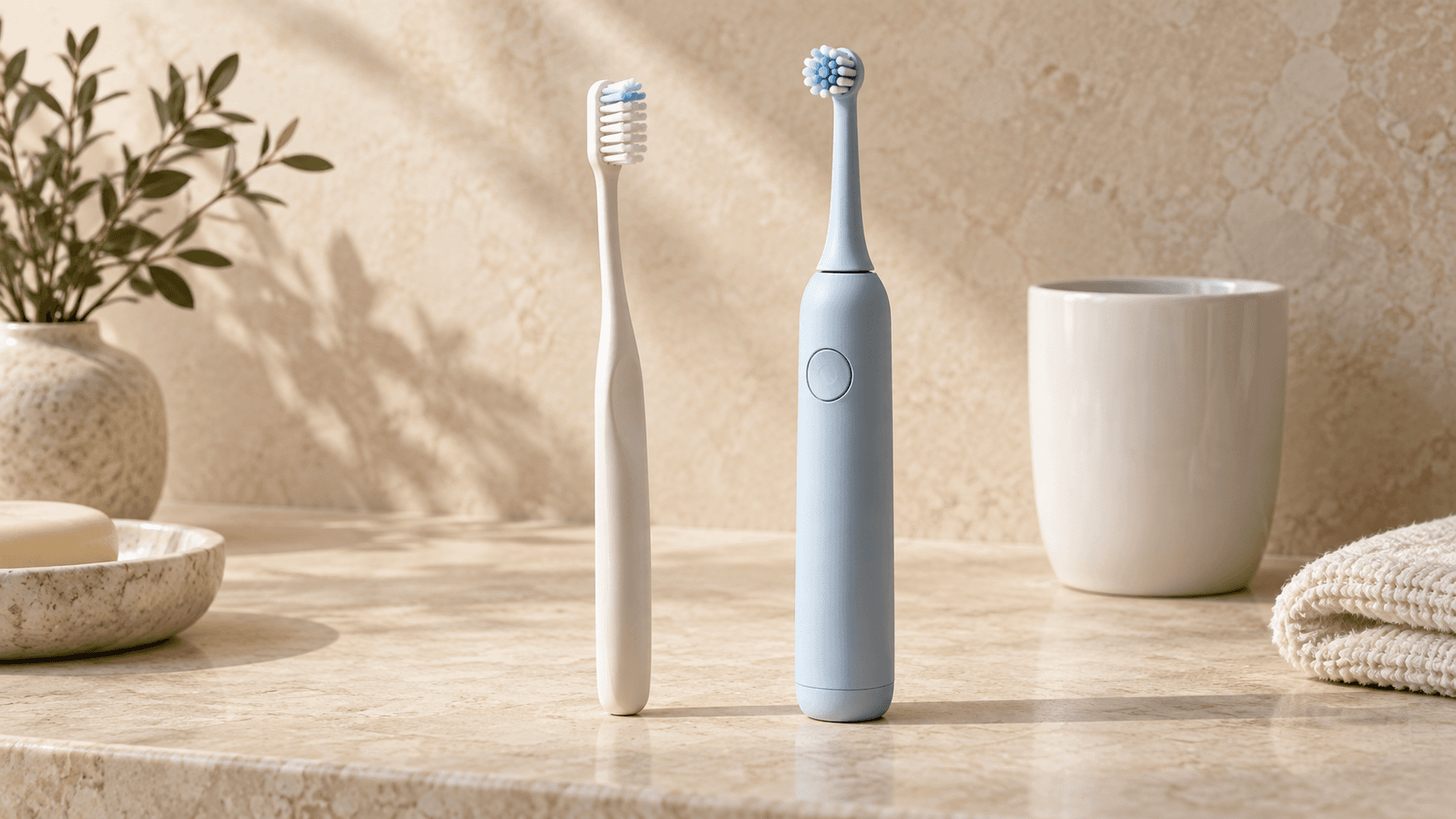
Manual and electric brushes can clean your teeth effectively. The American Dental Association (ADA) points out that both remove plaque, and ease of use can guide the choice. Before changing models, it is worth understanding if you can reach all surfaces and maintain a careful routine. The braces, alone, do not guarantee good brushing.
When can electricity make it easier?
The ADA advises that people with difficulty with manual dexterity or with braces may find the electric toothbrush easier to use. This does not make the manual version unsuitable for all of these people. Ask your dentist for a demonstration and see if you can guide the brush head through the areas that need cleaning.
What to look out for besides being electric or manual
The ADA recommends soft bristles and gentle pressure. It also advises replacing the brush approximately every three to four months, or sooner if the bristles are deformed or frayed. In electrical, watch for wear and tear on the brush head. Having a working handle does not mean that the bristles are still in good condition.
Routine matters as much as choice
The NHS advises brushing for about two minutes, twice a day, with fluoride toothpaste, including the last brushing before bed. Cleaning should cover the inside, outside and chewing surfaces of all teeth. If a region is often forgotten, ask for help adjusting the brushing sequence.
Does the electric toothbrush replace cleaning between teeth?
NHS guidance maintains care between teeth with dental floss or interdental brushes, according to spaces and professional guidance. Choosing an electric toothbrush does not eliminate this step. The dentist can demonstrate which resource fits in each region and how to use it without forcing it.
A practical roadmap to decide
Before buying, organize the choice with these questions. They help to compare day-to-day use, without turning price or number of functions into a promise of results:
- Can I hold and move the cable comfortably?
- Do I reach the bottom teeth and inner faces without difficulty?
- Can the professional check my technique with the chosen model?
- If it's electric, can I find and replace the brush heads?
- Does the cost of purchase and maintenance fit into my routine?
If there is frequent bleeding, do not treat the purchase of a brush as an automatic solution: the related article on bleeding gums explains the importance of evaluation. This content is educational, produced with the assistance of AI and institutional sources. It does not recommend brands or replace individual guidance.
Frequently asked questions
Doubts that help prepare the conversation.
Do I need to buy an electric toothbrush to clean my teeth well?
Not necessarily. The ADA recognizes that manual and electric toothbrushes can be effective. Ease of use and technique should be part of the decision, with professional guidance when there is difficulty.
Traceability
Sources
- Toothbrushes — choice, technique and conservation; update August 2026American Dental Association — Research Services and Scientific Information
- How to keep your teeth clean — routine and interdental cleaning; revised on 06/30/2025NHS
- Further reading: bleeding gums when brushingBlog Dr. Rodolfo Segawa