Smile aesthetics
Dental Erosion: How Acids Can Wear Away Enamel
Dental erosion involves loss of structure due to the action of acids. Understand the possible sources, general care, and questions that help in dental evaluation.
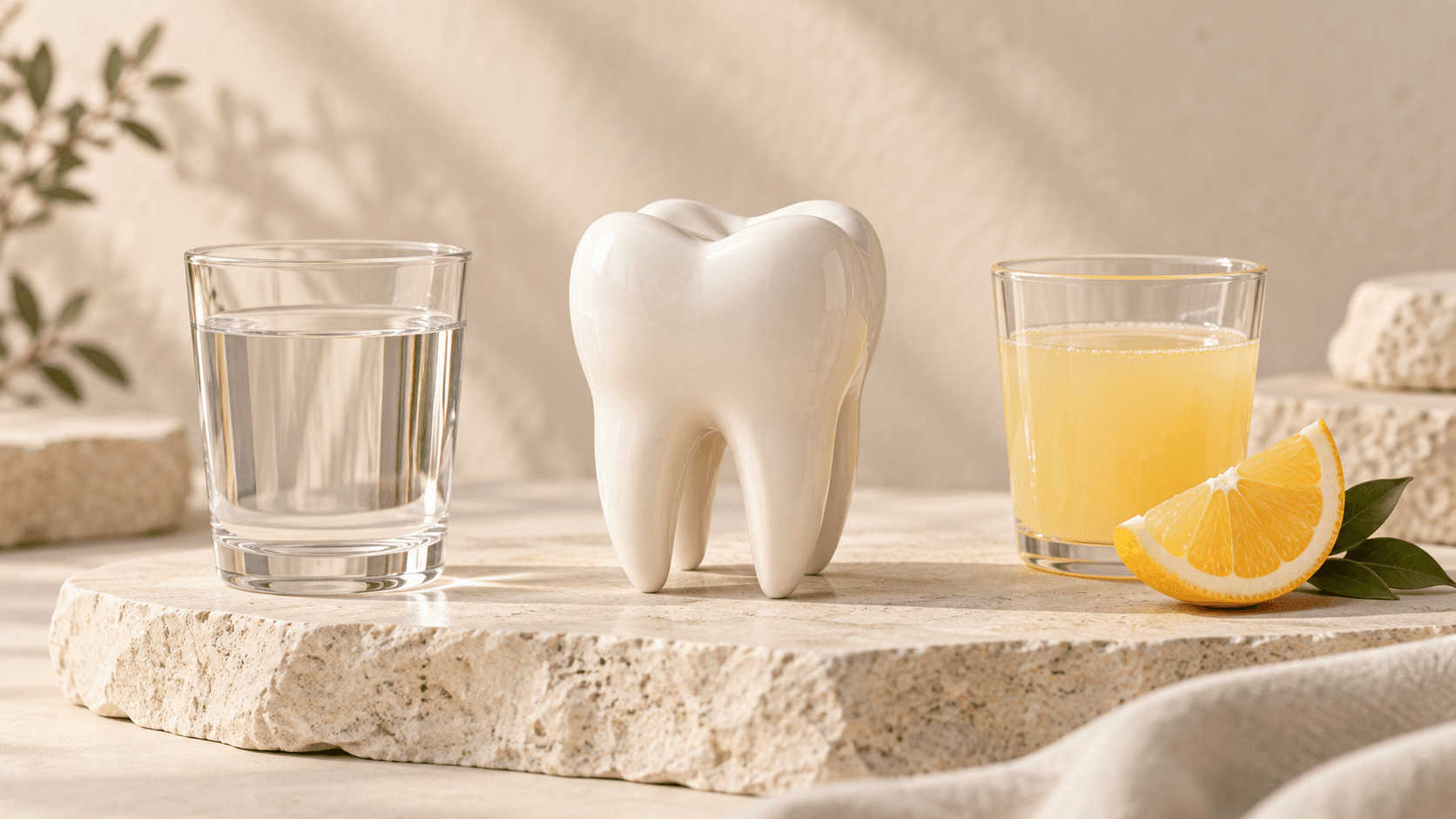
Dental erosion is the loss of tooth structure due to the action of acids that do not come from bacteria in the mouth. It can involve acidic drinks and foods or contact with stomach acid. The American Dental Association (ADA) explains that wear can be progressive and irreversible. Identifying the source of the exposure is part of the evaluation; the appearance of a tooth alone does not close the diagnosis.
Is dental erosion the same thing as caries?
No. In erosion, the acid acts directly on the tooth structure without having a bacterial origin. This distinguishes it from caries. It is also not synonymous with all wear: clenching, contact between teeth, and abrasion need to be considered in the exam. The ADA advises combining health history, risk factors, and clinical evaluation, instead of attributing any change to a single habit.
Where can acids come from?
The dental guidance of the Federal Public Prosecutor's Office cites soft drinks, isotonic drinks, citrus juices and preparations with vinegar among the possible food sources. The frequency and manner of consumption matter: keeping the drink in the mouth for a long time prolongs contact. The material itself emphasizes the nutritional value of foods such as fruits. The information is not an indication to exclude food groups on their own.
Cambridgeshire Community Services NHS Trust's educational material also describes stomach acid in episodes of reflux, regurgitation or vomiting as a possible source. Therefore, the history should not be limited to what you eat or drink. Recurrent symptoms need to be reported to healthcare professionals, without shame or judgment. Do not suspend medications or try to treat reflux with oral hygiene measures alone.
What to observe before scheduling the evaluation?
The NHS guide explains that enamel loss can advance to the dentin and be associated with sensitivity. However, feeling uncomfortable does not in itself reveal its cause. Write down when you started, which teeth bother you and whether the discomfort appears with cold, food or brushing. Old photographs can help explain a perceived change, but they are not a substitute for the exam.
General precautions that the sources guide
- Avoid withholding or rinsing acidic beverages before swallowing.
- After acidic foods or drinks, rinsing with water is a guideline cited by the MPU.
- Use a soft brush and fluoride toothpaste; avoid brushing hard.
- Talk about the frequency of acidic drinks throughout the day, without turning an isolated food into the only culprit.
These general measures, outlined in the MPU's dental guidance, do not reconstruct an already lost part of the tooth and do not replace an individual plan. The choice of products and the need for intervention depends on what the dentist finds. Avoid testing homemade mixtures or increasing the abrasiveness of brushing to try to correct a color change.
What to ask about protection and aesthetics?
Take three questions to the consultation: is there a loss of structure or another cause for the change I noticed? What exposures should be investigated in my history? How will the tooth be monitored before deciding on an aesthetic procedure? Understanding the cause helps to organize the decision. The article "porcelain veneers: how to think about aesthetics without ignoring structure and function", indicated in the complementary reading, approaches this conversation from another angle. This text does not indicate veneers, restorations or any treatment for an individual case.
Frequently asked questions
Doubts that help prepare the conversation.
Does feeling sensitivity mean I have tooth erosion?
It is not possible to conclude this from the symptom alone. Sensitivity can accompany loss of enamel, but the cause needs to be investigated with history and dental examination.
Do I need to stop eating citrus fruits?
This article does not recommend excluding fruits. The MPU guidance recognizes their nutritional value and highlights care with excess and form of consumption. Take your habits to the evaluation to receive individual guidance.
Traceability
Sources
- Dental Erosion — definition, factors and evaluationAmerican Dental Association
- Oral health: Excess acidic foods can cause tooth erosionFederal Public Prosecutor's Office — Mariana Andrade Viana, Dentistry
- Information and tips for maintaining oral health in children with autism — Acid Erosion section, page 8 of PDFCambridgeshire Community Services NHS Trust
- Further reading: porcelain veneers, structure and functionBlog Dr. Rodolfo Segawa