Smile aesthetics
Can coffee stain porcelain veneers?
Understand the limits of porcelain veneers' resistance to stains, how to deal with a perceived change in color, and what to talk about with your dentist.
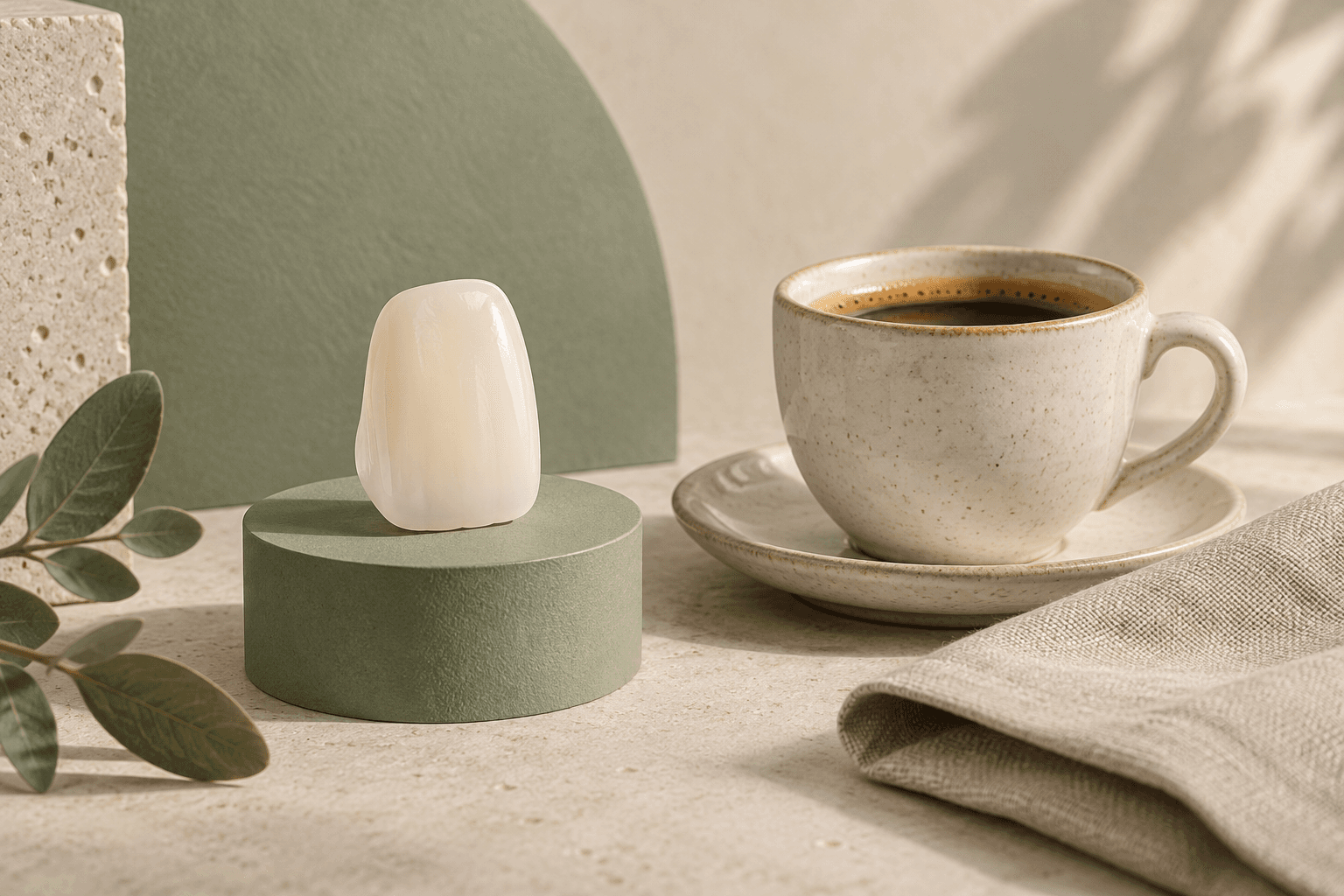
Porcelain veneers are stain-resistant, but that doesn't mean their appearance can never change. The Cleveland Clinic includes coffee, tea, and red wine among the beverages that can contribute to stains on veneers over time. If you've noticed a change, don't try to remove it by increasing the force of brushing: ask for an evaluation.
Strength is not a guarantee of permanent color
The Cleveland Clinic guidance distinguishes the strength of porcelain from absolute protection against pigmentation. The American Dental Association (ADA) also recommends caution for beverages that can stain or alter the appearance of veneers. None of these guidelines establish a number of cups that guarantees no stains for all people.
Do I need to give up coffee?
Sources recommend caution with pigmented beverages. To turn this guidance into an appropriate routine, talk to your dentist about your consumption and the condition of your fillings. There is no individual amount considered safe in this article or a promise that an isolated habit determines the color of veneers.
What to do if the veneer looks darker
Write down when you noticed the change, whether it appears in one piece or in several, and which products you started to use. This information helps explain the complaint in the consultation. Appearance alone does not allow you to confirm the cause or choose a procedure to correct the change.
The Cleveland Clinic advises a soft-bristled brush and non-abrasive fluoride toothpaste in the care of veneers. It also warns against whitening products that can scratch its surface. Avoid testing recipes or intensifying the abrasion to try to regain color at home. Care should preserve the restoration while the alteration is investigated.
Care that remains important
The ADA recommends brushing with fluoride toothpaste and daily cleaning between teeth, remembering that there may still be cavities around a veneer. Follow-up is not just about observing color: teeth and gums also need to stay healthy.
Questions to take to the consultation
- Is the change I noticed really in the veneer?
- Is the hygiene product I use suitable for my restorations?
- Is there anything in my consumption and cleansing routine that needs to be adjusted?
- What care is indicated before considering any change in the restoration?
Frequently asked questions
Doubts that help prepare the conversation.
Does stain-resistant porcelain mean it never changes its appearance?
No. Resistance is not a guarantee of the absence of blemishes. Perceived changes need to be evaluated before choosing a way to correct them.
Is there a number of cups that don't stain the veneers?
The sources consulted do not establish an amount that guarantees the absence of stains for all people. Discuss their consumption and restorations in the consultation.
Traceability
Sources
- Veneers — care and pigmented drinksCleveland Clinic — updated on 07/18/2022
- Veneers — Veneer Care GuidelinesAmerican Dental Association (ADA)
- Related Reading: Whitening in Resins, Crowns, and VeneersBlog Dr. Rodolfo Segawa