Smile aesthetics
How to clean the tongue without hurting?
Here's how to include gentle tongue cleaning in your routine, deal with cravings, and recognize changes that need evaluation rather than persistent scraping.
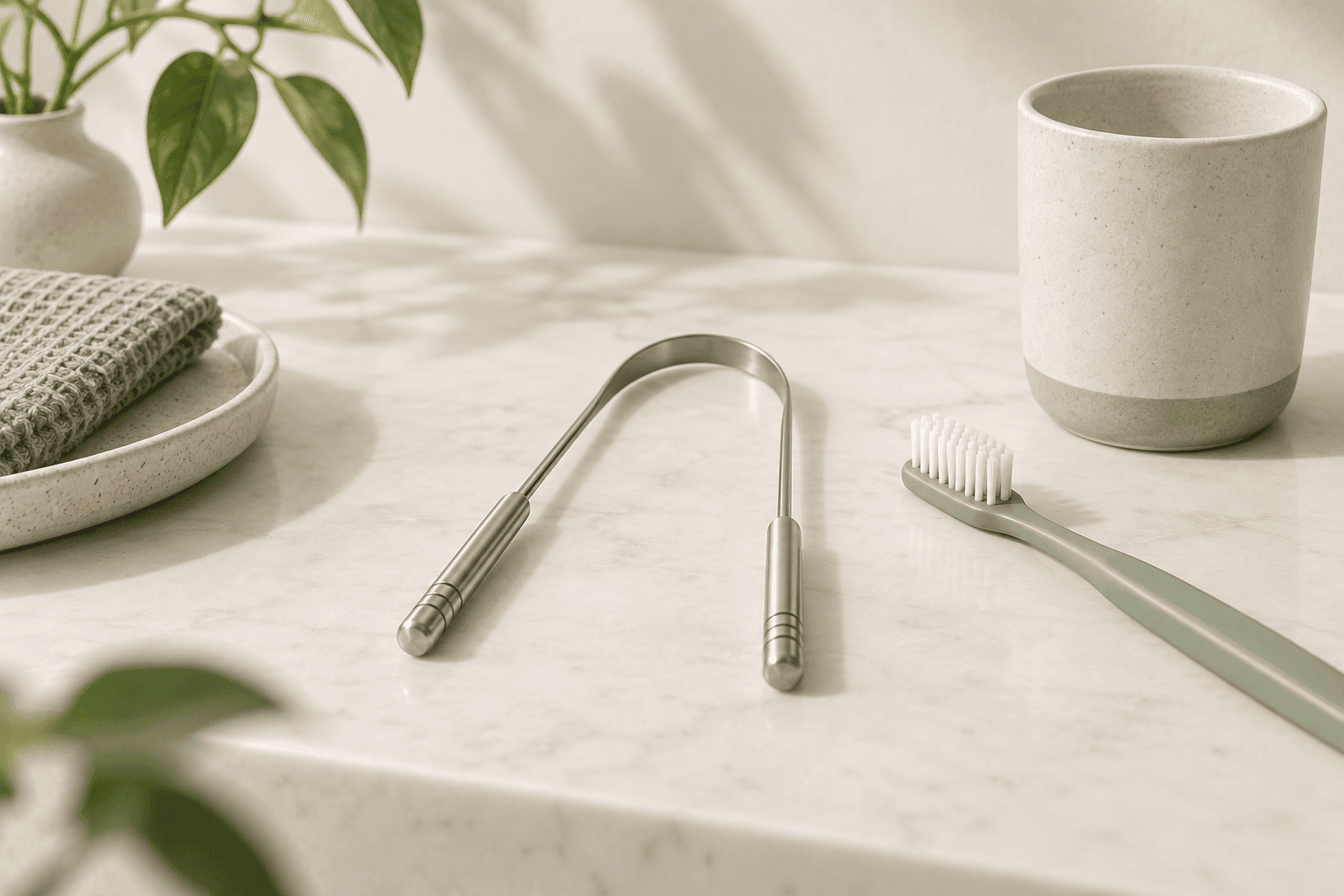
The tongue can be gently cleaned once a day, with a cleaner of its own, as recommended by the NHS. The goal is not to scrape hard or cause bleeding. This care complements the hygiene of the teeth and the spaces between them; it does not replace brushing, flossing or evaluation of persistent changes.
Why include the tongue in hygiene?
The Oral Health Foundation explains that the surface of the tongue can accumulate bacteria, food debris, and cells. Cleaning can help reduce bad breath related to this buildup. This doesn't mean that every color change is dirt or that all bad breath originates from the tongue.
How to do it without increasing strength?
The Oral Health Foundation's guidance is to gently pass the cleaner from back to front, without placing it so deep that it causes pain. One or two passes in each area are sufficient. Rinse the instrument between passes and sanitize it after use. The institution also mentions the brush as an option for cleaning the tongue.
And when does it get anxious?
Starting in the middle of the tongue and breathing slowly when exhaling are suggestions from the Oral Health Foundation for those who have this reflex. It is not necessary to press hard. If the difficulty prevents care, ask the dentist for guidance adapted to your routine, instead of insisting painfully.
Stubborn stain should not be scraped off by force
The Oral Health Foundation recommends evaluation when there is continuous pain, plaques that do not come out, lumps, wounds or color changes. In these cases, cleaning does not serve as a diagnostic test. The NHS also advises not to brush to the point of making the tongue or gums bleed.
What is still needed besides the cleaner?
The NHS recommends brushing your teeth with fluoride toothpaste, cleaning between them daily and having regular dental appointments. If bad breath continues after a few weeks of care, see a dentist. Toothache, sore, swollen or bleeding gums are also reasons for evaluation, without waiting for cleaning the tongue to fix everything.
Questions to take to the consultation
- Am I using excessive force or an inappropriate instrument?
- How to adapt care if I have a lot of anxiety?
- Does this persistent change need to be examined before continuing the cleanup?
Frequently asked questions
Doubts that help prepare the conversation.
Do I need to scrape until the tongue bleeds to clean it well?
No. The NHS advises avoiding force that causes bleeding. Persistent changes need evaluation, not more intense scraping.
Traceability
Sources
- Cleaning your tongue — published on 10/07/2026Oral Health Foundation — Sophie Turner
- Bad breath — review of 05/06/2025NHS
- Further reading: persistent bad breathBlog Dr. Rodolfo Segawa