Smile aesthetics
Can I use charcoal powder to clean porcelain veneers?
See the CFO's warning about charcoal dust, the limits of the evidence, and what to clarify when choosing hygiene products for those with porcelain veneers.
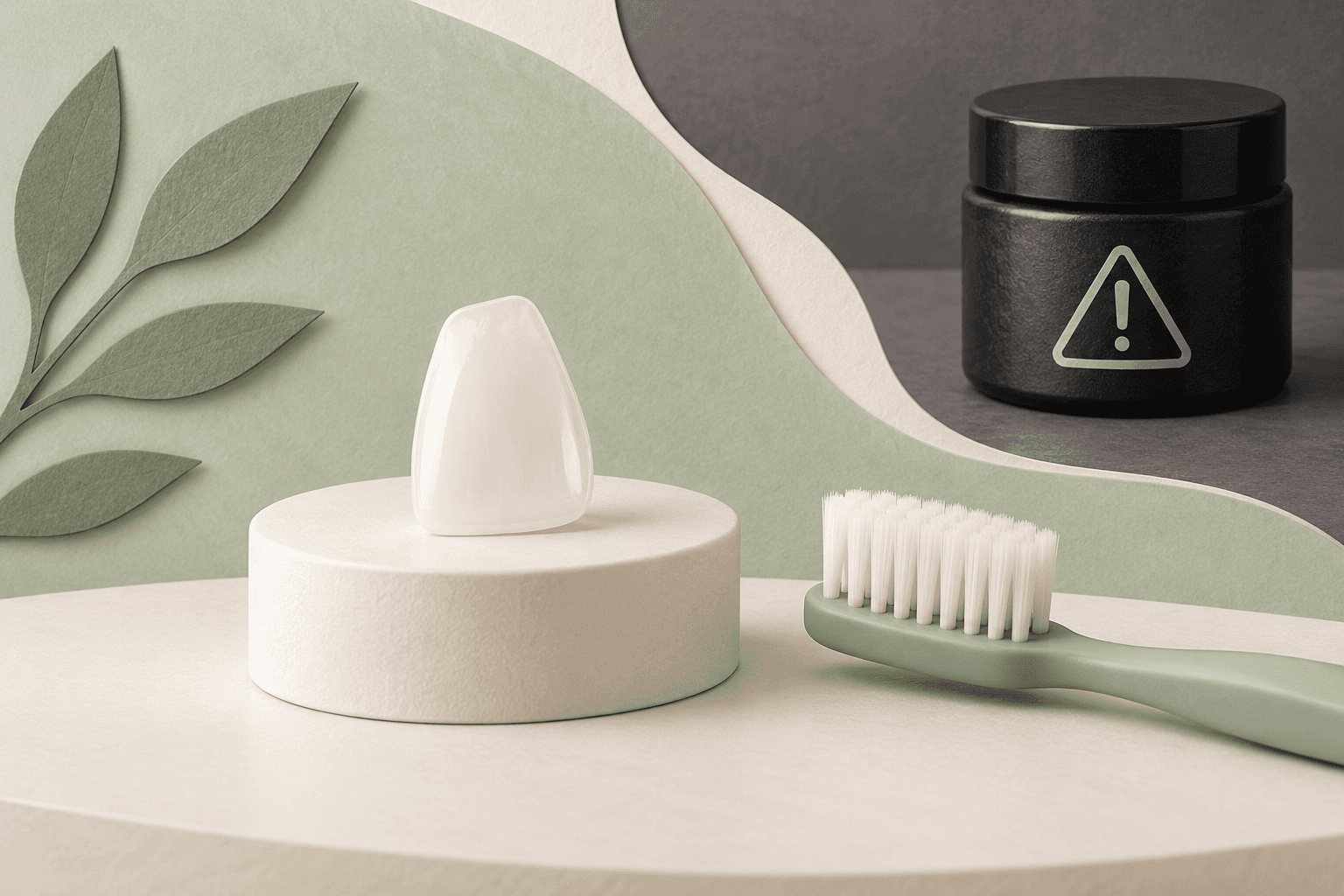
Do not use charcoal dust on your own to clean your porcelain veneers. In guidance on the conservation of veneers and veneers, the Federal Council of Dentistry (CFO) warns against charcoal powders sold on social networks. To choose hygiene products, follow the guidance of the dentist who accompanies your restorations.
The alert is not limited to the appearance of the veneer
The CFO points out that the mouth continues to have natural teeth subject to caries and gums that need care. In the same material, Professor Camillo Anauate Netto warns that the roughness of charcoal powders can wear down enamel and composite resin. This is not a measurement of the effect of every product on any porcelain; the alert should not be transformed into a prediction of individual damage to the ceramic.
Promise of whitening does not prove safety
The American Dental Association (ADA), in its whitening material, informs that the evidence is insufficient to demonstrate the whitening benefit of charcoal-based products on vital teeth with adequate safety and efficacy. This limitation does not authorize the assumption that the product is a safe way to recover the shine of a ceramic veneer.
The point here is the choice of cleaning product for those who already have veneers. The response of natural teeth and restorations to whitening is discussed in another blog read, available below.
What to keep in daily hygiene
The ADA's guidance for people with veneers includes brushing with fluoride toothpaste twice daily and cleaning between teeth daily. The CFO also recommends avoiding hard brushes and high-abrasiveness toothpastes in veneer and veneer wearers. Product selection should consider the restorative material and the condition of the mouth.
If the veneer looks smudged or lackluster
Take this perception to the consultation, along with the packaging of the products you use. In the monitoring of the veneers, the CFO describes professional cleaning and verification of the integrity and adaptation of the pieces. The evaluation is what allows discussing the need for intervention; it is not possible to define from this text whether cleaning is enough, if there is damage or if some treatment is necessary.
What to ask before changing the folder
Explain that you have porcelain veneers and ask if the intended product is suitable for you. If you have used charcoal, tell us which product and how you used it, without concluding that there was damage just because you used it. Do not increase the force of brushing or improvise a polish to try to correct the appearance.
Educational content produced with AI-assistance, with no individual assessment or clinical review alleged. Related sources and reading are available below.
Frequently asked questions
Doubts that help prepare the conversation.
I've used charcoal. Does that mean my veneers have gone bad?
It is not possible to conclude this by use alone. Tell the dentist which product you used and ask for an evaluation if you notice any changes. Do not try to do a homemade polish.
Traceability
Sources
- Veneers and veneers conservation – 02/12/2025Federal Council of Dentistry — Rita Siqueira
- Whitening: evidence on charcoal productsAmerican Dental Association — Research Services and Scientific Information
- Veneers: daily hygieneAmerican Dental Association — MouthHealthy
- Further reading: whitening and restorationsBlog Dr. Rodolfo Segawa
- Further reading: caries in teeth with veneersBlog Dr. Rodolfo Segawa