Smile aesthetics
Do I need to have an X-ray at every dentist visit?
X-rays are not mandatory at every dental appointment. Understand what guides the indication and why taking previous images helps in the evaluation.
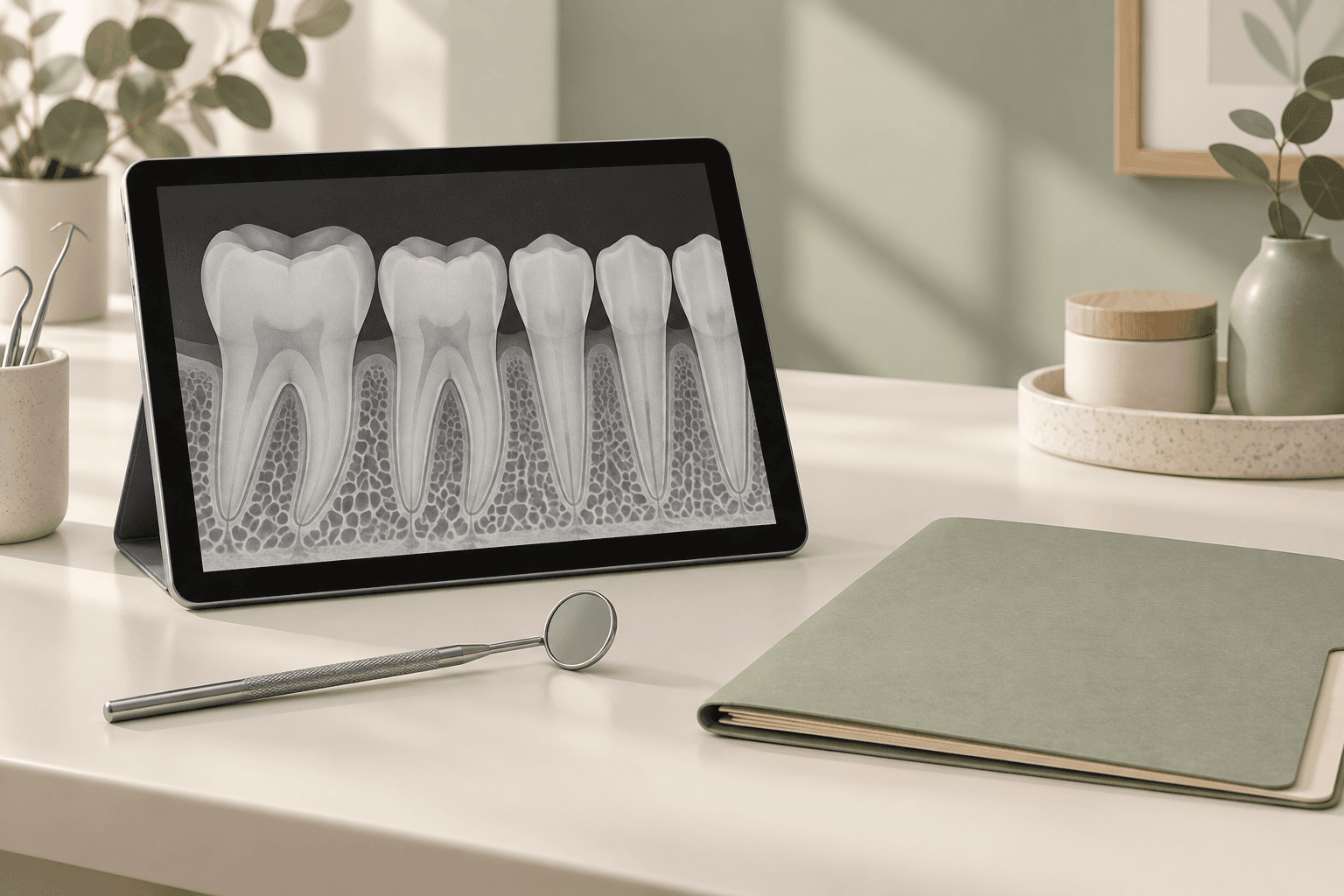
Not necessarily. Dental radiography should respond to a need identified in the evaluation, and not be automatically repeated at every visit. According to the American Dental Association (ADA), the decision considers the history, the examination of the mouth, current health, age, risk of disease and the signs or symptoms presented.
What does an image add to the query?
The ADA explains that x-rays help identify changes that may not appear on clinical examination, such as some caries lesions and teeth that have not erupted. They can also contribute to monitoring oral health over time. The point to clarify is what information the professional is looking for in your case.
Routine consultation and radiography have their own decisions
The NHS describes the review appointment as an opportunity to examine teeth, gums and mouth, update health information and discuss habits and the next return. Going to the appointment, therefore, does not necessarily mean leaving with an imaging request. The assessment comes before this decision.
Similarly, the interval between appointments does not alone establish the frequency of exams. Asking "what is the purpose of this x-ray?" is often more helpful than trying to follow the same schedule as someone else.
Take the exams you already have
When changing dentists, inform if there are previous images. The ADA advises that the new professional can request copies instead of asking for new X-rays. It is up to him to evaluate whether the available material responds to the current need.
Organize the files, the date of performance and the name of the service where they were done. If you only have one access link, confirm that it still works. Taking the material does not guarantee that a new exam will be dispensed with, but it allows it to be considered during the consultation.
Questions to understand a request
- What clinical doubt does this exam intend to clarify?
- Are the images I already have useful for this evaluation?
- Can the result change any treatment decision?
- How will I receive and save the test for future consultation?
These questions help to understand the indication. They do not serve as a rule to accept or refuse exams without talking to the dentist. The type of image and the time to perform it depend on the problem being investigated.
A change in symptoms deserves to be reported
The NHS advises you to contact the dental service when problems arise between routine appointments. If there is a new complaint, describe what has changed and since when, even if you have recently had x-rays. The existence of a previous image is not a substitute for assessing the current symptom.
In the complementary readings below, the article on return visits addresses the frequency of consultations, and the article on painless caries explains the role of evaluation. This text deals with the indication of radiographs, without prescribing a schedule of exams. Educational content prepared with the assistance of AI.
Frequently asked questions
Doubts that help prepare the conversation.
Does changing dentists require repeating all x-rays?
Not automatically. Inform about previous images and ask for help to forward them. The new professional will evaluate whether they meet the current need.
Can I use someone else's exam frequency as a benchmark?
Not as an individual rule. The indication considers health conditions, history and evaluation findings, which may be different between people.
Traceability
Sources
- X-rays — individual indication and previous imagesAmerican Dental Association (ADA) — MouthHealthy
- Dental check-ups — April 1, 2025 reviewNHS
- How often should I return to the dentist?Blog Dr. Rodolfo Segawa
- Can caries exist without pain? What the evaluation clarifiesBlog Dr. Rodolfo Segawa