Smile aesthetics
How often should I return to the dentist?
The interval between appointments depends on the assessment and individual risk. Understand what to ask and how to distinguish routine review from continuity of care.
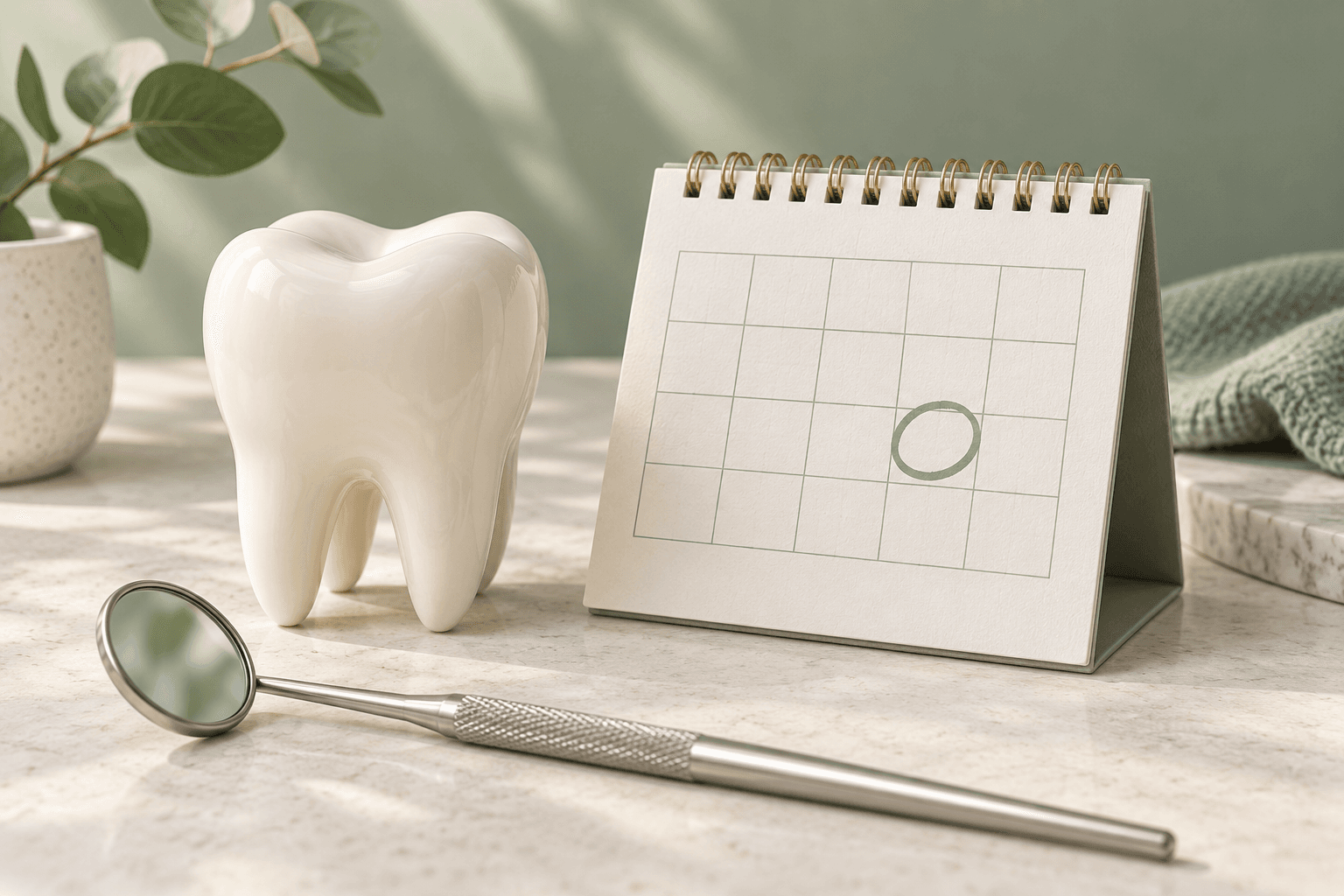
The return to the dentist does not have to follow the same interval for everyone. According to the NHS, the date of the next evaluation should consider the health of the mouth and the risk of new problems. The appropriate deadline is agreed after the exam, and not chosen only by the calendar.
Why is six months not a universal rule?
The NHS explains that some people need more frequent evaluations and others may have longer intervals. This guidance on individual monitoring does not authorize postponing an appointment on your own: the risk needs to be assessed by the professional.
What can influence the return
The NIDCR recommends regular visits and notes that medical conditions associated with a higher risk of gum disease, such as diabetes, may lead the dentist to indicate more frequent follow-ups. It also highlights that dry mouth related to medications can increase the risk of caries. Inform changes in health and medications in use, without suspending them on your own.
Routine review and treatment have different schedules
The NHS distinguishes periodic assessment from appointments required for treatments and emergencies. A future review date does not replace an already scheduled step to complete a treatment. If a problem arises between reviews, contact the dental service for guidance.
What to take note of to enjoy the consultation
A short list can help organize the conversation. Record the changes noticed since the last visit, hygiene difficulties, and questions about the plan in progress. It is not necessary to assess the severity of each item on your own before mentioning it.
- What is the purpose of the next return: review, maintenance or continuity of treatment?
- What findings of the evaluation justify this interval?
- What change should I communicate before the scheduled date?
- Is there any daily care I need to show to confirm the technique?
Care between appointments continues
The NIDCR recommends brushing with fluoride toothpaste twice a day and cleaning between the teeth regularly, trying to do it daily. Appointments help with follow-up, but do not replace this care. Ask for routine adaptation if there is difficulty using hygiene accessories.
Before leaving, make a note of the agreed time frame and purpose of the next appointment. Separating these two pieces of information avoids confusing a routine review with the completion of treatment. This educational content has been prepared with AI assistance and does not establish an individual interval.
In the further reading below, the article on painless caries explains why the absence of discomfort, in isolation, does not confirm the health of the tooth.
Frequently asked questions
Doubts that help prepare the conversation.
Does the date of the review also apply to complete a treatment?
Not necessarily. The NHS differentiates periodic review of appointments for treatment. Confirm the purpose of each return and keep the steps agreed with the dentist.
Traceability
Sources
- Dental check-ups — periodic dental evaluationsNHS — public health service in the United Kingdom
- Oral Hygiene – hygiene and follow-upNIDCR / National Institutes of Health (NIH)
- Can caries exist without pain? What the evaluation clarifiesBlog Dr. Rodolfo Segawa