Smile aesthetics
What does fluoride ppm mean on toothpaste label?
Understand what the fluoride concentration indicated in ppm means, where to find this information and what to clarify with the dentist about your toothpaste.
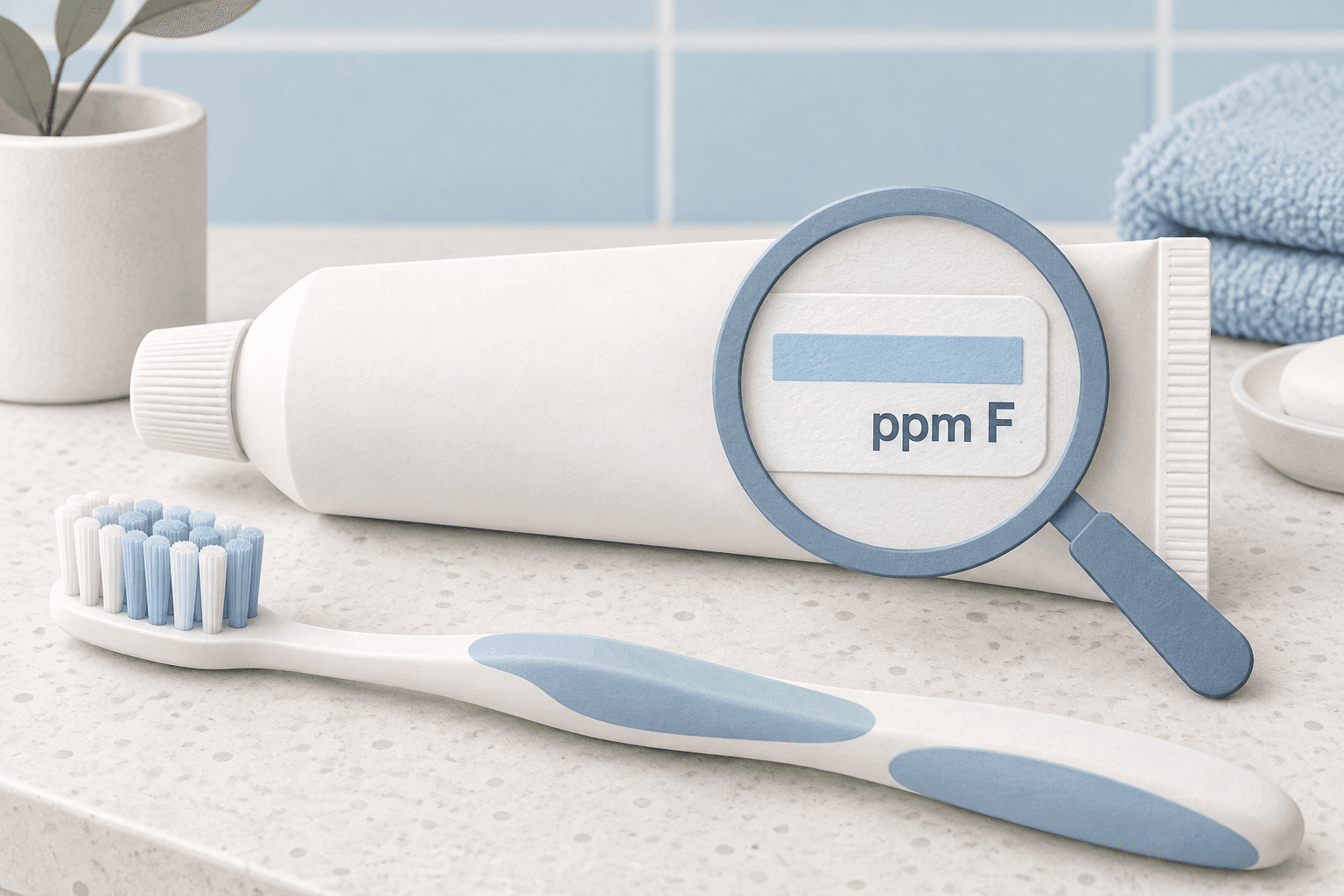
"PPM" stands for parts per million. In toothpaste, the number associated with fluoride tells you its concentration, not the amount of paste you should put on your brush. Checking this information on the packaging helps you understand the product you are using; taste and appearance are not a substitute for this information.
Where to Look for Concentration
Look on the box or tube for information about fluoride or fluoride and the value in ppm. The NHS recommends checking the packaging precisely because products can have different concentrations. If the information is not clear, take the packaging to the dentist instead of trying to deduce the concentration by its trade name.
Why this number matters for caries prevention
The Ministry of Health explains, in Technical Note No. 1/2020, that fluoride toothpaste makes fluoride available in the mouth and contributes to the remineralization of the teeth. The document also distinguishes total fluoride from that which remains chemically soluble in the formulation, an important aspect for the anti-caries effect.
This note was directed to the purchases of toothpastes by the public network. It helps to understand why the quality of the formulation matters, but does not allow the consumer to prove soluble fluoride at home just by looking at the tube. This article does not test or certify brands.
Is there a concentration suitable for everyone?
The NHS's public guidance for adults is to use toothpaste with at least 1,350 ppm of fluoride. The same source points out that the dentist may recommend a higher concentration in specific situations. This does not mean automatically choosing the highest number available: the indication needs to consider your needs.
For children, concentration, amount of paste, and supervision are related decisions. Do not use adult guidance as a complete instruction for a child; confirm age-appropriate care with the dentist.
The label number does not replace the routine
The NHS advises brushing twice a day, for about two minutes, including brushing before bed. Then, spitting out the excess without rinsing immediately helps keep fluoride in the mouth. A choice of product does not dispense with careful cleaning or dental follow-up.
A useful question for the next appointment
Take your briefcase and ask, "Is this concentration and formulation right for me?" This makes the conversation concrete, without relying on advertising or comparison just for price.
Educational content produced with AI assistance. Original sources and related readings are below; there was no individual assessment or clinical review claimed.
Frequently asked questions
Doubts that help prepare the conversation.
PPM tells you how much toothpaste to put on the brush?
No. ppm expresses concentration. The amount of toothpaste used is another guideline, which also needs to consider age.
Traceability
Sources
- Fluoride concentration in toothpastes — Technical Note No. 1/2020Ministry of Health — General Coordination of Oral Health
- How to keep your teeth clean — review as of 30/06/2025NHS
- Further reading: Painless cariesBlog Dr. Rodolfo Segawa
- Further reading: Mouthwash timeBlog Dr. Rodolfo Segawa