Smile aesthetics
Mouthwash: when to use it and how to organize the schedule?
Mouthwash can complement hygiene in some situations, but the goal and time matter. Here's what to clarify before including it in your routine.
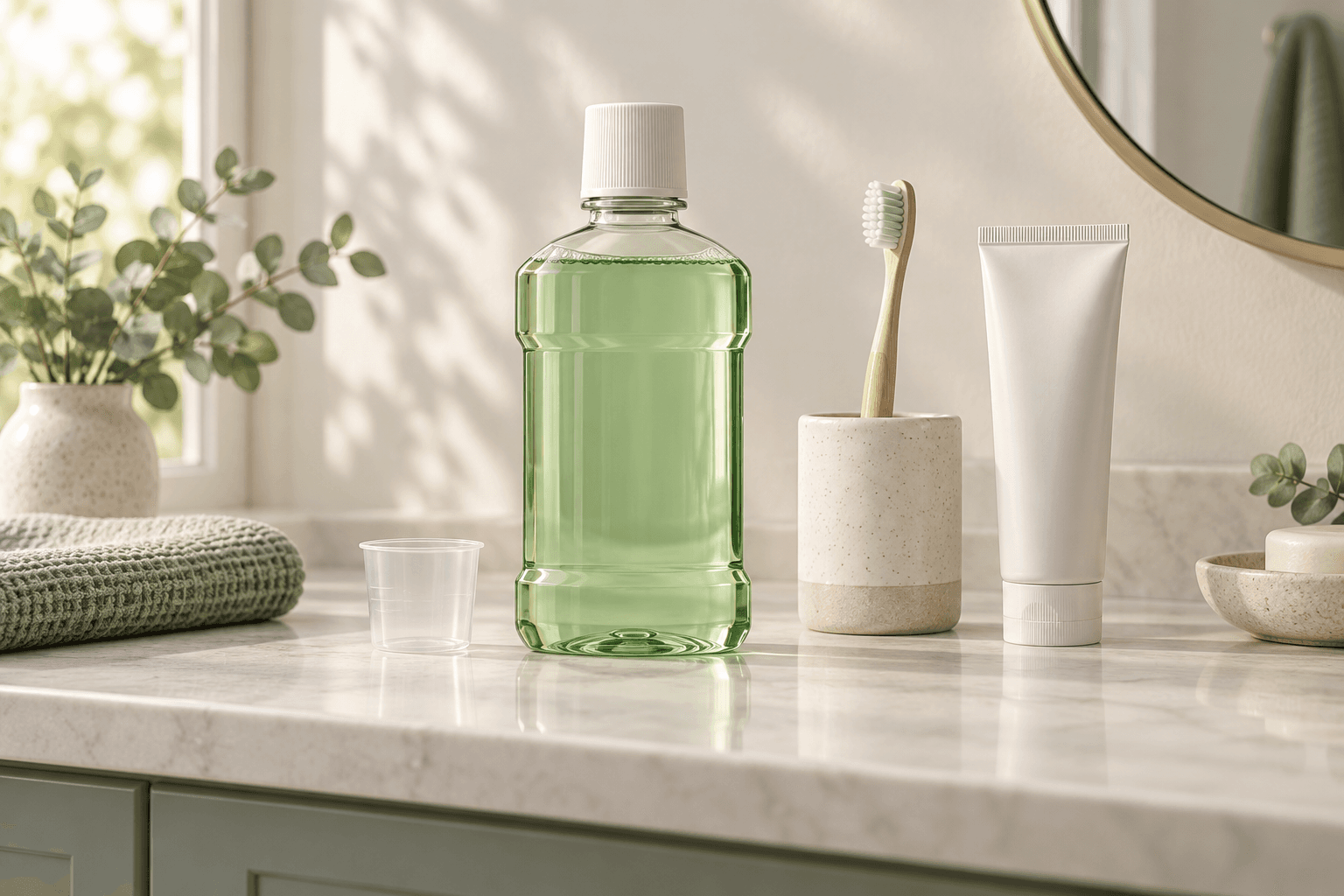
Mouthwash can complement hygiene in some situations, but it is not a substitute for brushing and cleaning between teeth. Before adopting it, clarify its purpose and the product instructions. For the general routine, the NHS recommends not using mouthwash immediately after brushing with fluoride toothpaste, as this removes concentrated fluoride that remains on the teeth.
First, understand the purpose of the product
The American Dental Association (ADA) distinguishes between cosmetic, temporary breath fresheners, and therapeutic mouthwashes, with ingredients designed to help control conditions such as plaque, gingivitis, or cavities. This does not mean that any one bottle fulfills all of these functions. The choice needs to match the objective, rather than based solely on taste or color.
Why separate the mouthwash from brushing?
In the general NHS guideline, after brushing, you should spit out the excess paste, without rinsing immediately. The service suggests another time for the mouthwash, such as after lunch. If it is a fluoride mouthwash, it advises waiting 30 minutes before eating or drinking.
This guidance describes a general routine. The ADA points out that the order of use may depend on the ingredients and the manufacturer's instructions. If you received a specific product from your dentist, confirm how to fit it into the day rather than modifying the guidance yourself.
Turn the indication into clear instructions
Bring the packaging or a legible photo of the label to the consultation. Saying only that you use a "strong" or "refreshing" product does not identify the formula. Ask for concrete answers to these questions:
- What is the purpose of this mouthwash in my case?
- How much should I use, how often and for how long?
- What time should I use it in relation to toothpaste?
- Is there a period without eating or drinking afterwards?
- When should I reassess the need to continue?
An adult routine should not be copied for children
The ADA does not recommend mouthwashes for children under the age of six, unless directed by your dentist, due to the risk of swallowing the liquid. The label also needs to be checked for age and precautions. Don't choose a baby mouthwash just because it tastes nice.
What this article allows you to decide
The text helps organize the conversation about purpose and time. It does not choose brand, concentration, or duration of treatment for a specific person. If the instructions you receive and the label look different, show both to the dentist and ask them to clarify the scheme before improvising a combination.
In the further reading below, there are guidelines on the flossing routine and on the investigation of persistent bad breath. Here, the proposal is to use products with an understood purpose and clear instructions. Educational content prepared with AI assistance, without replacing individual evaluation.
Frequently asked questions
Doubts that help prepare the conversation.
Does mouthwash replace dental floss?
No. The ADA presents it as a possible complement, not as a substitute for brushing and cleaning between teeth.
Do I need to use the mouthwash right after brushing?
The NHS advises separating moments in the general routine. For a specifically indicated product, confirm the time with the dentist and check the label, as ingredients may change the instructions.
Traceability
Sources
- Mouthrinse (Mouthwash) — updated on August 7, 2026American Dental Association — Research Services and Scientific Information
- How to keep your teeth clean — Review as of June 30, 2025NHS
- Floss before or after brushing? How to organize the routineBlog Dr. Rodolfo Segawa
- Persistent bad breath: why mouthwash may not solveBlog Dr. Rodolfo Segawa