Smile aesthetics
Does every wisdom tooth need to be extracted?
Not all wisdom teeth need to be removed. Understand what may warrant extraction, why follow-up remains important, and what questions to bring to the appointment.
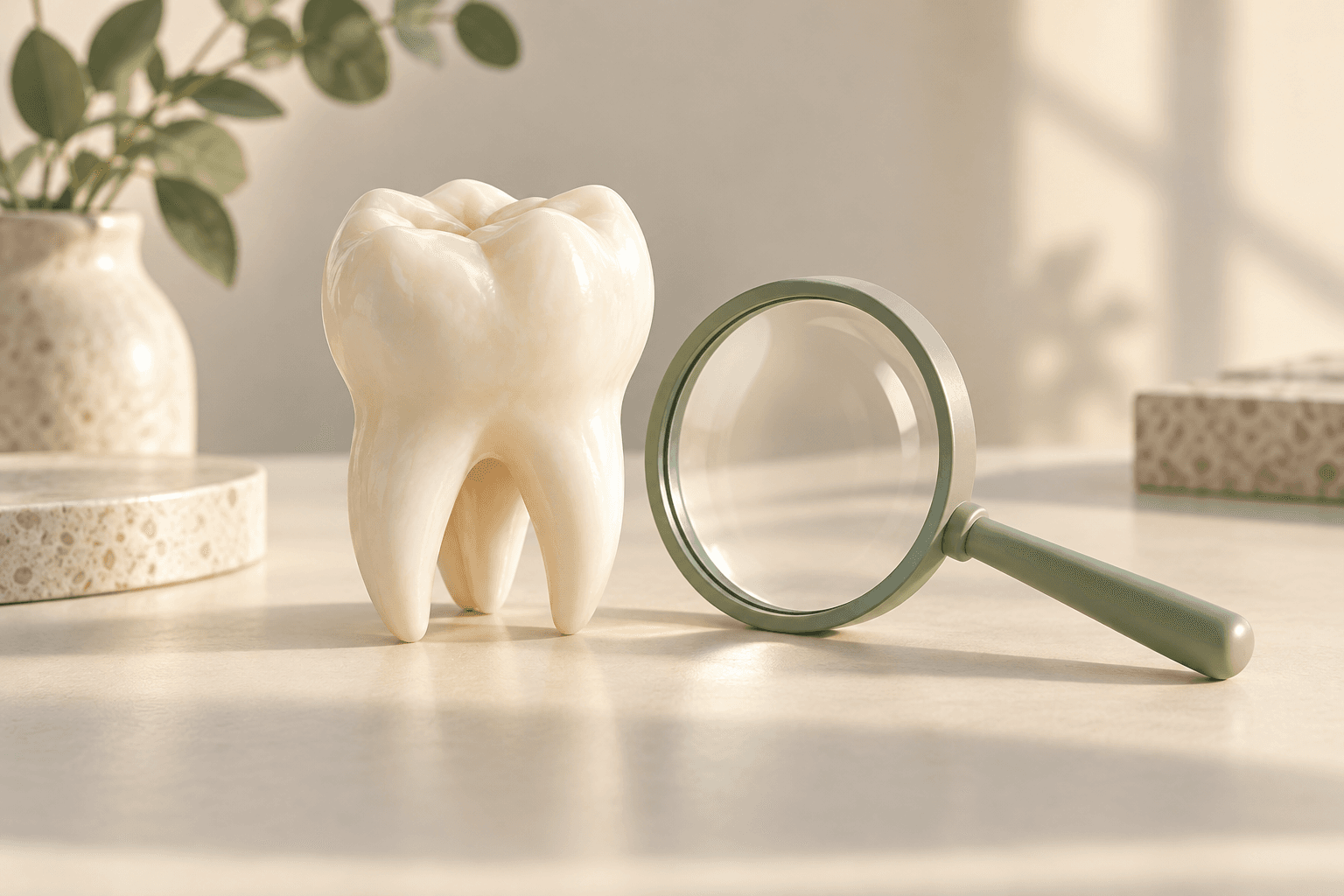
No. Having a wisdom tooth does not automatically mean that you need to have it extracted. The NHS informs that, when it does not cause problems, it can usually remain and be accompanied to appointments. The decision needs to consider the evaluation of the tooth and the region; it should not be made just because the wisdom tooth has appeared or because it is not hurting.
What is wisdom tooth?
Wisdom tooth is the popular name for the third molar, located at the back of the mouth. According to the American Dental Association (ADA), a healthy wisdom tooth that is born correctly can participate in chewing. The problem is not simply having this tooth, but checking its position, health, and relationship with nearby tissues and teeth.
When can removal enter the plan?
The ADA cites infection, cysts, damage to the neighboring tooth, gum disease, and caries that cannot or should not be restored among the situations that may warrant removal. The indication may also be part of other dental planning. None of these reasons should be presumed by a photo: ask the dentist to explain the finding of your case.
Are impacted wisdom teeth and partially born wisdom teeth the same situation?
The ADA uses the term included for the tooth that remains stuck in the bone or under the gum. It also describes possible problems when the wisdom tooth appears only partially, such as difficulty cleaning and infection in the gums. The NHS says that x-rays can help to check the position. The image should be interpreted along with the clinical evaluation.
If the wisdom tooth remains, the care continues
Keeping the tooth does not mean forgetting it. The ADA recommends monitoring the wisdom teeth that have not been removed because problems may arise later. Agree with the dentist how to clean the region and when to return. The absence of pain, in isolation, does not replace this evaluation; if there is pain, seek the professional.
Useful questions before deciding
- Which finding justifies removing or accompanying this wisdom tooth?
- Is there a problem with the neighboring tooth or gum?
- What are the risks and benefits of options for me?
- If the choice is to follow, how will the return be and what changes should I report?
The NHS reminds you that extraction can also have complications, such as infection and injury to nearby nerves. This does not mean that they will happen to you, but it reinforces the importance of discussing individual risk. This article does not indicate surgery or follow-up for a specific tooth: it organizes the points of conversation for an understood decision.
Frequently asked questions
Doubts that help prepare the conversation.
If the wisdom tooth doesn't hurt, can I stop following it?
It is not a safe conclusion. The ADA advises monitoring wisdom teeth that remain in the mouth because they can develop problems later. Arrange returns and hygiene with the dentist.
Traceability
Sources
- Wisdom tooth removal — indication and follow-upNHS
- Wisdom Teeth - evaluation of third molarsAmerican Dental Association — MouthHealthy
- Do I need to have an X-ray at every appointment?Blog Dr. Rodolfo Segawa