Smile aesthetics
Do porcelain veneers correct the gummy smile?
Understand why porcelain veneers do not automatically correct the gummy smile and what to evaluate about teeth, gums and lips before making a decision.
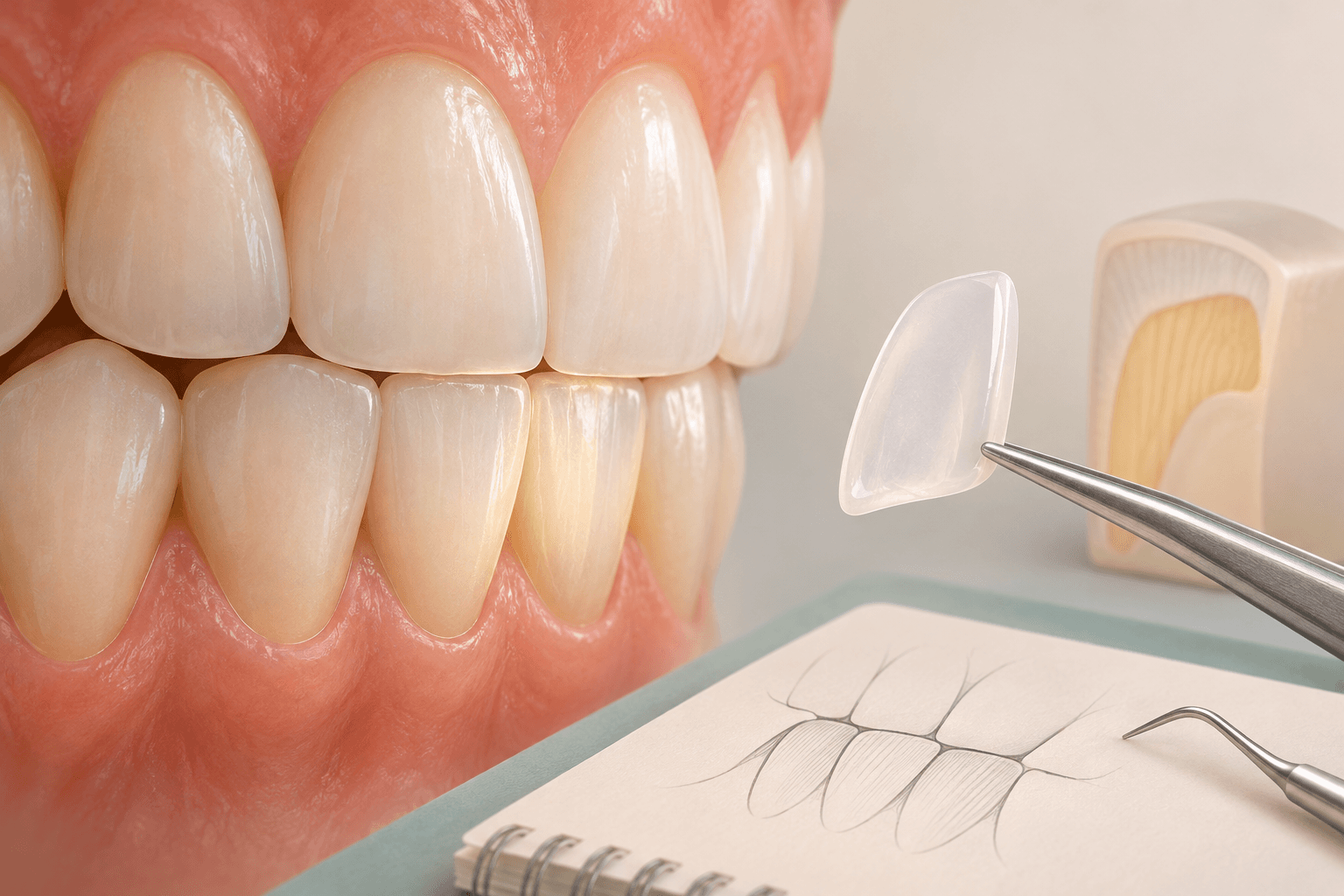
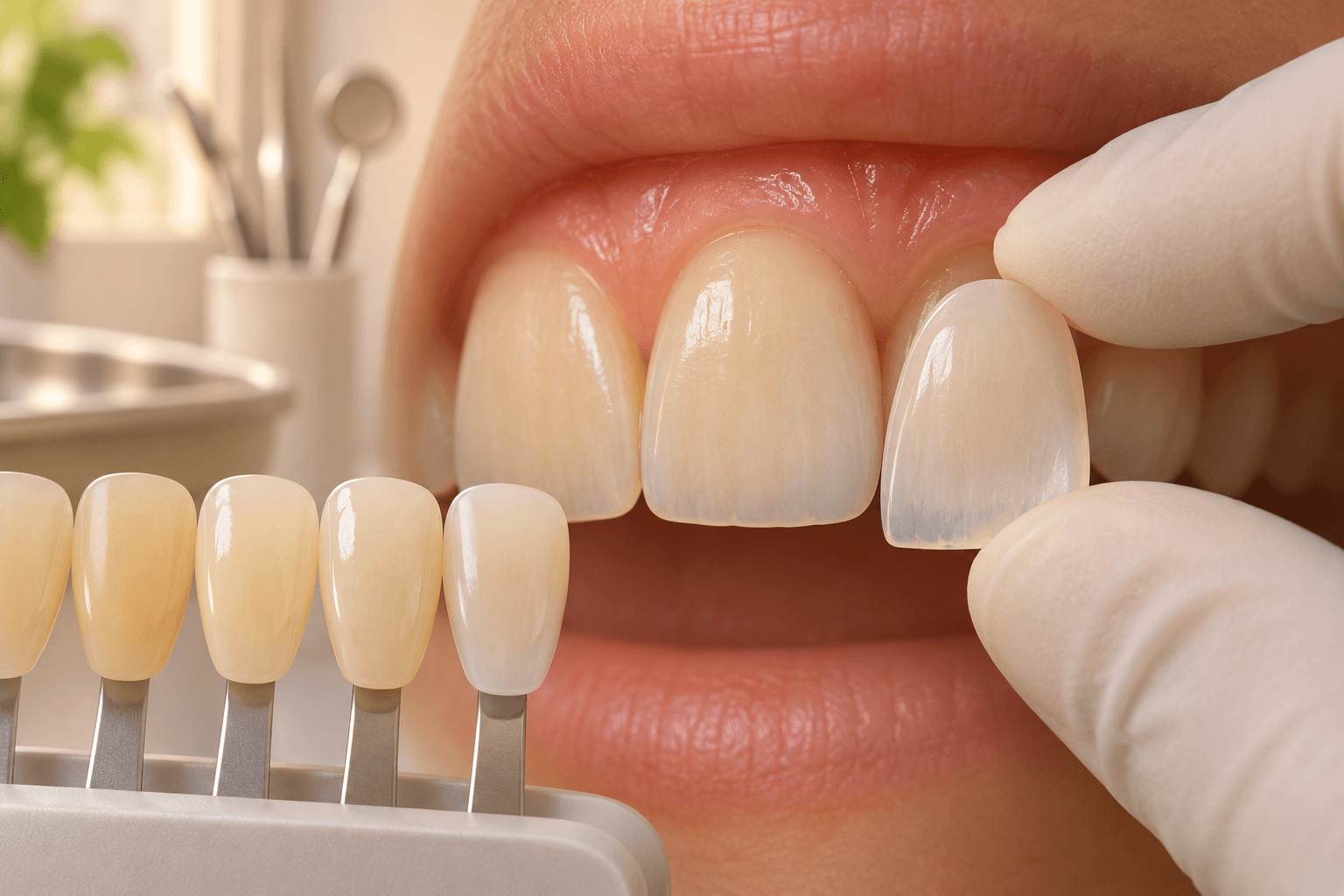
Porcelain veneers are not an automatic solution for gummy smile. They cover the front of the teeth; the amount of gum visible when smiling may involve other factors. Therefore, before choosing ceramic veneers for this complaint, it is necessary to identify what is causing the gum exposure and what change you want.
What veneers change — and what needs to be evaluated separately
The American Dental Association (ADA) describes veneers as custom coverings of the anterior surface of the teeth, used to modify their appearance. This action on the tooth does not in itself amount to correcting the position of the lip or a bony feature. This distinction stems from comparing the range of veneers and the different causes of gingival exposure described in the sources below.
Why does the gums appear more in some smiles?
In Maria L. Geisinger's educational material, published by Dentalcare, gingival exposure may be related to the growth of the gum, the way it covers the dental crown, the vertical dimension of the maxilla, the length or mobility of the upper lip, and the position of the teeth. More than one factor may participate. The clinical examination differentiates these situations; the appearance of short teeth, in isolation, does not define an indication of veneers.
Can veneers and gum treatment be part of the same plan?
In selected cases, yes. The Cleveland Clinic explains that gingival recontouring modifies gum tissue and that some people may also need veneers or crowns. This does not mean that every person with a gummy smile needs these interventions. In the evaluation, the institution highlights the relationship between gum and teeth, the position of the lips, tooth wear and bone structure.
Therefore, if veneers are proposed along with another procedure, ask the professional to explain the function of each step. Modifying the shape of the tooth and treating the cause of gum exposure are objectives that need to be clear in the planning.
Questions to take to the assessment
- What explains the amount of gum that appears in my smile?
- Which part of my complaint would be addressed by veneers, and which would remain?
- Is there an alternative that avoids covering healthy teeth?
- If there is more than one step, what are the limits, risks, and criteria for moving forward?
Health and expectations before choosing ceramics
The ADA advises treating caries and gum disease before veneers and reminds that preparation with enamel removal is not reversible. The decision should consider these limits, without promising that veneers will solve all dissatisfaction with the smile. This content explains general differences; the individual indication depends on examination and conversation with the dentist.
Frequently asked questions
Doubts that help prepare the conversation.
Do teeth that look short always need veneers?
No. The relationship between gums, teeth and lips needs to be examined to understand the appearance of the smile. The indication of ceramic is not defined only by the impression of short teeth.
Traceability
Sources
- Veneers — Range and Boundaries of VeneersAmerican Dental Association (ADA)
- Gum Contouring — evaluation and associated treatments; update of 22/08/2023Cleveland Clinic
- Evaluating and Establishing Ideal Smile Esthetics —Maria L. Geisinger, DDS, MS; section on gingival exposure, p. 11Dentalcare / Crest + Oral-B — Maria L. Geisinger
- Further reading: veneers with inflamed gumsBlog Dr. Rodolfo Segawa