Smile aesthetics
Are porcelain veneers all the same material?
Understand why the name porcelain veneer does not define a single ceramic and what questions help clarify the choice of material with the dentist.
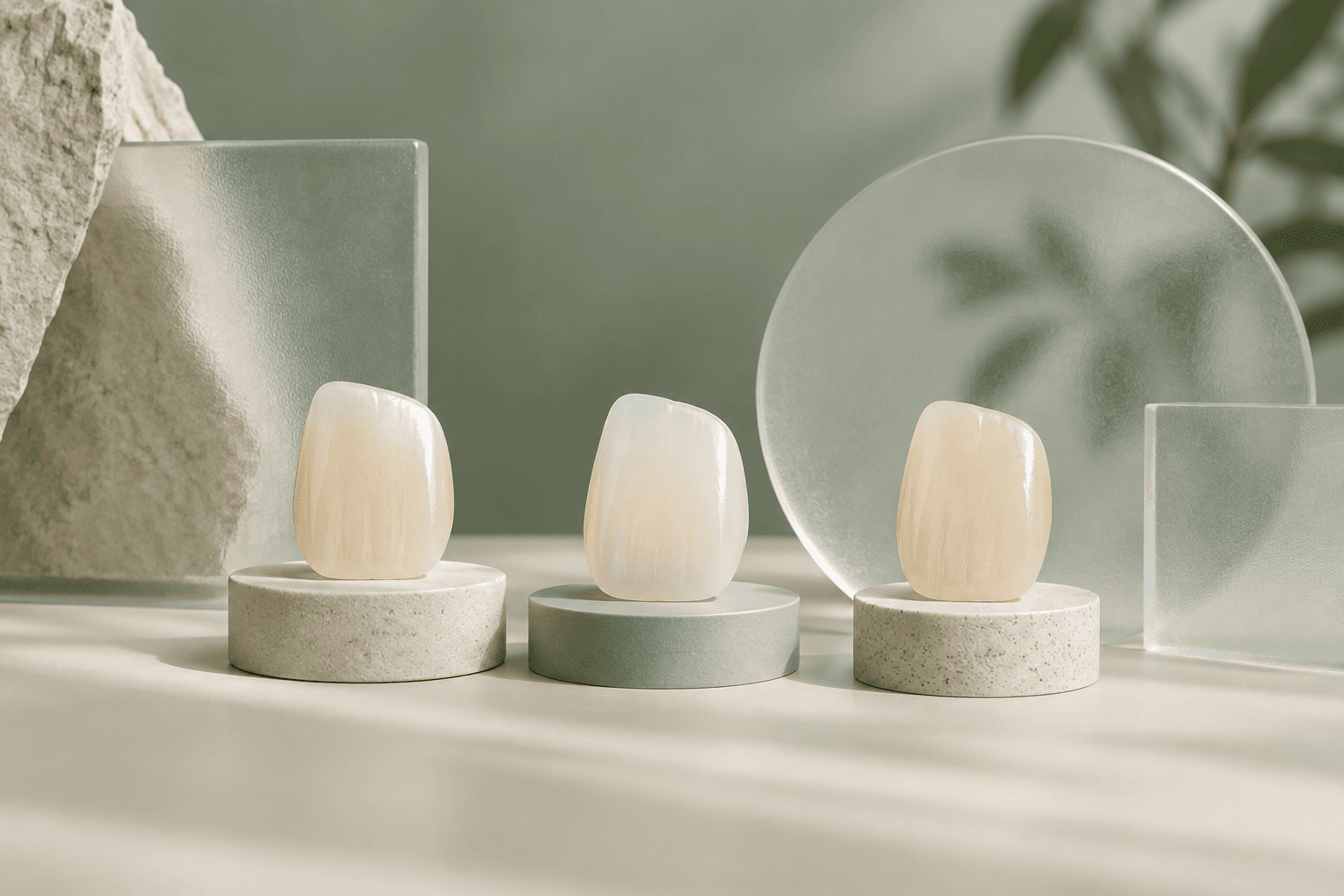
No. The name "porcelain veneer" does not identify the composition of the ceramic on its own. There are different materials for indirect restorations, and the choice needs to consider the indication and characteristics of the case. Before deciding, ask the dentist to explain which material they are proposing for your veneers and why.
Feldspar porcelain and lithium disilicate: what are they?
The American Dental Association (ADA) describes feldspar porcelain as a high-translucency but brittle ceramic. Lithium disilicate, on the other hand, is a glass-ceramic: it has a higher flexural strength and can be produced at different levels of translucency. These names identify families of materials, not guaranteed aesthetic results.
Does more stamina automatically mean a better choice?
It is not possible to choose a veneer by an isolated property. According to the ADA, composition, physical and mechanical characteristics, processing and clinical indication need to be part of the decision. A data on the strength of the material does not equate to a prediction of how many years your veneer will last.
What to ask in the consultation
- What is the proposed ceramic family for my veneers?
- Why was it chosen for my teeth?
- How will shape, color and fit be evaluated before cementing?
- What limitations and precautions do I need to consider in this plan?
Write down the answers with the treatment plan. A helpful explanation should relate the choice to your case, in language you understand. If you receive only one business name, also ask for identification of the type of material and justification for the indication.
Ceramics are not a substitute for tooth assessment
The ADA's page on veneers advises treating caries and gum disease before the procedure. It also reminds you that removing nail polish makes the treatment irreversible and that veneers can chip, crack or come loose. These points remain relevant when discussing any material; it is not enough to choose a ceramic tile to conclude that the treatment is indicated.
How to compare information without drawing wrong conclusions
When reading about ceramics, check out which restoration the information refers to: the ADA review brings together veneers, crowns, and bridges. Results presented for one of these applications should not be treated as a promise for another. To also understand the manufacturing stage, see the complementary reading about the laboratory, below.
Frequently asked questions
Doubts that help prepare the conversation.
Is the trade name enough to understand the veneer material?
Ask the dentist to also clarify the family of ceramics and the reason for choosing them for your case. The name alone does not answer questions about indication, planning and limits.
Traceability
Sources
- Materials for Indirect Restorations – Ceramic Families and Selection CriteriaAmerican Dental Association (ADA)
- Veneers — indication and boundaries of veneersAmerican Dental Association (ADA)
- Further reading: the laboratory in the making of veneersBlog Dr. Rodolfo Segawa