Smile aesthetics
Does sugar-free gum replace brushing?
Understand how sugar-free gum can stimulate saliva, why it does not replace oral hygiene and when discomfort when chewing deserves evaluation.
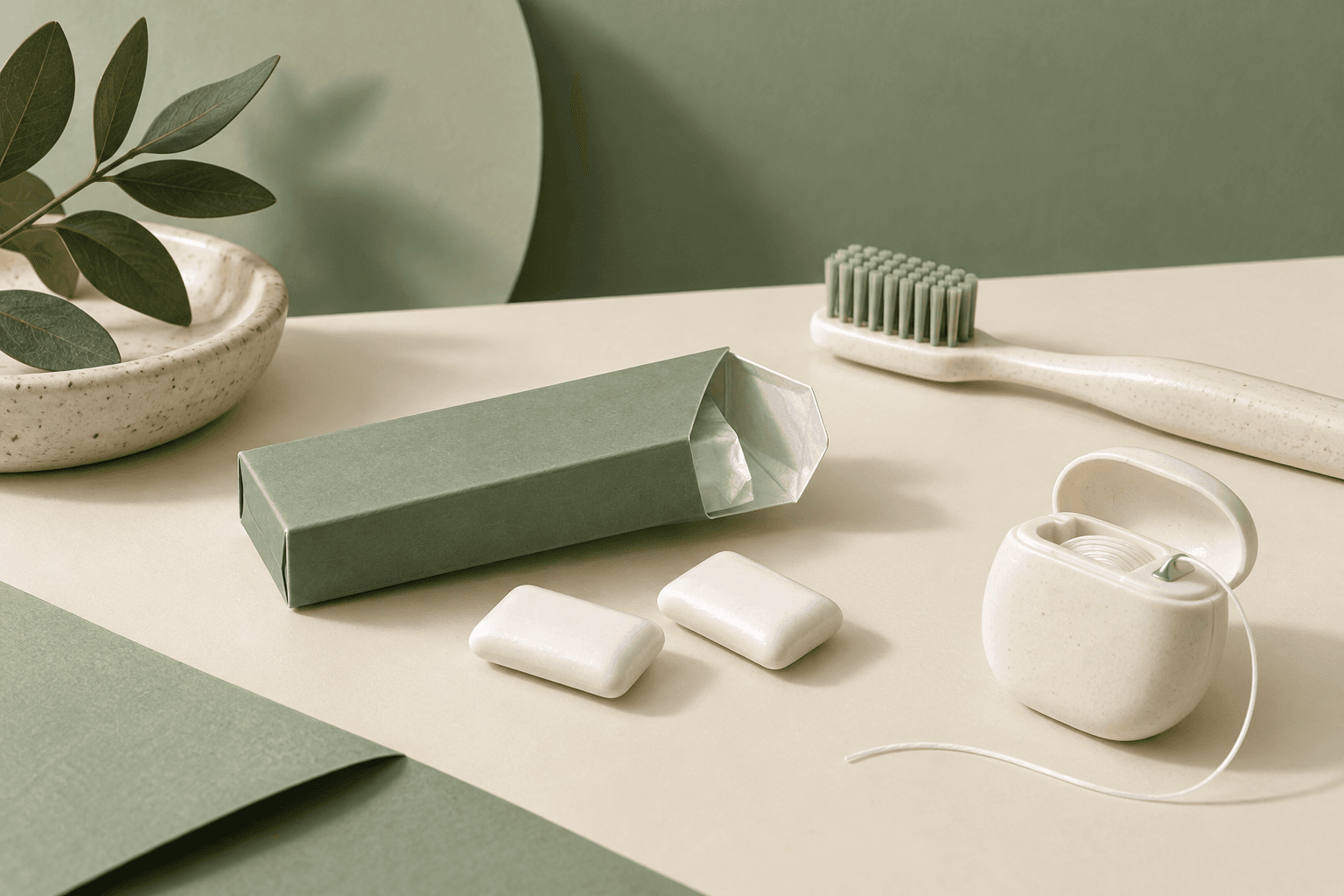
Sugar-free gum can help stimulate saliva and contribute to the prevention of caries, but it is not a substitute for toothbrushing, fluoride toothpaste, or cleaning between teeth. The American Dental Association (ADA) presents its use as a complement to hygiene. Therefore, chewing a gum after eating is not equivalent to brushing your teeth.
What does saliva have to do with it?
In the ADA's technical review of chewing gum, chewing and taste appear as stimuli to saliva production. The increased flow helps to dilute and neutralize acids produced by plaque bacteria. Saliva also transports calcium and phosphate, which are involved in protecting enamel. These mechanisms explain the possible complementary benefit, without guaranteeing that a person will be caries-free.
Are sugar and sugar free equivalent?
No. The ADA's MouthHealthy educational page explains that sugar can be used by bacteria to produce acids that are harmful to teeth. Therefore, the guidance on benefit refers to sugar-free gum. Check this information on the packaging: mint flavor, feeling of freshness and advertising promise are not the same thing as the indication of absence of sugar.
How long do I need to chew?
The ADA's technical review describes studies in which participants used sugar-free gum for 20 minutes after meals. This data is not a mandatory prescription for everyone and does not mean that prolonging chewing will increase the benefit. The central point remains to maintain your usual hygiene and check if this supplement is right for you.
What if chewing causes jaw pain?
MouthHealthy advises avoiding gum in those who have temporomandibular disorder and seeking evaluation when there are symptoms. The page also warns of prolonged chewing and very hard products sold as a way to exercise or modify the jaw. Pain should not be interpreted as a sign that the exercise is working.
How to organize the routine without exchanging one care for another
- Keep brushing with fluoride toothpaste and cleaning daily between your teeth.
- If you opt for gum, make sure it's sugar-free and don't use it as a justification for skipping hygiene.
- Report pain, discomfort, or difficulty chewing to your dentist.
- Bring questions about labels and product promises to the consultation.
This content is educational and does not indicate a brand or evaluate your ability to chew safely. In the further reading, see how to organize the use of dental floss along with brushing.
Frequently asked questions
Doubts that help prepare the conversation.
Does sugary gum offer the same prevention guidance?
No. The complementary benefit described by the ADA refers to sugar-free gum; sugar can fuel the production of acids by bacteria.
Traceability
Sources
- Chewing Gum — Guidelines for the PublicAmerican Dental Association — MouthHealthy
- Chewing Gum — mechanisms and scientific evidenceAmerican Dental Association — Oral Health Topics
- Further reading: flossing and brushingBlog Dr. Rodolfo Segawa