Smile aesthetics
Can porcelain veneers close spaces between teeth?
Understand when porcelain veneers can enter the evaluation of a diastema and why investigating the cause of the space comes before the aesthetic choice.
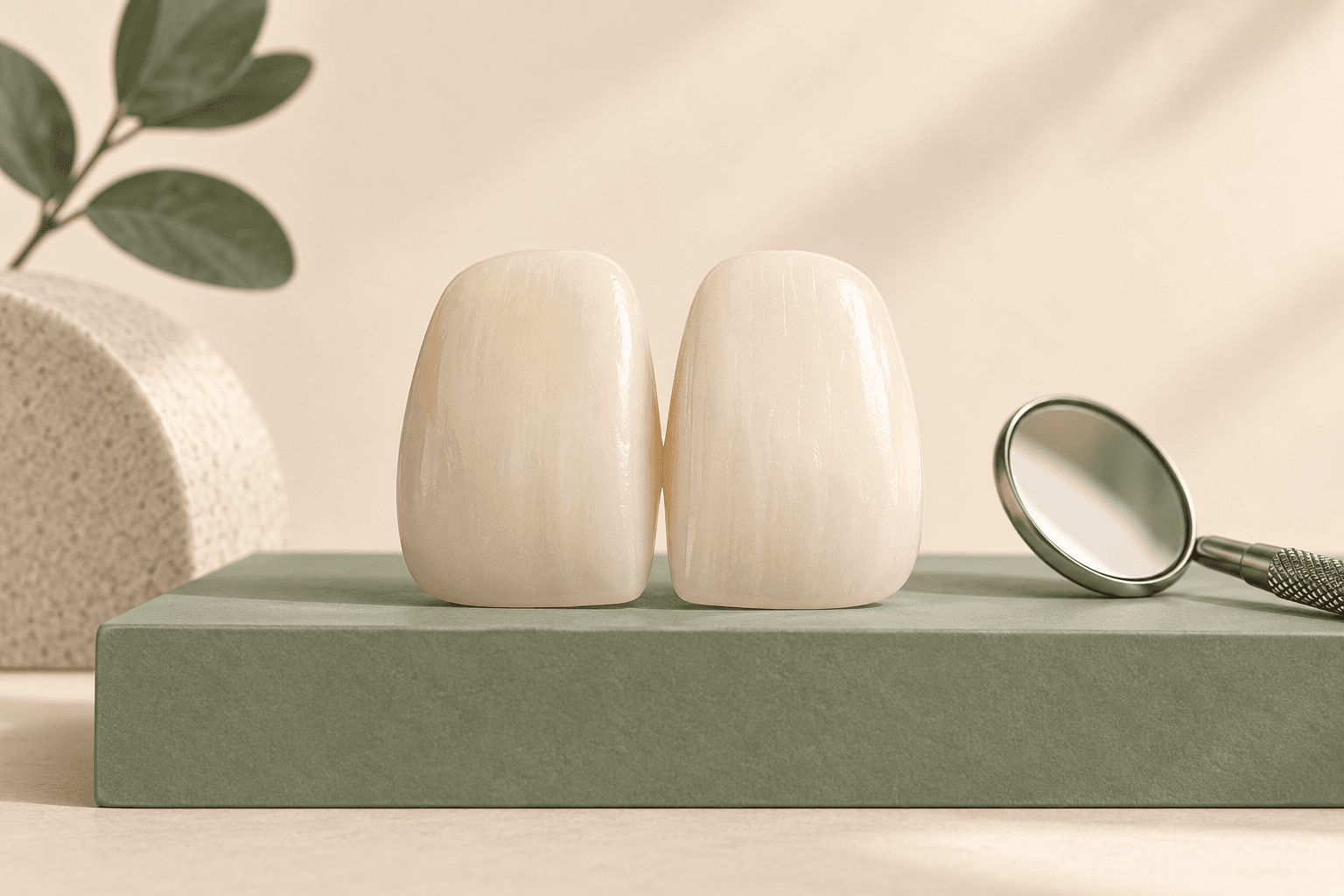
Porcelain veneers can be an option to disguise or visually close certain spaces between the teeth, but they are not automatically indicated for every diastema. Before choosing ceramics, it is necessary to understand the origin of the space and evaluate oral health. A space that has emerged or increased deserves attention before any aesthetic decision.
Does all the space between the teeth need to be closed?
No. Diastema is the name given to the space between teeth. The Cleveland Clinic explains that it often represents a normal variation, without harm to health. If the teeth and gums are healthy, the decision to modify this characteristic may be aesthetic. Not liking the space and having a disease are different situations.
Why investigate a new space?
The same institution informs that some spaces may be related to periodontal disease. Therefore, tell the dentist if the space has always existed or changed recently. If there is bleeding, swelling or other gum change, report it as well. The cause cannot be determined by a photo of the smile alone.
Where do porcelain veneers come in?
The American Dental Association (ADA) describes veneers as custom coverings for the front of the teeth and recognizes their use to mask spaces in the smile. The choice needs to consider the condition of the teeth, expectations, and limits of treatment. The ADA recommends treating problems such as cavities and gum disease before veneers are placed.
What alternatives can be discussed?
Among the possibilities described by the Cleveland Clinic are resin restorations, ceramic veneers, and orthodontic treatment. The option depends on the cause and the evaluation. The existence of these alternatives does not mean that they are all suitable for the same person. If there is gum disease, its treatment has priority over aesthetic closure.
When discussing ceramics, also consider the commitment to maintenance. The ADA points out that glaze removal preparation is not reversible and that veneers may need repair or replacement over time. Closing a space does not eliminate the need for hygiene or follow-up.
Questions to guide the decision
- Is space a stable feature or is there a cause that needs treatment?
- Is there a need to close it for health or is the change just aesthetic?
- Why would pottery be preferable to the other options in my case?
- Which teeth would be involved and what modifications would be necessary?
The purpose of the consultation is to clarify these answers before choosing a material. The indication of veneers depends on the individual examination; this text does not define whether your space should be closed or which treatment would be appropriate.
Frequently asked questions
Doubts that help prepare the conversation.
Is diastema always a health problem?
No. It can be a normal variation. New or changing spaces need to be evaluated, as in some cases there is a relationship with gum disease.
Are veneers the only option to close the space?
No. Resin and orthodontic treatment are among the possible alternatives, depending on the cause and individual evaluation.
Traceability
Sources
- Diastema—causes and treatment optionsCleveland Clinic — updated on 03/03/2026
- Veneers — indications, preparation and maintenanceAmerican Dental Association (ADA)
- Related reading: porcelain veneers and bracesBlog Dr. Rodolfo Segawa