Smile aesthetics
I have porcelain veneers: do I need to notify the anesthesiologist before surgery?
Learn why you should tell the anesthesiologist you have porcelain veneers, what details to report, and when to talk to your dentist before surgery.
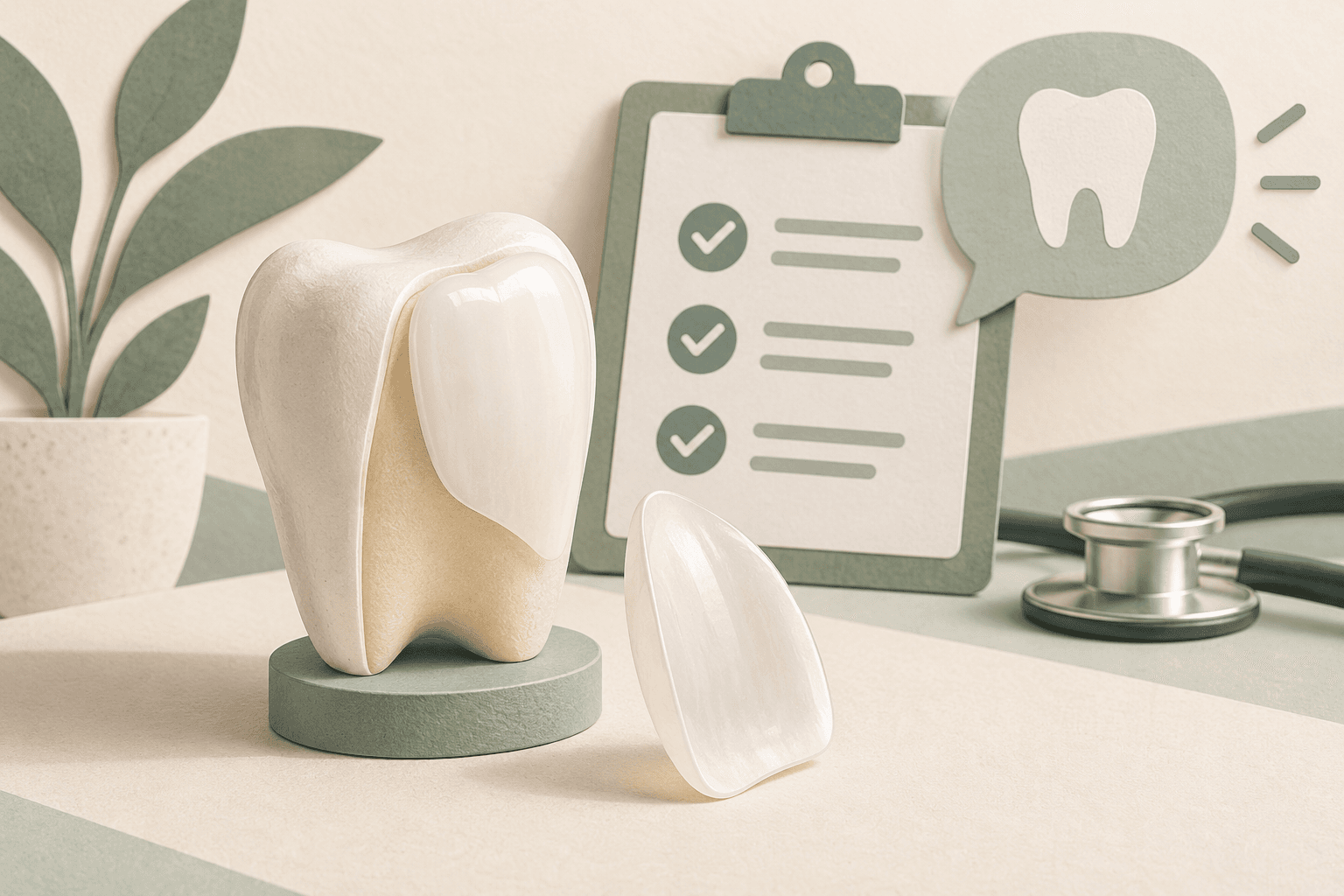
Yes. If you have porcelain veneers or ceramic veneers, tell the anaesthetist before surgery under general anaesthesia, even if they are comfortable. The Royal College of Anaesthetists includes veneers among the dental works that must be communicated in the pre-anaesthetic assessment.
Why do veneers matter in surgery outside the mouth?
During general anaesthesia, devices may be needed to maintain breathing. Moorfields Eye Hospital explains that the placement of these devices can accidentally reach teeth or restorations, including veneers. Information about your veneers helps staff consider this condition in planning, including when the operation is not dental.
What to count in the pre-anesthetic evaluation
- Inform that you have porcelain veneers and indicate the teeth involved, if you know.
- Report loose teeth or parts and current gum problems.
- Let them know if there has ever been difficulty placing a breathing tube or dental damage in previous anesthesia.
This information is recommended by the Royal College of Anaesthetists. A straightforward sentence is enough to start: "I have ceramic veneers and would like to record this before anesthesia." If you don't know the name of the dental work, explain what was done and ask your dentist for help to clarify.
When to talk to your dentist too
Moorfields recommends dental evaluation before a planned operation when there are loose teeth or teeth and gums in poor condition. If you notice an unstable veneer, report it to both the dentist and the surgical team. It is not up to this article to define whether surgery should be postponed; this decision depends on the evaluation of the professionals in charge.
If there is any damage after surgery
Notify the care team and seek dental advice. According to Moorfields, damage to veneers may need repair, defined according to the injury. The Royal College of Anaesthetists advises requesting a written record when dental damage or difficulty with the airway occurs, as this may be relevant in future anesthesia.
Informing helps, but does not guarantee zero risk
This guidance serves to prepare the conversation with the professionals, not to choose the anesthetic technique or to estimate your individual risk. The sources below are British patient education materials; care and conduct should follow the team that accompanies your surgery in Brazil.
Educational content produced with AI-assistance, with no individual assessment or clinical review claimed. See also the related readings below.
Frequently asked questions
Doubts that help prepare the conversation.
Do I need to warn even if the veneers don't bother you?
Yes. The recommendation to inform about veneers is not limited to pieces with symptoms. Include this information in the conversation with the anesthesiologist.
Traceability
Sources
- Damage to teeth, lips, and tongue — November 2024 issueRoyal College of Anaesthetists — Leila Finikarides
- Anaesthesia explained — section on dental damageMoorfields Eye Hospital NHS Foundation Trust
- Further reading: loose or broken veneerBlog Dr. Rodolfo Segawa
- Further reading: bite discomfort after veneersBlog Dr. Rodolfo Segawa