Smile aesthetics
Do porcelain veneers need to wear down the tooth? Understand the preparation
Does a porcelain veneer always require wear? Understand why the preparation varies according to enamel, position, volume, bite, and restorative objective — and which conservative alternatives can be discussed in the evaluation.
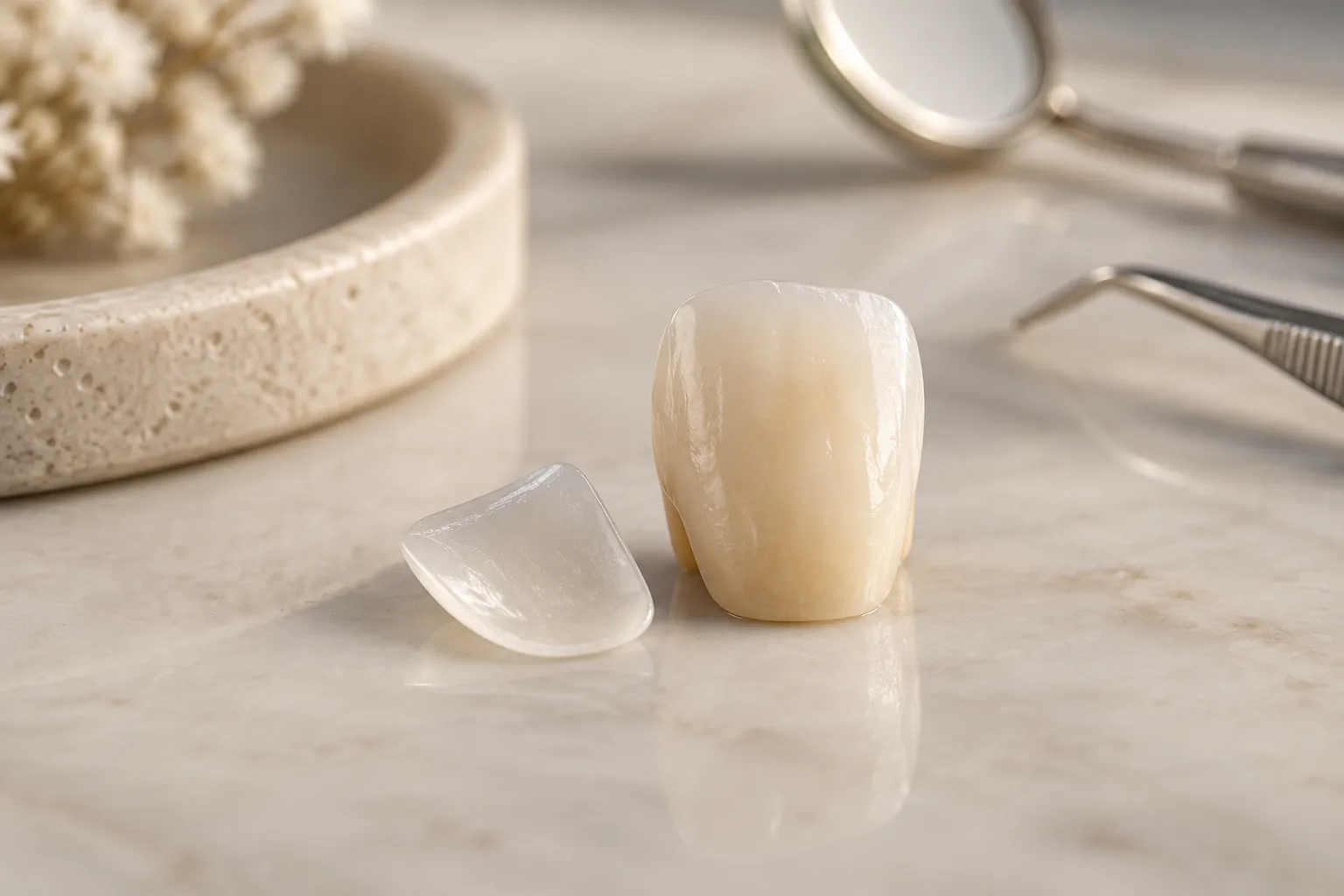
Direct answer: there is no rule that every porcelain veneer requires the same wear, nor is it responsible to promise that every case can be done without preparation. The plan depends on the tooth, the position, the color, the available space and the way the piece needs to integrate with the bite. An individual evaluation compares the expected benefit with the amount of dental structure that would need to be modified.
What does it mean to prepare the tooth for a veneer?
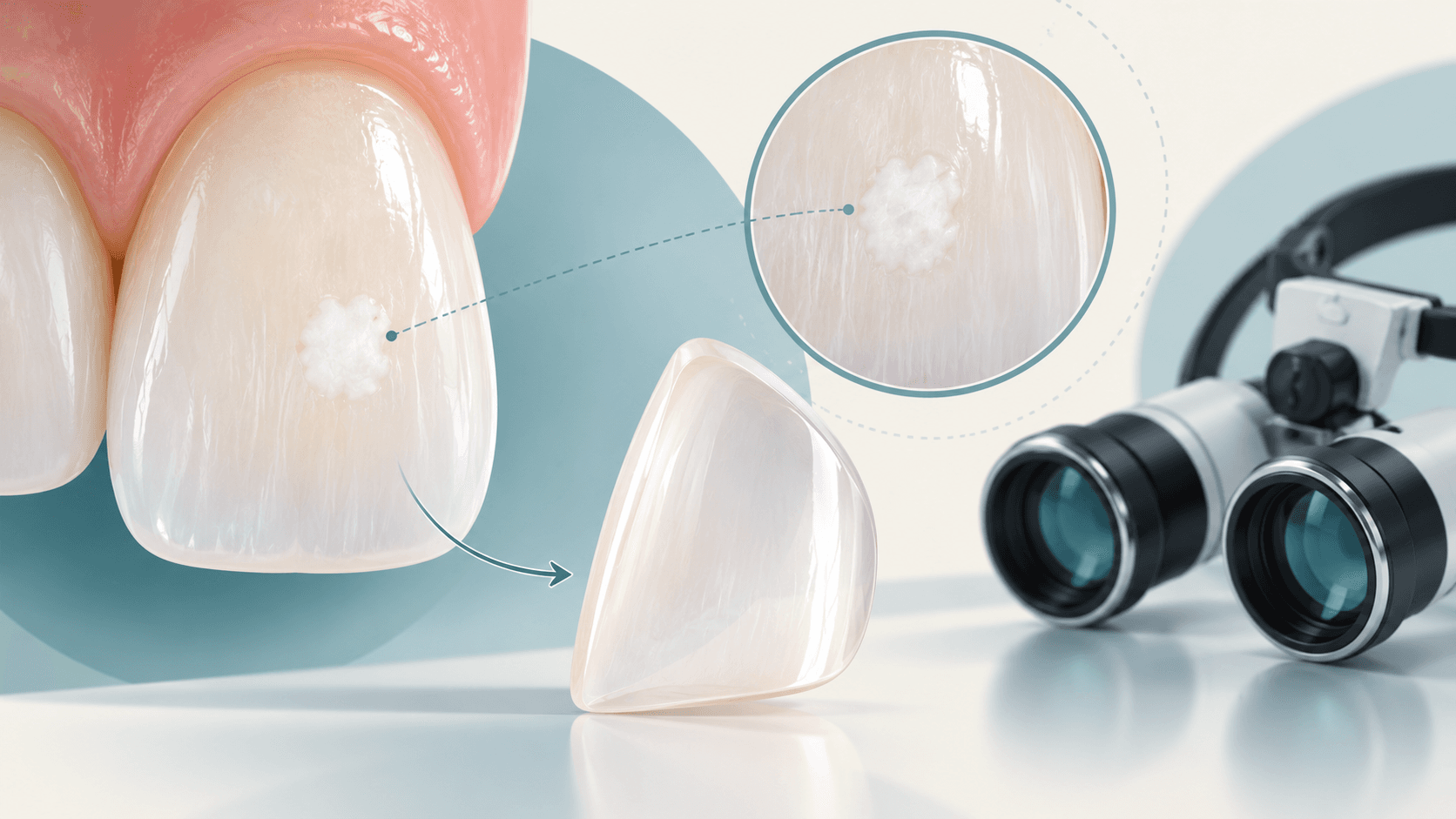
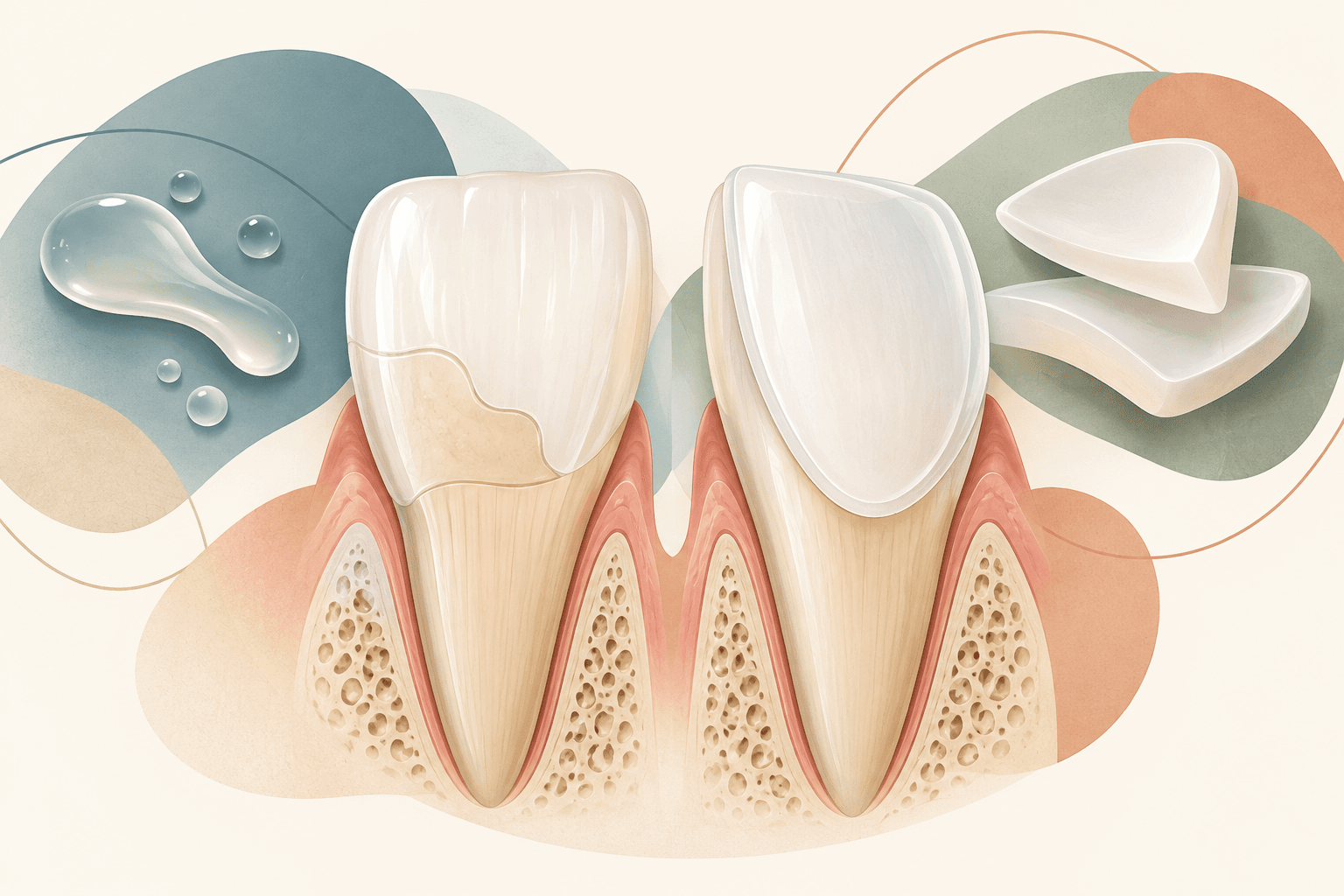
Preparation is a planned adjustment of the tooth surface to create space and allow adaptation, contouring, and adhesion of the restoration. The amount and location vary: in some selected cases there may be little or no wear; in others, enamel removal may be necessary. When tooth structure is removed, it does not spontaneously recompose, so the plan must be explained before the procedure and executed with discretion.
What does the dentist need to evaluate?
The decision usually considers gum and tooth health, amount of enamel available for adhesion, position and inclination, color, shape, space for the ceramic, and relationship with the bite. Habits such as clenching or bruxism, existing restorations, and expectations about the result also come into play. Photographs, scans, or models can help plan, but they do not replace clinical examination or define the indication on their own.
What alternatives can preserve more structure?
Depending on the complaint and the condition of the teeth, whitening, orthodontics, restorations located in composite resin, follow-up without intervention, or a combination of approaches may be discussed. Each option has different limits: whitening changes the color, but does not change the position; orthodontics moves teeth, but does not correct all types of shapes; resin may be repairable, but requires its own maintenance. It is not always necessary to cover several teeth to treat a localized concern.
Useful questions before authorizing preparation
Ask the professional to explain which areas would be modified and why; whether the proposal preserves enamel whenever possible; what alternatives were compared; how the bite will be considered; and what maintenance or repair possibility may exist in the future. A visual simulation can support the conversation, but it does not guarantee that the final result will be identical. If there is doubt, it is reasonable to ask for time to understand the plan before deciding.
Frequently asked questions
Doubts that help prepare the conversation.
Does every porcelain veneer need to wear down the tooth?
No. Preparation varies according to position, shape, color, space, available enamel and functional planning. Some selected cases may require little or no adjustment; others need controlled reduction. Only clinical evaluation can define what is appropriate.
If the enamel is removed, does it grow back?
No. The removed enamel does not regenerate spontaneously. Therefore, the need and extent of any preparation must be explained before treatment, along with alternatives that can preserve more structure.
Traceability
Sources
- Long-Term Survival and Complication Rates of Porcelain Laminate Veneers: Systematic ReviewJournal of Clinical Medicine / PubMed
- Dental treatments: veneersNHS