Smile aesthetics
Resin veneer stain? Polishing, repairs and maintenance
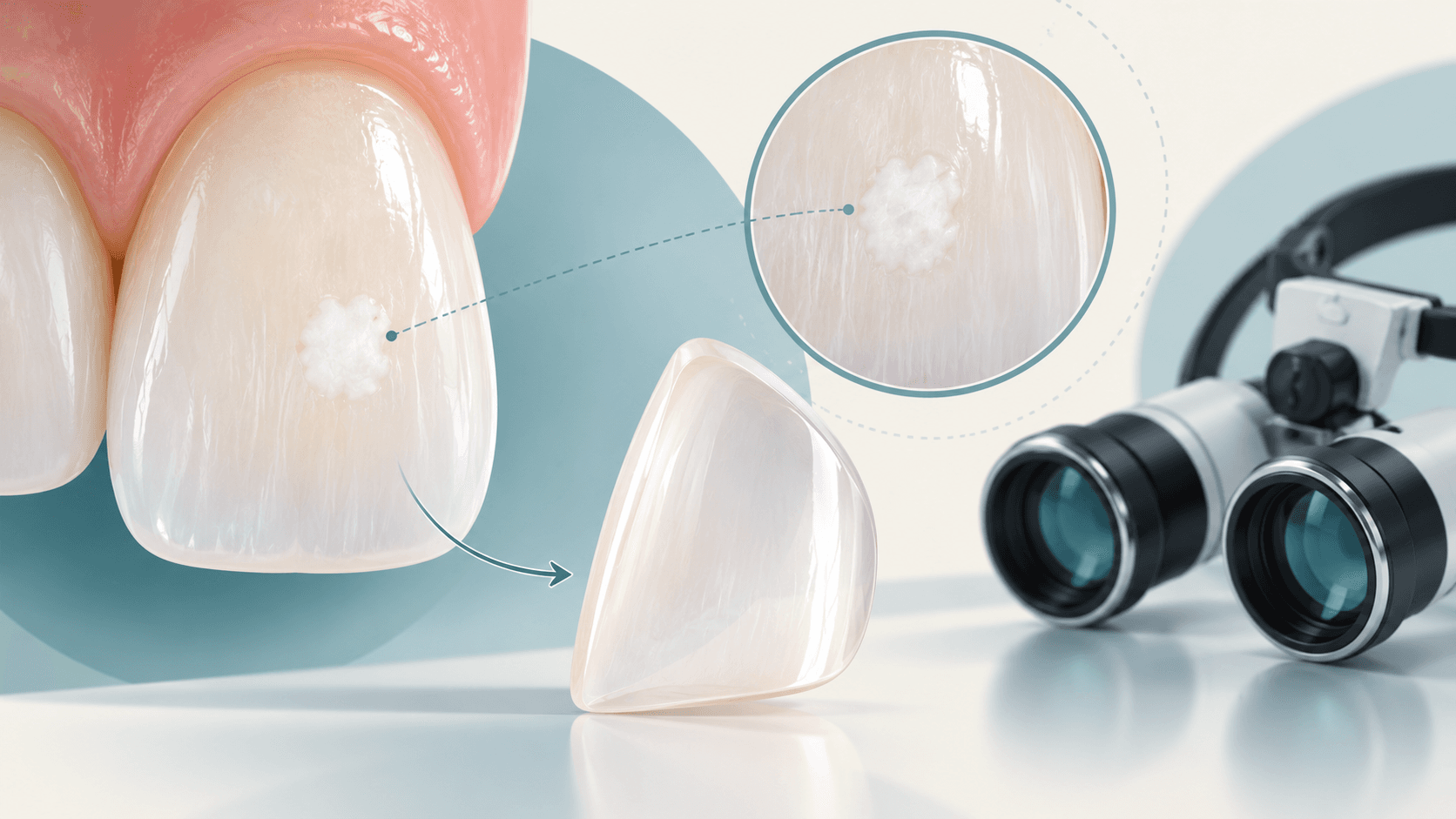
Stains, rough edges, and small chips can appear on resin restorations. Learn what can be evaluated, when polishing or repair comes into discussion, and how to care for it without trying to correct it at home.
Direct answer: A resin veneer may change color or texture, but the cause and solution vary. Pigments, wear, finishing, hygiene, habits, adaptation, and condition of the restoration may all be involved. The dentist needs to examine before indicating polishing, repair, follow-up, or replacement.
What can cause staining or roughness?
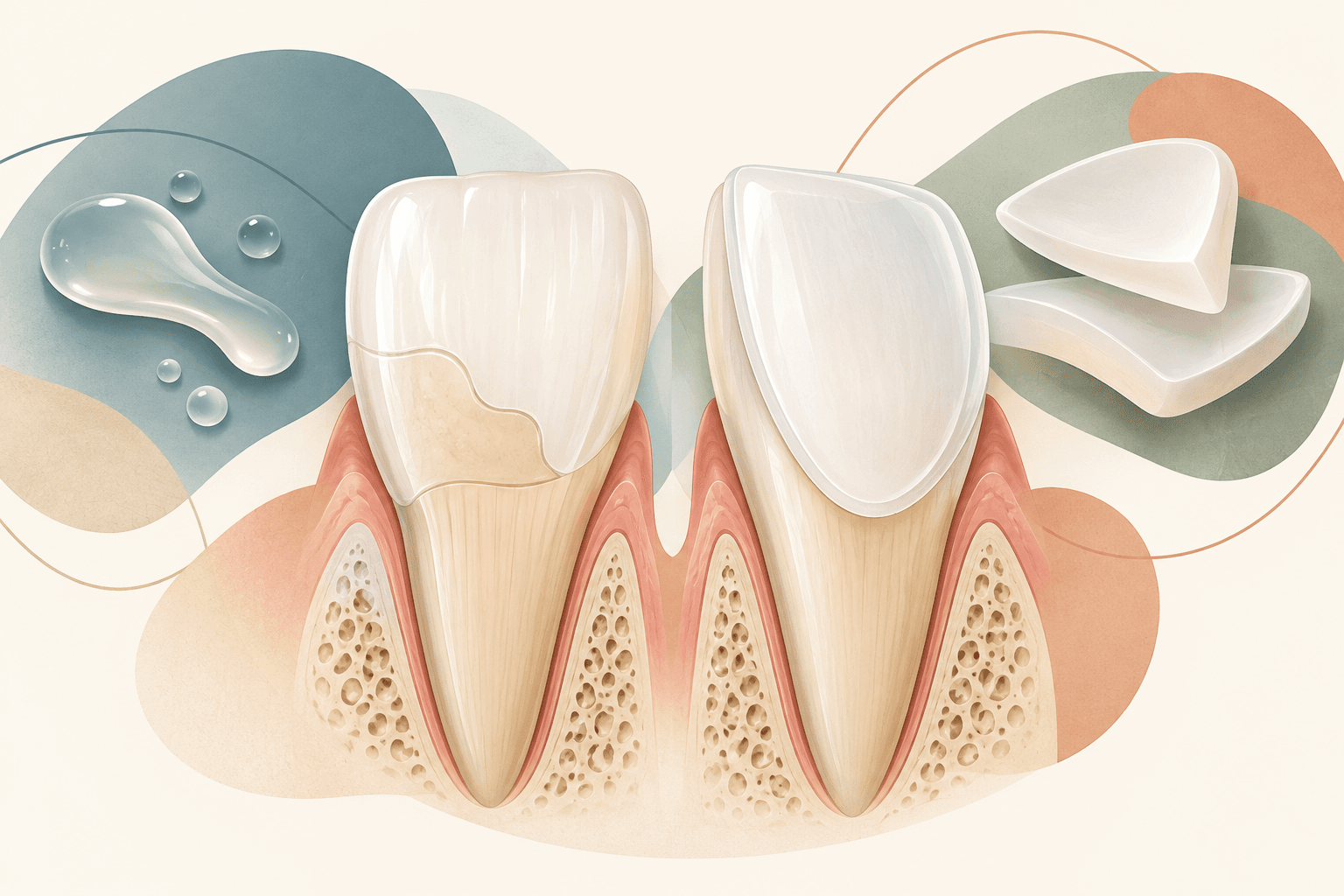
Composite resin can undergo surface alteration by pigments and use; wear and microfractures can also change the brightness or texture. Reviews of studies report different types of failure and maintenance, with results varying by technique and period observed. Not every stain means that the veneer has failed, and not every change can be removed by polishing.
How does the dentist evaluate the restoration?
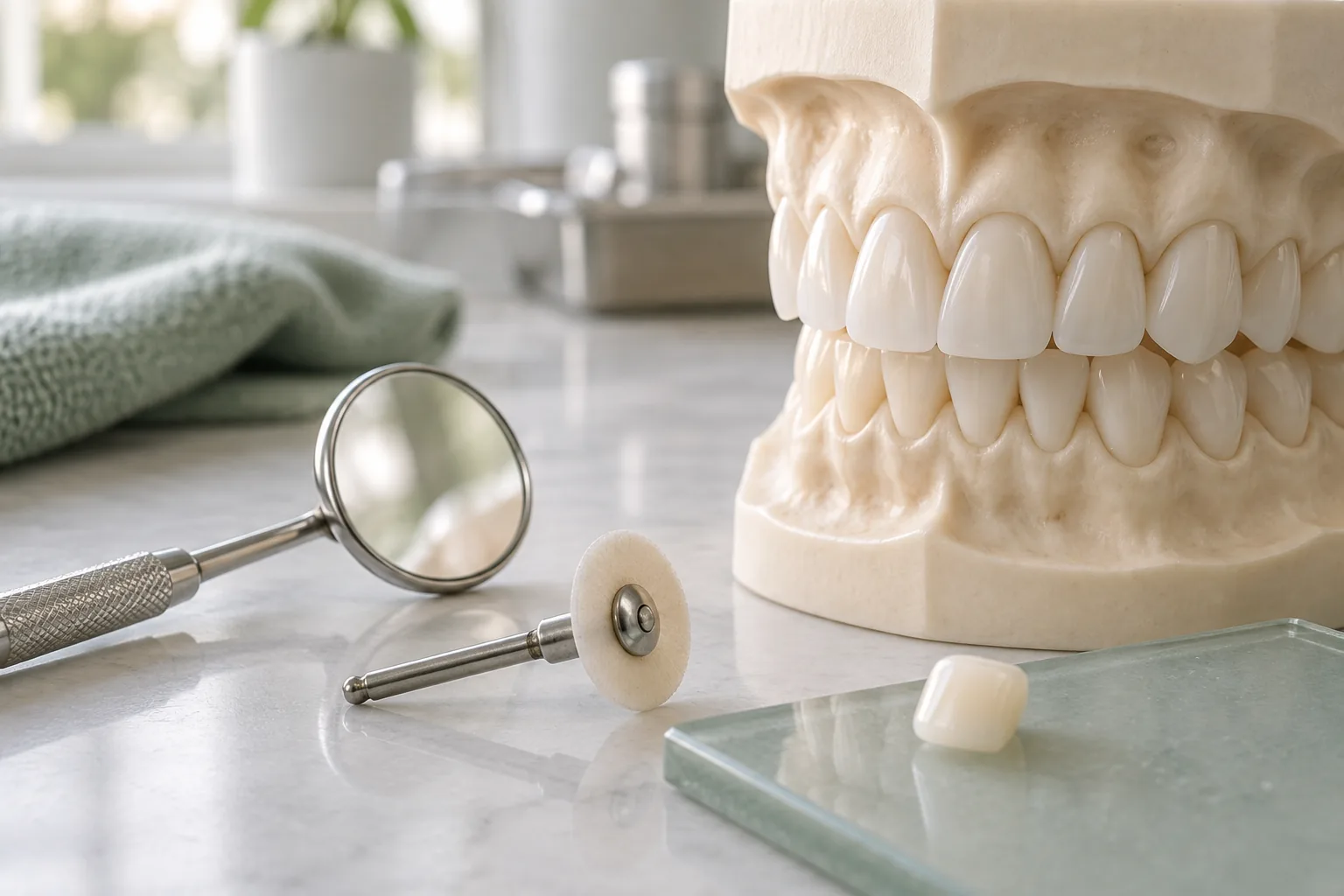
The professional observes color, shine, margins, cracks, adaptation, gums, and bite contacts, as well as asking when the change began and about habits. Depending on the cause and extent, he may discuss follow-up, polishing, spot repair, or replacement. There is no one-size-fits-all solution.
What helps with daily maintenance?
Keep brushing and interdental cleaning as directed by dentistry and attend the indicated appointments. Avoid habits that overload the teeth and talk about frequent consumption of pigmented foods, without blaming an isolated food for any change. Whitening natural teeth does not change the color of the existing resin; the color and options should be discussed before the procedure.
When to look for evaluation?
Make an appointment if you notice a persistent change, rough edge, chipping, cracking, pain, new sensitivity, bleeding gums, or change in bite. Do not sand, scrape, or apply homemade products to the piece: this can damage the restoration or tissues. In case of severe pain or trauma, seek dental advice as soon as possible.
Frequently asked questions
Doubts that help prepare the conversation.
Can resin veneer stain?
There may be color or gloss change over time. The cause and possibility of polishing or repair depends on professional evaluation.
Can I polish or lighten resin at home?
Don't try to wear or apply products on your own. Teeth whitening doesn't whiten existing resin; talk to a dentist to evaluate safe alternatives.
Traceability
Sources
- Direct composite resin for anterior teeth: a systematic reviewPubMed (2023)
- Longevity of direct anterior composite restorations: systematic reviewJournal of Clinical and Experimental Dentistry / PMC (2022)