Implants and rehabilitation
Intraoral scanner and tomography: what is the difference in planning?
The scanner records the surface of the teeth; the CT scan shows internal structures in three dimensions. Learn why these features have different functions.
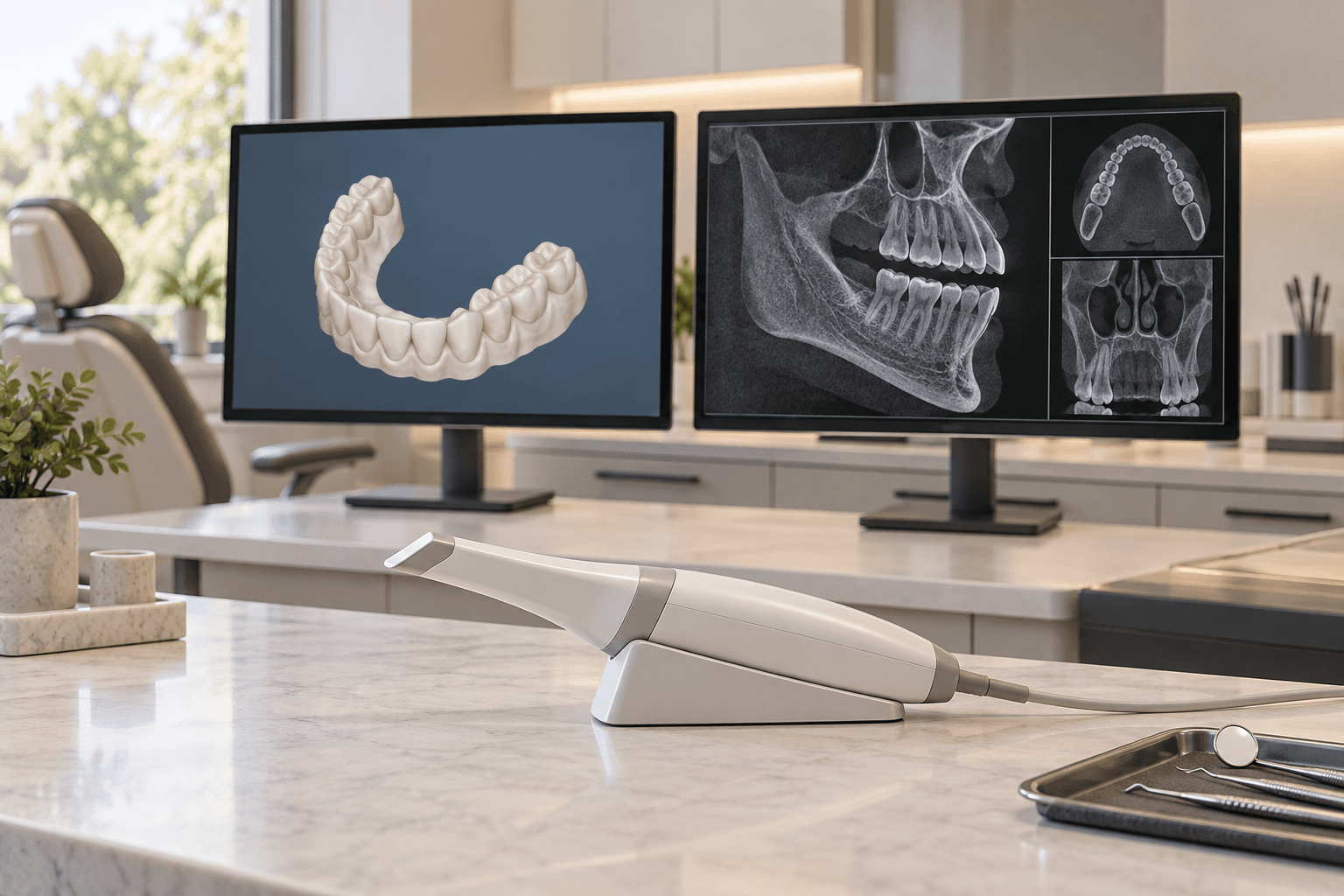
Intraoral scanners and dental tomography can participate in digital planning, but they do not produce the same information. The first records surfaces of the mouth; the second uses X-rays to represent internal structures. Understanding this difference helps to talk about the purpose of each stage of care.
What does the intraoral scanner record?
A small camera travels through the mouth and generates a digital model of the surfaces of the teeth and gums. Somerset NHS describes its use as an alternative to conventional molding in certain consultations. The file allows you to view the recorded shape and support the making of dental work. This optical scan is not equivalent to an X-ray and does not show, by itself, the inside of the bone.
What does cone beam tomography show?
Cone beam computed tomography, also called CBCT, combines images obtained with X-rays to form a three-dimensional representation. According to RadiologyInfo, it can assist in the analysis of bone structures, teeth, and anatomical relationships, including implant planning. The images need to be interpreted by qualified professionals and related to clinical evaluation.
Why doesn't one feature automatically replace the other?
A surface model can help study the shape of the teeth, while a CT scan can answer questions about the bone. Thus, receiving a scan does not mean that all the information necessary for surgery has already been obtained. It also does not mean that it will be mandatory to have a CT scan: the need depends on the clinical question and the available records.
When does radiation exposure deserve attention?
CT scans use ionizing radiation and should not be ordered just because it is a digital technology. The FDA recommends justifying its need and adjusting the exposure to the purpose of the test. Taking previous tests helps the professional to assess whether they are sufficient and to avoid unnecessary repetitions. Inform the team if there is a possibility of pregnancy so that this can be considered in the decision.
Useful questions for consultation
Before making any records, ask: what do we need to find out, how will the result change the planning and the tests I already have meet this need? Also ask for an explanation of the images in plain language. Technology can support decisions, but the choice of treatment depends on clinical history, examination of the mouth and professional interpretation. This article presents educational information, without indicating tests for an individual case.
Frequently asked questions
Doubts that help prepare the conversation.
Is intraoral scanner a CT scan?
No. The scanner records surfaces by optical means; tomography uses X-rays to represent internal structures.
Does all digital planning require tomography?
No. The indication must respond to a specific clinical need, considering the examination and the records already available.
Can I bring old exams to the appointment?
Yes. They can help the professional decide if adequate information already exists or if a new test is needed.
Traceability
Sources
- Dental Cone-beam Computed TomographyU.S. Food and Drug Administration — FDA
- Dental Cone Beam CTRadiologyInfo — ACR and RSNA
- No more dental putty: new technology improves patient experience at MusgroveSomerset NHS Foundation Trust