
Segawa Method · Cosmetic Dentistry
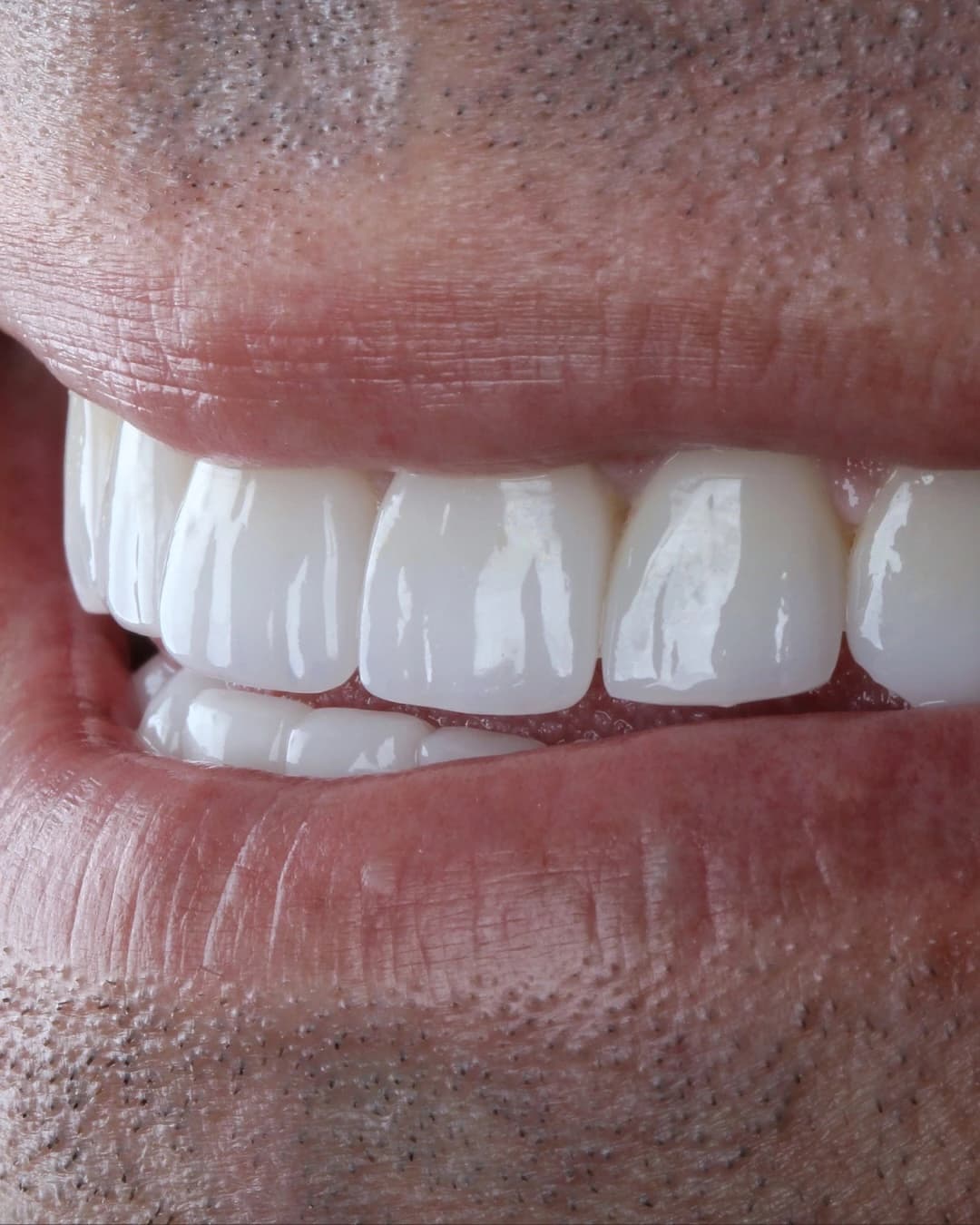
Porcelain veneers with indication and measure.
In the Segawa Method, porcelain veneers are planned to adjust shape, proportion, texture, and color with attention to health, function, and preservation of tooth structure.
The contact page does not confirm time or treatment.
An overview
Clear information before choosing
Porcelain veneers and veneers are ceramic laminates adhered to the outer face of the teeth. The names are usually related to the thickness of the piece and the need for preparation, but they do not replace the diagnosis: each tooth may require a different approach.
They can be considered for selected changes in shape, proportion, texture, color, and small position discrepancies. Before that, it is necessary to check if whitening, orthodontics, resin, or follow-up offer a more conservative solution.
Healthy gums, enamel available for adhesion, bite stability, and realistic expectations are all part of the indication. Decay, inflammation, active wear or bruxism need to be understood and controlled before treatment.
Individual evaluation
What needs to enter the clinical conversation
No single item defines an indication. The decision depends on the set of information and professional evaluation.
- Teeth, gum, and supporting tissue health
- Quantity and quality of enamel available for adhesion
- Bite, chewing function, and signs of bruxism
- Color, shape, proportion and position of teeth in the smile
- Whitening, orthodontics, resin and other conservative alternatives
- Expectations, habits, and availability for maintenance
Segawa Method
Preserve, measure and individualize
The method organizes the planning of porcelain veneers in a clinical sequence that combines digital reading, magnification, preservation of the dental structure, and proximity to the laboratory.
Preservation as a principle
The original dental structure guides the design. Preparation is considered only when necessary for space, adaptation, or volume control, with no automatic promise of zero wear.
Digital planning and magnification
Photographs, scanning, and microscopy help you analyze proportions, visualize boundaries, and make adjustments with precision, without replacing clinical judgment.
Ceramic chosen for the case
Feldspar porcelain and lithium disilicate can be considered according to thickness, tooth color, optical requirement, strength and planned design.
Clinic-lab integration
The proximity between dentist and ceramist facilitates communication and adjustments of color, shape and texture during the fitting, without turning the deadline into an automatic promise.
Care in stages
A shared decision-driven journey
- 01
Digital assessment and records
Gather clinical examination, photographs and scanning to understand teeth, gums, bite and aesthetic objectives.
- 02
Drawing and Preview
Define proportions and test the proposal by simulation or mock-up when indicated, before a final decision.
- 03
Conservative preparation, when necessary
Make only adjustments that are compatible with the plan. An ultra-thin veneer does not automatically mean wear-free treatment.
- 04
Preparation and clinical testing
Evaluate adaptation, contact, color, texture and integration with the smile. The material and the need for adjustments influence the deadline.
- 05
Cementation and follow-up
Perform adherence, check the bite and establish care and returns consistent with the treatment performed.
Frequently asked questions
Direct answers, no promises
General information to organize questions before an individual evaluation.
No. The indication depends on the individual clinical evaluation and comparison with alternatives that may be more conservative.
In general, the term veneer is used for thinner laminates with less preparation required, while veneer can designate thicker parts. The correct thickness and preparation, however, are defined by the case, not by the trade name.
It is not responsible to promise zero wear. Some cases allow little or no preparation; others require controlled adjustments to create space, improve adaptation, and avoid excess volume.
Comfort is planned at each stage and may include anesthesia when indicated. Sensitivity and perception vary, so the experience should not be presented as the same for all people.
The integration between clinic and laboratory can concentrate steps in selected cases. The actual deadline depends on the oral condition, the number of teeth, the material, the tests, and the necessary adjustments.
There is no single deadline. Material, quality of adhesion, bite, habits, hygiene, and follow-up influence longevity; repair or replacement may be necessary over time.
The amount depends on the number of teeth, the material, the clinical complexity and the necessary steps. A responsible proposal can only be made after the evaluation and definition of the plan.
Daily hygiene, periodic appointments, bite control and attention to habits that overload the teeth. When indicated, night protection can also be part of the care.